Intervals & Waves
SA node arrhythmias
Atrial and junctional arrhythmias
EKG graph paper
Lead placement
100
This EKG interval measures the time it takes for electrical impulse/conduction to travel from SA node to the AV node measured from the P wave to the Q wave or beginning of the QRS.
What is the PR interval?
100
This sinus node arrhythmia occurs when the SA node temporarily fails to generate an electrical impulse, resulting in a pause on the EKG tracing.
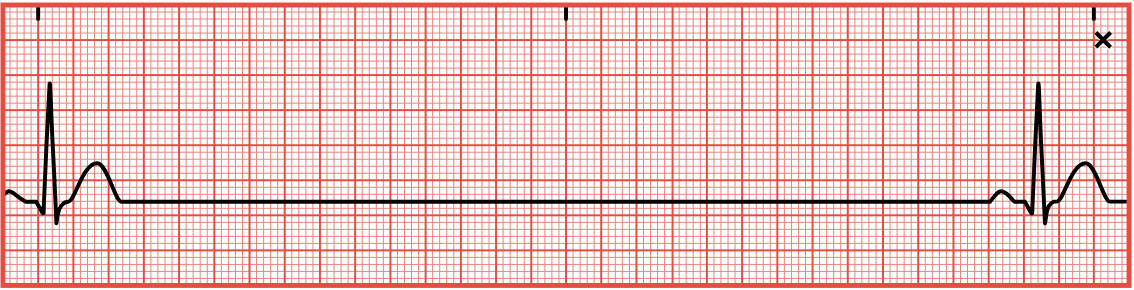
What is sinus arrest?
100
In this atrial arrhythmia, a single area of atrial tissue fires rapidly, producing multiple p waves for each QRS complex.
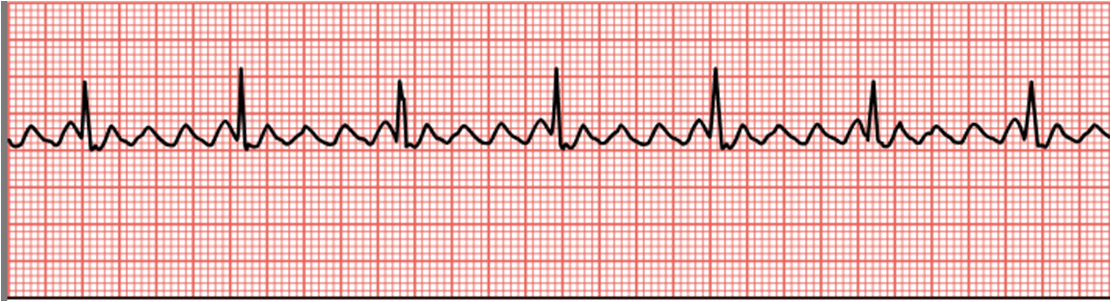
What is atrial flutter?
100
This rectangular mark at the beginning of an EKG tracing verifies the machine’s calibration of 10 mm high and 5 mm wide at standard settings.
What is the calibration marker?
100
Which lead should an EKG technician observe to help verify correct limb electrode placement, expecting a positive deflection?
What is lead I?
200
An EKG technician would measure this interval to determine the regularity of atrial depolarization.
What is the P-P interval?
200
This sinus rhythm has a slightly irregular pattern associated with normal breathing.
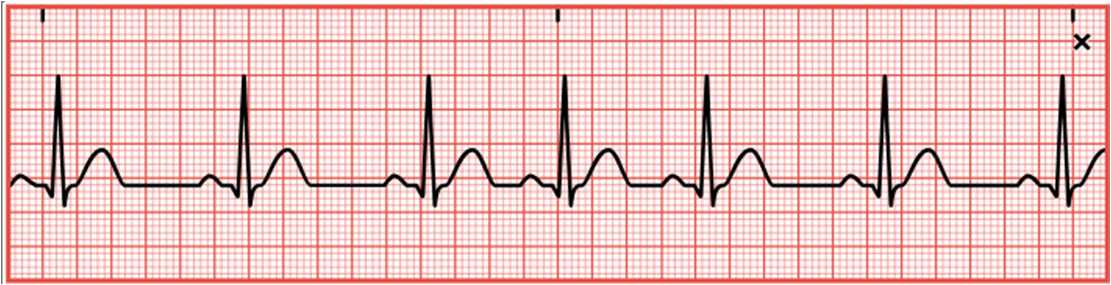
What is sinus dysrythmia/ arrythmia?
200
This premature heartbeat originates near the AV junction and may cause an irregular rhythm. On the EKG tracing, the P wave may appear before or after the QRS complex or be hidden within it.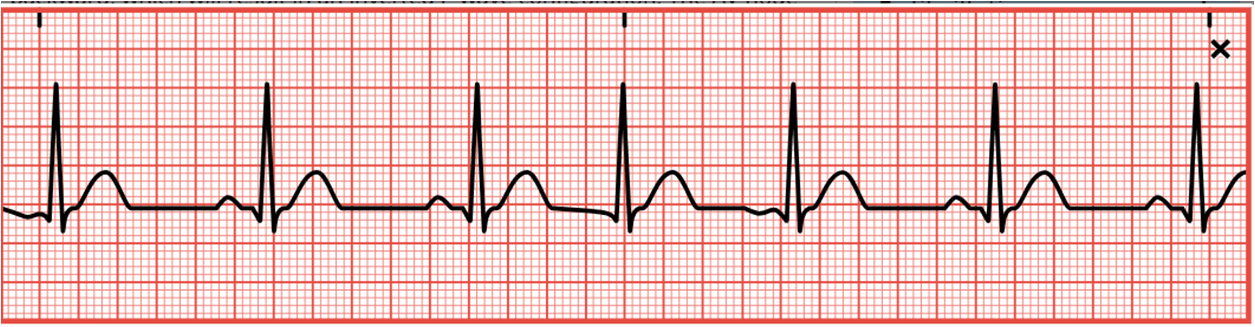
What is a premature junctional complex (PJC)?
200
This function needs to be decreased if the QRS complexes are too tall to fit on the EKG paper.
What is the gain/amplitude/voltage?
200
When performing an EKG on a patient with a left below-knee amputation, where should the EKG technician place the left leg electrode?
What is the left thigh or left lower abdomen?
300
This EKG interval extends from the Q wave to the end of the T wave, representing the total time for ventricular depolarization and repolarization.
What is the QT interval?
300
When analyzing an EKG strip for SA node arrhythmias, which waveform should the technician focus on?
What is the P wave?
300
This junctional rhythm has a heart rate of 60–100 beats/min, faster than a junctional escape rhythm, and patients are less likely to show signs of decreased cardiac output.
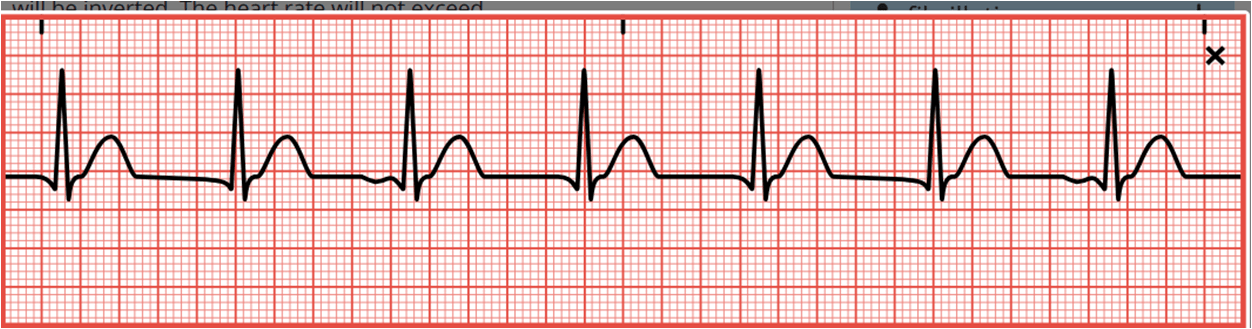
What is an accelerated junctional rhythm?
300
This is the standard amplitude (gain or voltage calibration) used to record a 12-lead EKG.
What is 10 mm/mV?
300
This anatomical landmark is located first when identifying the correct placement of the precordial or V leads.
What is the angle of Louis or sternal angle?
400
This term describes an upward waveform movement below the isoelectric line on an EKG tracing.
What is a positive deflection?
400
This sinus rhythm has a heart rate greater than 100 beats/min and may occur normally during exercise.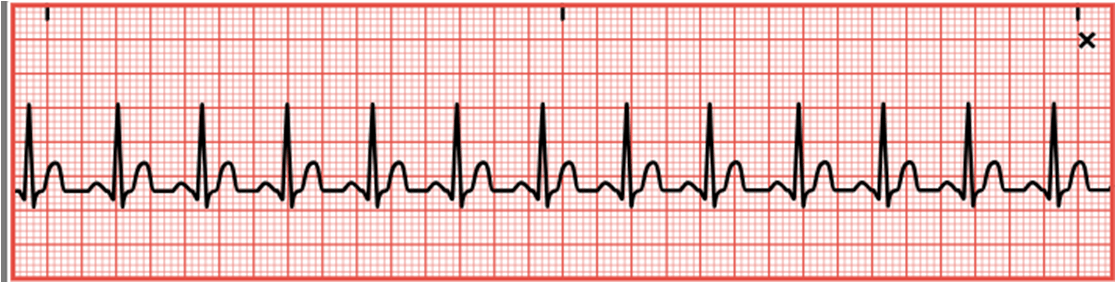
What is sinus tachycardia?
400
In this arrhythmia, the atria quiver instead of contracting effectively, increasing the risk of blood clot formation and stroke.
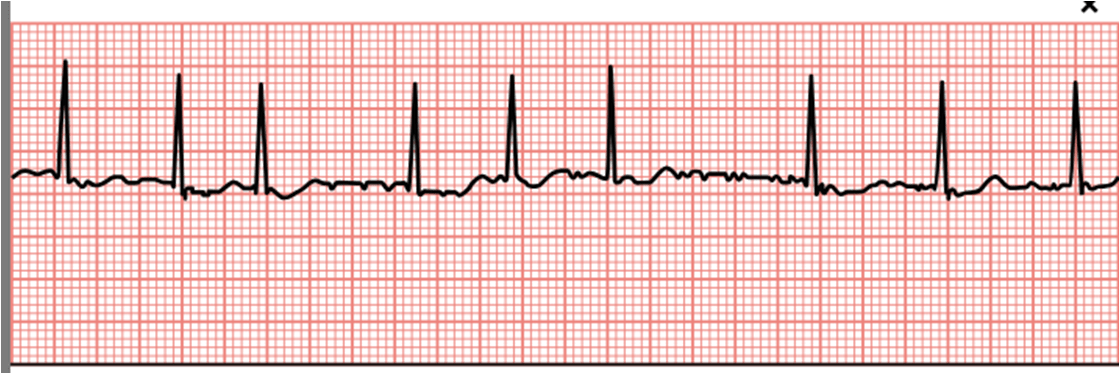
What is atrial fibrillation?
400
An EKG technician should recognize that a rhythm strip must be at least this many seconds long to help accurately identify heart rate and rhythm.
What is 6 seconds?
400
This precordial lead is placed in the fifth intercostal space at the midclavicular line.
What is V4?
500
An EKG technician measure this interval to determine the regularity of ventricular depolarization.
What is the R-R interval?
500
This sinus rhythm has a heart rate below 60 beats/min and may be a normal finding in well-conditioned athletes.
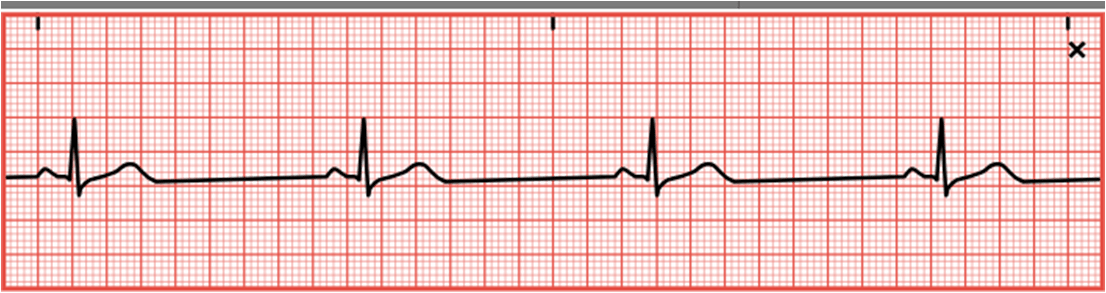
What is sinus bradycardia?
500
This rhythm occurs when the AV junction takes over as the heart’s backup pacemaker, producing a heart rate of 40–60 beats/min and absent or inverted P waves.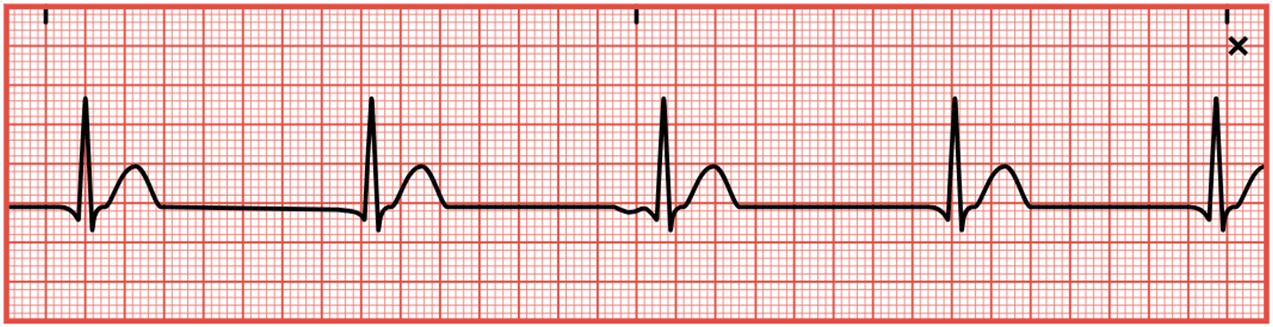
What is a junctional escape rhythm?
500
How much time does each small horizontal square on standard EKG paper represent?
What is 0.04 seconds?
500
Which precordial/chest lead is placed at the fourth intercostal space, just to the right of the sternum, in an adult?
What is lead V1?