Nutrition & Health
& Food Choices
& Food Choices
What are factors that impact one's FOOD CHOICES.
The visual representation of the US Dietary Guidelines.
What is MY PLATE?
This dietary component helps maintain blood sugar (among other benefits) and is recommended to be 25 grams for women & 38 grams for men...
What is FIBER?
What kind of vitamins are A, D, E, and K?
What are FAT SOLUBLE vitamins?
Compared to home meals, the average trip to a fast food restaurant has about __(How Many?)_ extra calories?
What is 300?
The number of calories in one gram of fat.
What is 9 calories?
The primarily physiological drive to find and eat food.
What is HUNGER
The ratio derived by dividing a food’s nutrient content by its calorie content. When the food’s overall nutrient contribution exceeds its contribution to our calorie needs, the food is considered to have a favorable nutrient density.
What is NUTRIENT DENSITY
According to the Food and Nutrition Board, the acceptable macronutrient distribution range (AMDR) for TOTAL FAT in one's diet.
What is 20% to 35%?
A lack of this mineral raises the risk of osteoporosis.
What is CALCIUM?
Thinkin of one's dietary requirements, as folks get older their ______ needs decrease and their ________ needs increase. [You need to get both correct]
What is their calorie needs decrease but their nutrient needs increase?
The top carbohydrate source for US Adults?
What is sugar-sweetened beverages?
This disease is considered the second leading cause of preventable death in North America.
What is OBESITY?
Failing health that results from chronic dietary patterns that do not coincide with nutritional needs.
What is malnutrition?
The amino acids that cannot be synthesized by humans in sufficient amounts or at all and therefore must be included in the diet.
What are essential amino acids?
Substances found in foods that are not nutrients but have health benefits.
What are PHYTOCHEMICALS?
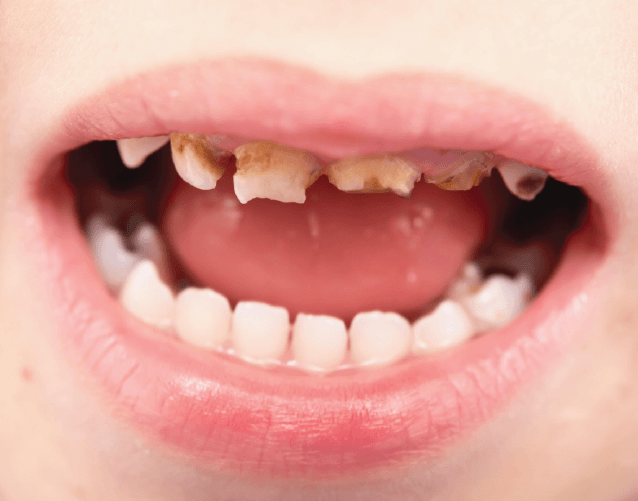
Tooth decay that results from formula or juice (and even human milk) bathing the teeth as the child sleeps with a bottle in the mouth. The upper teeth are mostly affected as the lower teeth are protected by the tongue; formerly called nursing bottle syndrome and baby bottle tooth decay.
The state in which energy intake is less than energy expended, resulting in weight loss.
What is NEGATIVE ENERGY BALANCE?
The energy needed to raise the temperature of 1 gram of water through 1 °C
What is a calorie or kilocalorie?
Height, weight, skinfold thickness, and arm muscle circumference are all parts of this component of nutritional assessment.
What is ANTHROPOMETRIC Assessment?
A protein-digesting enzyme produced by the stomach.
What is PEPSIN?
Maximum amount of sodium one should consume each day. Not a goal but no more than this amount.
What is 2,300 milligrams?
Condition of inadequate growth during infancy or early childhood caused by insufficient nutritional intake, inefficient nutrient absorption, or excessive energy expenditure; commonly defined as weight-for-age below the 5th percentile on multiple occasions or weight declining 2 or more major percentile lines on a standardized growth chart.
What is failure to thrive?
Drinking sufficient alcohol within a 2-hour period to increase blood alcohol content to 0.08% or higher; for men, consuming 5 or more drinks in a row; for women, consuming 4 or more drinks in a row.
What is binge drinking?
What does this graphic represent?
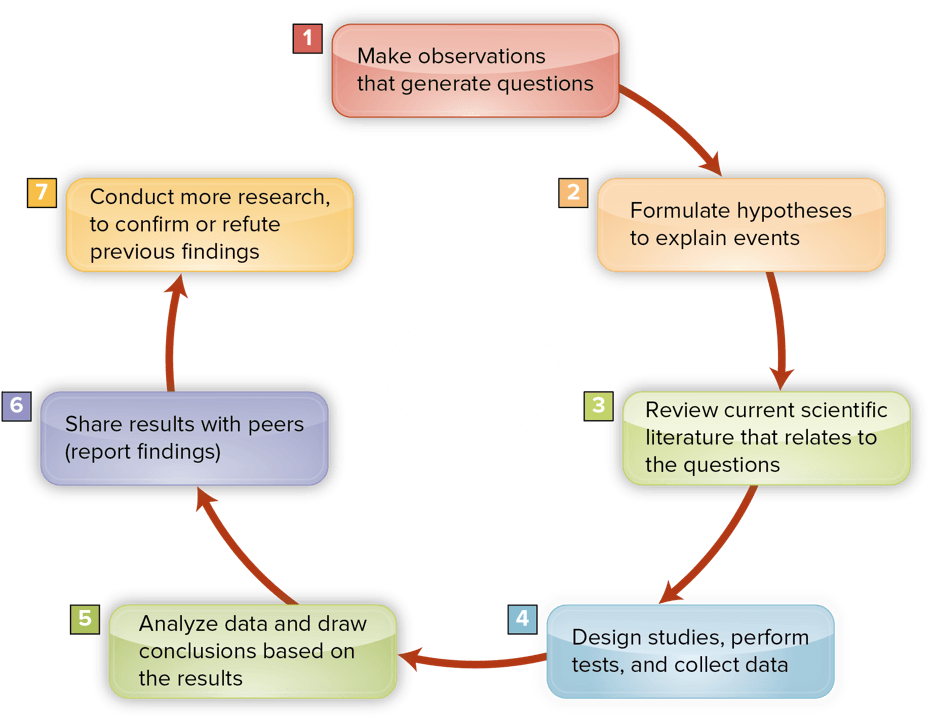
What is the scientific method?
Quantity (expressed in percentage) of a specific nutrient that corresponds to the total percentage of the daily requirements for a particular nutrient based on a 2000 kcal diet.
What is the DV (Daily Value)?
The TWO Fatty acids that must be supplied by the diet to maintain health. Currently, only linoleic acid and alpha-linolenic acid are classified as essential.
What are LINOLEIC (Omega-6) and Alpha-LINOLENIC (Omega-3) Fatty Acids?
This comprises 50% to 70% of the human body and is the primary medium for chemical reactions,
What is water?
The number of extra calories that a pregnant woman should consumer daily during the second and third trimesters.
What is 350 to 450 calories per day?
The amount of calories the body uses when the person has not eaten in 4 hours and is resting (e.g., 15 to 30 minutes) and awake in a warm, quiet environment. It is usually slightly higher (10%) than basal metabolism due to the less strict criteria for the test; often referred to as resting metabolic rate (RMR).
What is RESTING METABOLIC RATE?