Robo/Energy
Laparoscopy
Pharm
Rando
Review
100
You are performing a robotic laparoscopic paraesophageal hernia repair when the anesthesiologist alerts you that the patient’s oxygen requirements have abruptly increased. In addition, there is new-onset tachycardia and hypotension. What is the best next step?
A. Immediately stop the procedure, deflate the abdomen, and treat as a presumptive capnothorax.
B. Immediately stop the procedure, deflate the abdomen, and place the patient in the right lateral decubitus position.
C. Continue the procedure, and ask the circulating nurse to lower the abdominal pressure to 10 mm Hg.
D. Undock the robot and place the patient in the Trendelenburg position.
CORRECT. The answer is A.
While undergoing a robotic-assisted laparoscopic paraesophageal hernia repair, this patient likely has suffered from presumed capnothorax. The best next course of action is to stop the procedure, deflate the abdomen, and treat as a capnothorax.
When treating an air embolus, you would place the patient in a left lateral decubitus position, not right lateral. This patient probably does not have an air embolus based on the likely risks associated with the procedure.
Lowering the abdominal pressure is reasonable considering the natural compression of the inferior vena cava causing hypotension, but this is accompanied by tachycardia and increasing respiratory requirements, which points to a likely capnothorax.
Placing the patient in the Trendelenburg position may be a temporary treatment for hypotension secondary to presumed hypovolemia, but this patient likely has a capnothorax.
100
These are the cardiovascular and respiratory effects of pneumoperitoneum
Increase afterload
Decreased preload
Decreased cardiac output
Decreased FRC
100
Benzodiazepine overdose is treated with this
Flumazenil - inhibits benzo receptor site.
(0.2mg IV w/ repeat doses up to 3mg)
100
A 44-year-old construction worker is referred to you with symptoms of difficulty swallowing solids and liquids as well as a sensation of food sticking at the xiphoid. He has lost 3 pounds over the past 3 weeks. His BMI is 27.5 kg/m2, and he smokes one pack of cigarettes daily. Physical examination is normal except for a small epigastric hernia.
What is the most appropriate and cost-effective study to begin with for your workup?
Contrast esophagram
Dysphagia should always prompt a diagnostic workup. The most appropriate and cost-effective first study to obtain is a contrast esophagram.
Based on those findings may also end up ordering:
- Esophageal Manometry
- Fiberoptic endoscopic evaluation of swallowing, or FEES
- 24-hour pH monitoring
100
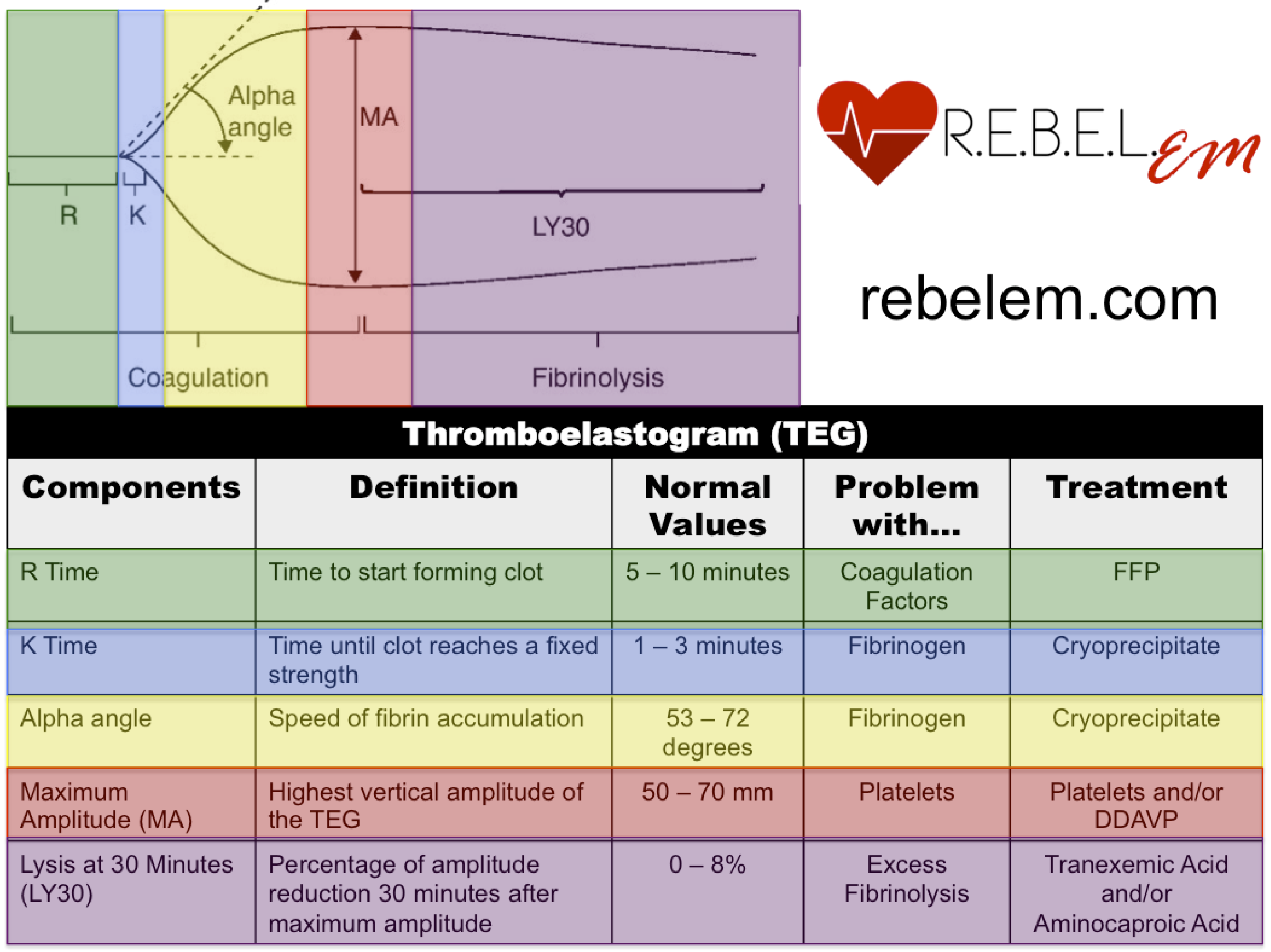
Patients with prolonged K or Alpha Angle on TEG need this.
200
An 81-year-old woman with a history of chronic obstructive pulmonary disease, HTN, uterine fibroids requiring hysterectomy, and multiple episodes of sigmoid diverticulitis is undergoing outpatient workup for elective robotic sigmoidectomy. She then presents to the ED with 10/10 abdominal pain, nausea, and vomiting. She is febrile to 39 ºC, tachycardic to 114 beats/min, and has a BP of 90/62 mm Hg. A CT scan shows pneumoperitoneum and fat stranding around the sigmoid colon. She is started on vasopressors. Surgical management is required.
What about her situation is an absolute contraindication to robotic surgery?
Need for pressors.
200
This setting on a monopolar device has the highest voltage
Cut - lowest voltage, transfers the least amount of energy.
Coagulation: highest voltage, transfers the greatest amount of energy.
Higher-voltage cautery has a potential for increased risk of interference with pacemakers, capacitance, and antenna coupling. A higher power setting also leads to increased energy transfer.
200
A 55-year-old patient underwent an orthotopic liver transplant 2 weeks ago for hepatitis B cirrhosis. Overnight, she has an acute change in mental status that is suggestive of tacrolimus-related neurotoxicity. What alternate immunosuppressant that acts via a similar mechanism could be considered for this patient?
A. Sirolimus
B. Cyclosporine
C. Mycophenolate mofetil
D. Steroids
B. Cyclosporine
There are several families of immunosuppressive agents, but calcineurin inhibitors are one of the most common and include cyclosporine and tacrolimus. Cyclosporine binds the immunophilin cyclophilin to inhibit calcineurin, whereas tacrolimus binds the immunophilin FKBP12. Because of their slightly different mechanism of T-cell suppression, these medications have different side-effect profiles, with cyclosporine having less neurotoxicity than tacrolimus.
Unlike cyclosporine, sirolimus blocks the second phase of T-cell activation by interfering with signals from cytokines and growth factors, such as IL-2.
Mycophenolate mofetil inhibits 5'-monophosphate dehydrogenase, the rate-limiting enzyme for guanine nucleotide synthesis, leading to inhibition of T-cell and B-cell proliferation. It can be used as an adjunct to liver transplant immunosuppression, but its mechanism of action is different than tacrolimus.
Steroids are broad immunosuppressants with multiple downstream targets, and they are not in the same class of medications as cyclosporine and tacrolimus.
Tacrolimus = nephro and neuro tox
Mycophenolate Mofetil = GI side effects
Sirolimus = impaired wound healing
Cyclosporine= seizures and arrhythmias
200
This is the most common anterior mediastinum tumor.
Thymoma- Can be seen with autoimmunie disease such as MG, Pure red cell aplasia. Do not biopsy for fear of seeding. Resect via midline sternotomy.
200
This is the free water deficit for a 50kg F with a Na of 160
Female = FWD = W x 0.5 (current na -140/140) -
50 x0.5 (160-140/140)
25 (20/14) = 3.5 L
Male is the same but 0.6.
300
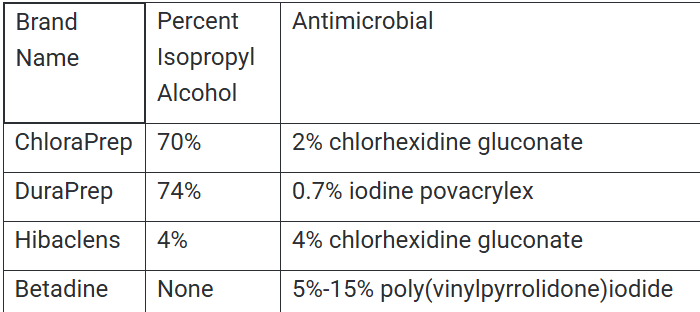
What prep should be used when doing a tracheostomy or trauma ex-lap, and why?
Betadine
Betadine is a skin “prep” solution that does not contain alcohol and does not require a drying time prior to surgery. In a hemodynamically unstable patient who cannot safely wait for skin “prep” drying time, this is the “prep” solution of choice. The other options either require drying time to reduce OR fire risk (which may delay life-saving treatment) or are not as effective of skin-cleaning solutions.
300
On a patient who is otherwise healthy besides significant HTN, during an open splenectomy, you are using an ultrasonic energy delivery device (harmonic scalpel) to dissect and skeletonize the splenic artery. You note that the vessel appears larger than expected, and you estimate the size to be about 8 mm. The vessel is divided and the operation completed. Early in the evening, the patient has hypertensive urgency during a pain crisis and later becomes hypotensive and tachycardic. Imaging confirms extravasation from the splenic artery stump. Which of the following techniques for division is the most likely to lead to poor hemostasis of this vessel?
A. Suture ligation
B. Linear stapling
C. Surgical clip ligation
D. Ultrasonic energy delivery (harmonic scalpel)
CORRECT. The answer is D.
Ultrasonic energy delivery devices are designed to seal vessels reliably up to 3- to 5-mm in diameter (with newer instruments working up to 7 mm). This patient’s bleeding complication is likely the result of using a device outside of the manufacturer’s recommended specifications. Suture ligation, clip ligation, and stapling are all accepted mechanisms for dividing a vessel of 8 mm in size.
300
This drug should be part of the regimen to treat nearly all patients with invasive aspergillosis
Voriconazole
300
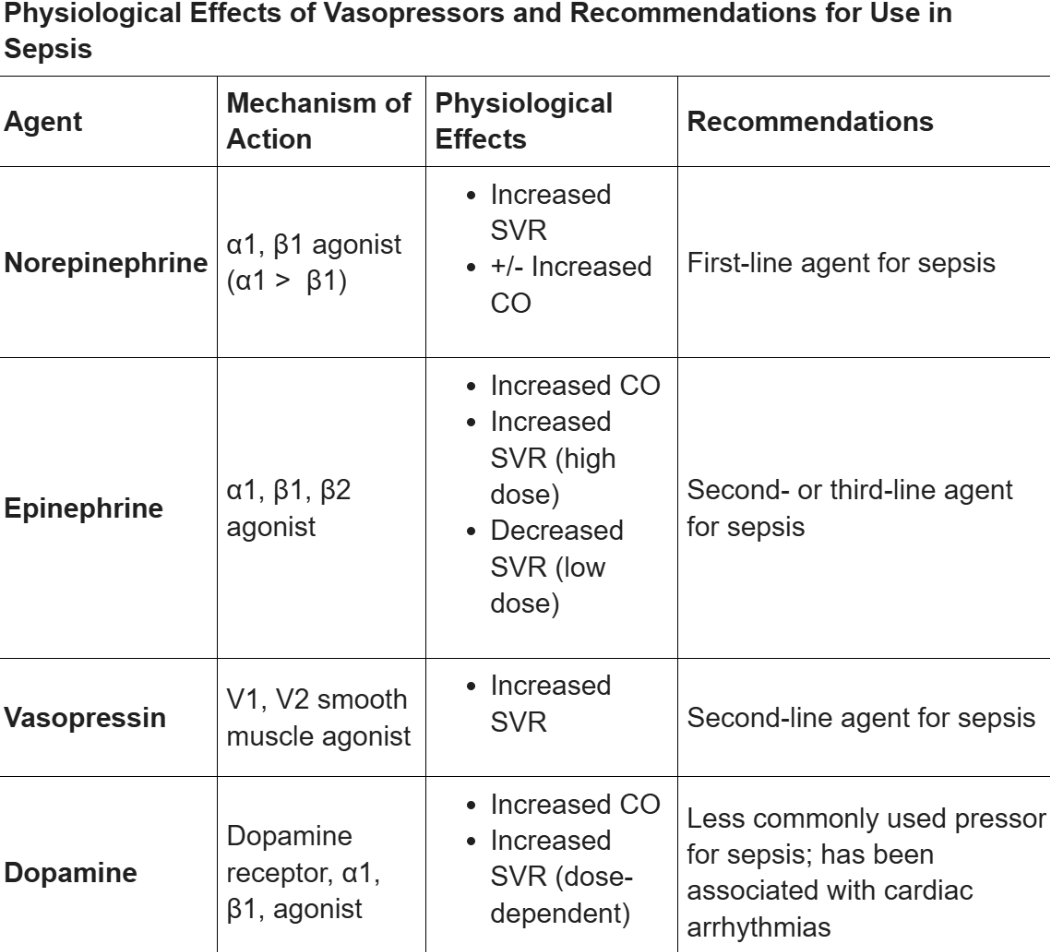
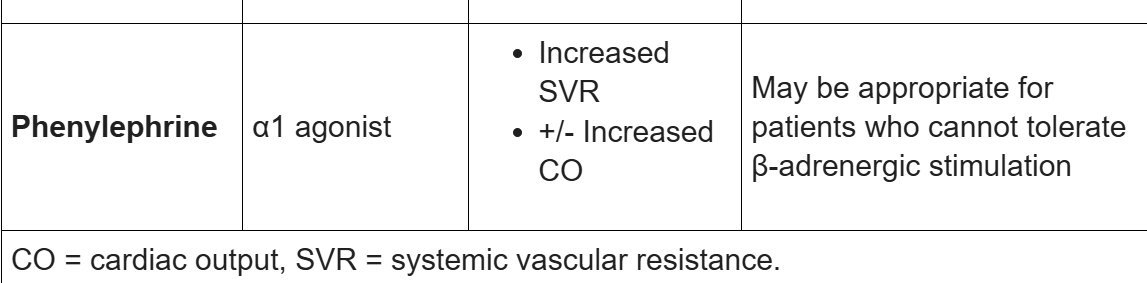
What pressor is a sympathomimetic agent primarily with alpha1-adrenergic effects but also some beta1-adrenergic action, providing both peripheral vasoconstriction and modest inotropic support?
300
Which of the following conditions demonstrates the clinical and lab abnormalities seen with contrast-induced nephropathy?
A. Normal Urine Output, over 25% increase in Cr above baseline, FeNA <1%, Granular brown casts on UA, mild proteinuria
B. Normal Urine Output, over 20% increase in Cr above baseline, FeNa <1%, normal UA
C. Oligouria, over 25% increase in Cr above baseline, Normal UA
D. Oligouria, over 25% increase in Cr above baseline, FeNa >1%, hyaline casts, mild proteinuria
E. C. Oligouria, over 50% increase in Cr above baseline, FeNa >1%, Granular brown casts on UA, mild proteinuria
CIN - Parenchymal form of AKI. Uniquely, preseants with FeNa less than 1%. The Cr level will be greater than 25% above baseline and peaks 3-5 days after exposure. UA will show granular brown casts and mild proteinuria. Not typically presenting with oliguria.
400
A patient is undergoing laparoscopic cholecystectomy using an ultrasound energy delivery device (harmonic scalpel). The cystic artery is inadvertently avulsed. To achieve hemostasis, the surgeon repeatedly “grabs” near the proximal stump of the vessel with multiple applications of the energy device. Once hemostasis is achieved, the surgeon immediately starts using the energy device to bluntly sweep away the adjacent duodenum. Five days later the patient returns to the ED with severe upper abdominal pain, tachycardia, and hypotension. Imaging demonstrates free fluid and air near the gallbladder fossa, and the patient has diffuse rebound tenderness. What is the likely mechanism of this patient’s injury?
A. Insulation defect on the energy delivery device
B. Antennae coupling
C. Residual heat injury
D. Capacitive coupling
E. Direct coupling
C. Residual heat injury
Although ultrasound energy delivery devices are much less likely to unintentionally deliver stray energy in the form of antennae coupling, insulation failure, capacitive coupling or direct radiofrequency energy, the device tips can become quite hot after repeated use and can lead to direct thermal injury due to residual heat. With repeated use, the device tips should never be allowed to touch adjacent structures, and one should consider pausing to allow for cooling of the tips.
Antennae coupling is the unintentional transfer of energy to nonactive wires adjacent to monopolar cautery wires that can lead to burns.
Capacitive coupling typically occurs with monopolar energy devices. This energy transfer occurs through intact insulation when an insulated portion of the instrument is in contact with nearby tissue. Insulation failure allows for energy to be delivered via defects in insulation unintentionally.
Direct coupling is the transfer of energy between a monopolar device and another metallic device via contact. Energy can affect any tissues in contact with this noninsulated instrument.
400
A 47-year-old woman undergoes elective laparoscopic cholecystectomy under general anesthesia with controlled ventilation. Shortly after CO₂ insufflation is initiated to establish pneumoperitoneum, the anesthesiologist notes a sudden decrease in end-tidal CO₂ from 36 to 17 mm Hg. This is immediately followed by hypotension (blood pressure falls from 120/72 to 70/40 mm Hg), sinus tachycardia to 132 beats/min, and a drop in SpO₂ from 99% to 86%. Auscultation reveals a churning, "mill-wheel" murmur over the precordium. The surgeon reports that the Veress needle was placed just before insufflation.
Which of the following is the most appropriate immediate next step in management?
A. Increase the insufflation pressure to improve visualization and complete the case quickly
B. Immediately stop CO₂ insufflation and desufflate the abdomen, place the patient head-down in the left lateral decubitus position, and ventilate with 100% oxygen
C. Immediately stop CO₂ insufflation and desufflate the abdomen, and place the patient in reverse Trendelenburg (head-up) position to improve venous return
D. Obtain a stat CT of the abdomen to confirm intravascular gas before intervening
This is a classic presentation of CO₂ (gas) embolism during laparoscopy, a rare but potentially fatal complication caused by direct insufflation of CO₂ into a vein or solid organ, typically from misplacement of the Veress needle or trocar. The temporal link between insufflation and abrupt deterioration is the key diagnostic clue. The sudden fall in ETCO₂ (from increased alveolar dead space as gas obstructs the pulmonary circulation) is the most sensitive routinely available intraoperative sign, and mill-wheel murmur (splashing sound), hypotension, tachycardia, and hypoxemia complete the picture.
Correct management is immediate and simultaneous, aimed at stopping further gas entry and reducing existing gas load:
Stop CO₂ insufflation and release the pneumoperitoneum.
Position head-down in the left lateral decubitus position to trap gas in the right ventricular apex and away from the RV outflow tract.
Ventilate with 100% oxygen and hyperventilate to aid CO₂ elimination.
Provide hemodynamic support; if a central venous catheter is present, attempt aspiration of gas from the right atrium/RV. For massive embolism, consider cardiopulmonary bypass, and consider hyperbaric therapy after stabilization.
Once stabilized, pneumoperitoneum may be cautiously reestablished, but conversion to an open procedure is warranted if cardiopulmonary instability persists
400
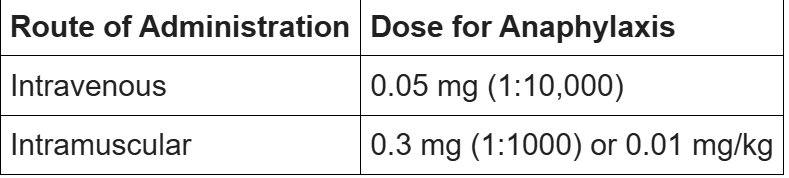
This is the dose and concentration of epinephrine to be given IV during anaphylaxis
400
This is the first-line treatment for retroperitoneal fibrosis.
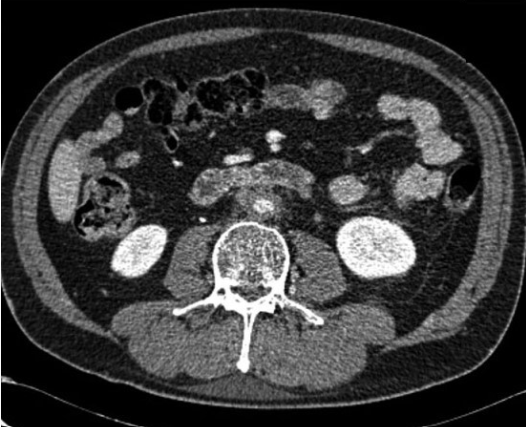
1st: High-dose glucocorticoids.
RPF:
- Low back/abd/flank pain, decreased GFR due to hydronephrosis
- Images: confluent RP mass with homogeneous attenuation similar to muscle, encases the ant/lat side of the aorta, encircles/compresses the IVC, often causes medial deviation of the ureters.
- Histo - Type 1 collagen fibers organized in thick irregular bundles that surround small RP vessels, hyaline rings surrounding vessels and nerves.
400
A 46-year-old male with PMHx of HIV, HTN, asthma, and GERD presents with abd pain and what appears to be early appendicitis on CT. They are HDS, Afebrile, with no leukocytosis, and ask if this can be managed non-operatively.
What do you tell him?
If appendicitis is suspected, an operation should not be delayed because perforation can be devastating in immunocompromised patients.
500
A 54-year-old patient with recurrent sigmoid diverticulitis is undergoing an elective laparoscopic sigmoid resection. Using an ultrasonic energy source (harmonic scalpel), the left colon is mobilized from lateral to medial. The inferior mesenteric artery and inferior mesenteric vein are isolated, coagulated, and transected using the harmonic scalpel. In this patient, which of the following is an advantage of using an ultrasonic energy source?
A. Rapid cycling of the active blade in the coagulating mode (minimal), resulting in more precise cutting of tissue and less thermal spread but minimal hemostasis
B. Slow cycling of the active blade in the cutting mode (maximal), resulting in less precise cutting of tissue, but more thermal spread and hemostasis
C. Hemostasis and division of unsupported vascular tissues up to 10 mm in diameter using the coagulating mode
D. Minimal thermal injury, which occurs as a function of the energy type and mechanics of the ultrasonic shears
E. Hemostasis as a result of tissue sticking, which occurs because of the higher heat generated at the blade-tissue interface
D. Minimal thermal injury, which occurs as a function of the energy type and mechanics of the ultrasonic shears
This is correct because ultrasonic shears use both compression and friction to efficiently deliver mechanical energy to target tissues. This results in a predictable pattern of thermal destruction that can be used for coagulation and cutting. The cutting mode (maximal) generates rapid cycling of the active blade resulting in more precise cutting of tissue and less thermal spread but minimal hemostasis. The coagulating mode (minimal) generates slow cycling of the active blade resulting in less precise cutting of tissue but more thermal spread and hemostasis.
500
You have just dissected the gallbladder from the liver during a routine laparoscopic cholecystectomy using the hook cautery. You notice a few stray cautery burns on the liver a centimeter or two from the gallbladder fossa. What is the most likely cause of this?
A. Direct coupling
B. Disruption of the grounding pad
C. Capacitive coupling
D. Insulation failure
E. Electrosurgery unit failure
D.
The insulation on a hook cautery is at risk near the tip, especially if cleaned too rigorously (ie, with a scratch pad). Also, most insulation breaks occur in the distal third, and this would be seen as stray marks close to the operative field.
If this were capacitive coupling, the charge would be dispersed through one of the other instruments which would likely result with burns marks on the gallbladder itself, similar with direct coupling.
Disruption of the grounding pad and electrosurgery unit failure would result in the circuit being broken and no electrocautery.
500
Which of the following is the mechanism of elimination for succinylcholine?
A. Hofmann Degradation
B. Pseudocholinesterase
C. Cytochrome P450
D. Renal excretion
E. Hepatic metabolism
Succinylcholine is a depolarizing neuromuscular blocker, so it mimics ACh by binding to receptors at the end of the motor end plate and causing depolarization of the muscle. It is degraded by plasma pseudocholinesterase. Patients with deficiencies in this enzyme may experience prolonged effects.
500
A 68-year-old woman presents 14 months after orthotopic liver transplant with 3 days of left cheek pain and pain on eye movement. She has been maintained on tacrolimus, mycophenolate, prednisone, and trimethoprim-sulfamethoxazole. Maxillofacial computed tomography shows an opacified left maxillary sinus. Sinus endoscopy reveals necrotic, black mucosa. Grocott methenamine silver (GMS) stain of a sinus biopsy shows nonseptated hyphae with broad branching angles. What should the initial treatment be for this condition?
A. Intravenous itraconazole and weekly sinus biopsy
B. Intravenous lipid amphotericin
B and aggressive sinus debridement
C. Intravenous posiconazole and repeat weekly sinus endoscopy
D. Intravenous caspofungin and aggressive sinus debridement
E. Intravenous voriconazole and repeat weekly sinus endoscopy
B. Intravenous lipid amphotericin B and aggressive sinus debridement
This patient has an invasive, destructive, highly lethal fungal sinus infection with Mucor. On GMS staining, Aspergillus shows septated hyphae with narrow branching angles. In contrast, Mucor shows nonseptated hyphae with broad, branching angles. Treatment is lipid amphotericin B combined with aggressive surgical debridement of all infected tissue.
Itraconazole is often used as fungal prophylaxis but is not effective against Mucor. Posiconazole may be used later for stepdown treatment. Caspofungin alone is not effective; it may be combined with other antifungals. Voriconazole is not effective against Mucor.
500
You are scheduling a patient for lap chole. He is on warfarin for Afib and has a CHADS2 of 2. How should his AC be managed preoperatively?
He is low-risk CHADS-VASc 0-2 = discontinue 5 days before surgery with no bridge.
CHADS-VASc 3-4 = mod risk, consider bridging.
CHADS-VASc 5-6 high risk = Bridge
BRIDGE RCT - pts with AFib who need temp interruption of warfarin for an elective procedure can forgo bridging. This was non-inferior to bridging with LMWH for DVT ppx and was superior, with a decreased risk of major bleeding.