ABGs
Autonomic Dysreflexia
Pharmacology
Pulmonary Embolism
EKG
100
Mrs. Johansson, who had undergone surgery in the post-anesthesia care unit (PACU), is difficult to arouse two hours following surgery. Nurse Florence in the PACU has been administering Morphine Sulfate intravenously to the client for complaints of post-surgical pain. The client’s respiratory rate is 7 per minute and demonstrates shallow breathing. The patient does not respond to any stimuli. The nurse assesses the ABCs (remember Airway, Breathing, Circulation!) and obtains ABGs STAT! Measurement of arterial blood gas shows pH 7.10, PaCO2 70 mm Hg, and HCO3 24 mEq/L. What does this mean?
Respiratory Acidosis, Uncompensated
100
Which patient below is at MOST risk for developing a condition called autonomic dysreflexia?
A. A 24-year-old male patient with a traumatic brain injury.
B. A 15-year-old female patient with a spinal cord injury at C7.
C. A 35-year-old male patient with a spinal cord injury at L6.
D. A 42-year-old male patient recovering from a hemorrhagic stroke.
B. A 15-year-old female patient with a spinal cord injury at C7.
Patients who are at MOST risk for developing autonomic dysreflexia are patients who’ve experienced a spinal cord injury at T6 or higher…this includes C7. L6 is below T6, and traumatic brain injury and hemorrhagic stroke does not increase a patient risk of AD.
100
The nurse is preparing to administer cefazolin to a client. Which of the following findings would require follow-up prior to administering the medication?
1. History of anaphylaxis from ampicillin.
2. History of asthma during childhood.
3. Temperature of 102.5° F (39.2° C).
4. Heart rate of 120/min.
1. History of anaphylaxis from ampicillin.
100
A nurse is caring for a patient who suddenly develops shortness of breath, chest pain, and tachycardia. The nurse suspects a pulmonary embolism (PE). Which action should the nurse take first?
A. Administer oxygen via nasal cannula
B. Notify the healthcare provider
C. Start an IV line for anticoagulant therapy
D. Place the patient in high-Fowler’s position
A. Administer Oxygen via Nasal Cannula
*The priority is to improve oxygenation and prevent hypoxemia due to impaired gas exchange.
100
What Rhythm is this?
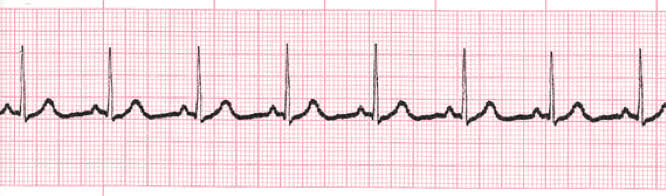
Normal Sinus Rhythm (NSR)
200
A patient's arterial blood gas measurements read pH = 7.32, PaCO₂ = 40 mmHg, and HCO₃ = 16 mEq/L. How would you interpret this?
UNCOMPENSATED METABOLIC ACIDOSIS
200
What is the BEST position for a patient experiencing autonomic dysreflexia?
High Fowler’s with legs lowered
200
The nurse is caring for a client with a new mechanical heart valve. The nurse should expect that the client will be prescribed.
Warfarin
200
A patient with a pulmonary embolism is prescribed heparin therapy. Which lab value should the nurse monitor to evaluate the effectiveness of this medication?
aPTT
**Activated partial thromboplastin time evaluates the effectiveness of heparin therapy. Therapeutic range is typically 1.5–2.5× the control.
200
What are you calling for this patient based on their ECG?
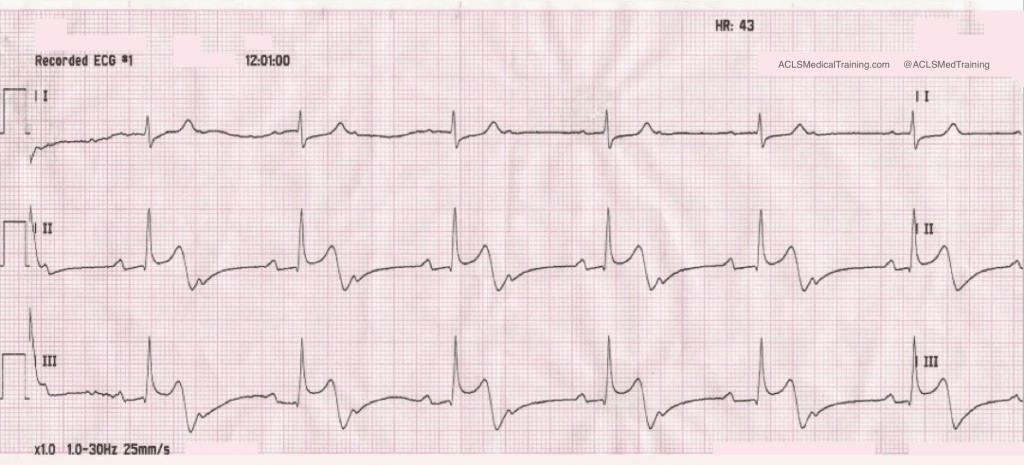
Stemi Alert
300
A patient's arterial blood gas measurements read pH = 7.48, PaCO₂ = 31 mmHg, and HCO₃ = 20 mEq/L. How would you interpret this?
PARTIALLY COMPENSATED RESPIRATORY ALKALOSIS
300
True or False: Autonomic dysreflexia causes a slow heart rate and severe hypertension.
True
300
The physician orders Nitropaste for a patient who has developed autonomic dysreflexia. Which finding would require the nurse to hold the ordered dose of Nitropaste and notify the physician?*
A. The patient’s blood pressure is 130/80.
B. The patient reports a throbbing headache.
C. The patient’s lower extremities are pale and cool.
D. The patient states they took Sildenafil 12 hours ago.
D. The patient states they took Sildenafil 12 hours ago.
A patient should not receive a dose of Nitropaste if they have taken a phosphodiesterase inhibitor within the past 24 hours (Sildenafil or Tadalafil). This will cause major vasodilation and severe hypotension that will not respond to medication. Another medication should be used. All the other findings are expected with autonomic dysreflexia.
300
The nurse suspects a patient has developed a pulmonary embolism. Which action should the nurse take immediately?
A. Prepare the patient for chest physiotherapy
B. Start an IV line and prepare to administer anticoagulants
C. Obtain a sputum specimen for culture
D. Place the patient in Trendelenburg position
B. Start an IV line and prepare to administer anticoagulants
300
What are your next steps for a patient with this rhythm and no pulse?
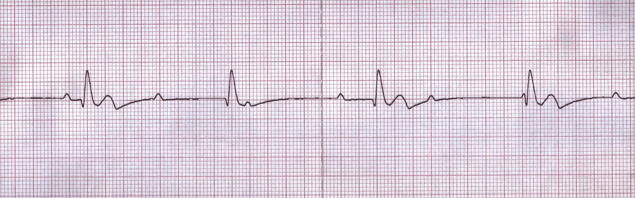
CPR; Start Compressions
400
Baby Angela was rushed to the Emergency Room following her mother’s complaint that the infant has been irritable, difficult to breastfeed, and has had diarrhea for the past 3 days. The infant’s respiratory rate is elevated and the fontanels are sunken. The Emergency Room physician orders ABGs after assessing the ABCs. The results from the ABG results show pH 7.39, PaCO2 27 mmHg, and HCO3 19 mEq/L. What does this mean?
Metabolic Acidosis, Fully Compensated
400
After taking all the necessary steps for a patient who has developed autonomic dysreflexia, what should the nurse assess FIRST as a possible cause of this condition?
Possible bladder irritant
Anything that can cause an irritating stimulus below the site of the spinal injury (T6 or higher) can lead to autonomic dysreflexia, which causes an exaggerated sympathetic reflex response and the parasympathetic system is unable to oppose it. This will lead to severe hypertension. The most common cause of AD is a bladder issue (full/distended bladder, urinary tract infection etc). Other common causes are due to a bowel issue like fecal impaction or skin break down (pressure injury/ulcer, cut, infection etc.).
400
What is a primary adverse effect of excessive central nervous system depression from phenytoin toxicity?
Nystagmus, ataxia (staggering gait), sedation, and cognitive impairment.
400
The nurse is preparing to assist with the insertion of a vena cava filter in a patient with recurrent pulmonary emboli. What is the primary purpose of this procedure?
A. To dissolve existing clots in the lungs
B. To prevent additional emboli from reaching the lungs
C. To increase oxygen exchange in the alveoli
D. To improve circulation to the lower extremities
B. To prevent additional emboli from reaching the lungs
**The inferior vena cava (IVC) filter traps emboli from the lower extremities before they can travel to the lungs
400
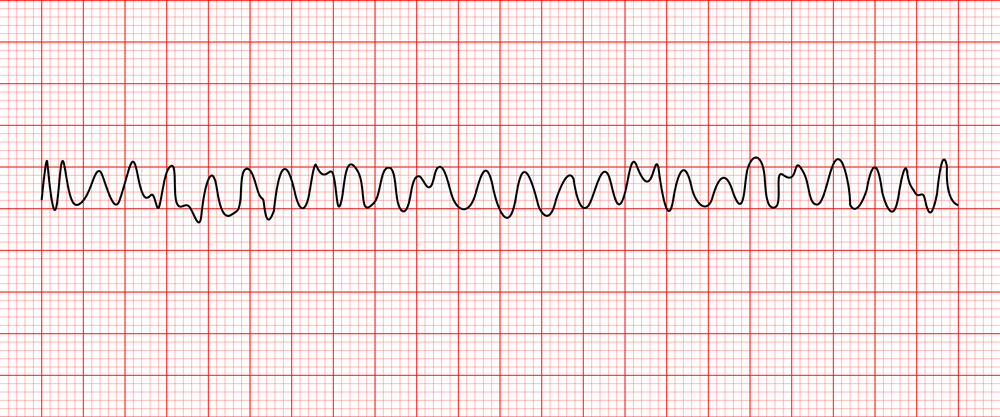
What medication is used to treat this rhythm?
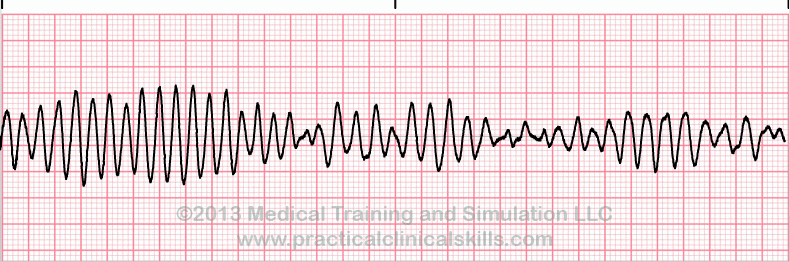
Magnesium
500
A nurse is interpreting arterial blood gas (ABG) results for a patient with a confirmed pulmonary embolism. Which finding is most likely?
A. pH 7.31, PaCO₂ 50 mm Hg, HCO₃⁻ 25 mEq/L
B. pH 7.47, PaCO₂ 30 mm Hg, HCO₃⁻ 22 mEq/L
C. pH 7.36, PaCO₂ 40 mm Hg, HCO₃⁻ 24 mEq/L
D. pH 7.29, PaCO₂ 20 mm Hg, HCO₃⁻ 18 mEq/L
B. pH 7.47, PaCO₂ 30 mm Hg, HCO₃⁻ 22 mEq/L
**Indicates respiratory alkalosis due to hyperventilation and anxiety from hypoxemia — common in early PE.
500
True or False: Autonomic dysreflexia is an exaggerated reflex response by the parasympathetic nervous system that results in severe hypertension due to a spinal cord injury.
False
Autonomic dysreflexia is an exaggerated reflex response by the SYMPATHETIC (NOT parasympathetic) nervous system that results in severe hypertension due to a spinal cord injury
500
A patient receiving a continuous intravenous heparin infusion develops severe, spontaneous bleeding. Which medication should the nurse anticipate administering as the antidote?
Protamine Sulfate
500
The healthcare provider orders a CT pulmonary angiogram for a patient with suspected PE. Which nursing action is most important before the test?
A. Administer a mild sedative to the patient
B. Assess for allergy to iodine or shellfish
C. Encourage the patient to void before the procedure
D. Check for recent use of bronchodilators
B. Assess for allergy to iodine or shellfish
500
Besides epinephrine, what other medication will I give a patient with this rhythm?
Amiodarone or Lidocaine