Atomic Struture
Formulae + Bonding
Acids and Bases
Rates of Reaction
Mystery
100
What is the symbol for sodium?
Na
100
what is the formula for Bromine?
Br2
100
Name an everyday Acid.
Stomach acid, vinegar, citric acid or any other appropriate answer.
100
True or false:
if you increase the rate of a reaction more products will be created at the end of the reaction.
FALSE
100
What is a chemical reaction?
when one or more substances (the reactants) are converted to one or more different substances (the products).
200
What is group 1 of the periodic table called?
The Alkali Metals
200
What is the valency of phosphorous?
3
200
Acid is found in fizzy juices. Name one impact this can have on your health.
Can rot your teeth.
200
Name 3 ways to increase the rate of a chemical reaction.
increase surface area/decrease particle size
add a catalyst
increase concentration
increase temperature
200
What is the difference between exothermic and endothermic reactions?
exo = produces heat (hotter)
endo = takes in heat (colder)
300
Name a property of group 8/0
They are unreactive.
300
What is the chemical formula for Strontium Phosphide?
Sr3P2
300
What is a base?
A substance that can react with an acid to neutralize it.
300
What is the total volume of Gas produced in this reaction?
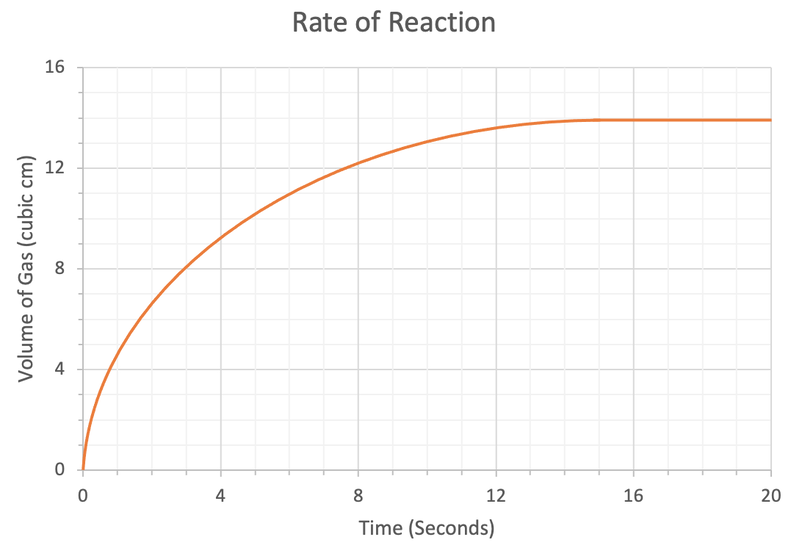
14cm3
300
Why are atoms neutral overall?
They have the same number of protons and electrons.
400
What do the letters A and Z represent?

A = Mass Number
Z = Atomic Number
400
Name the elements that you would find in the compound Lithium Phosphate.
Lithium, Phosphorous and Oxygen.
400
Name the salt formed in the reaction between sulphuric acid and Calcium Hydroxide.
Calcium Sulphate.
400
Which reaction is the fastest? Green, orange or purple?
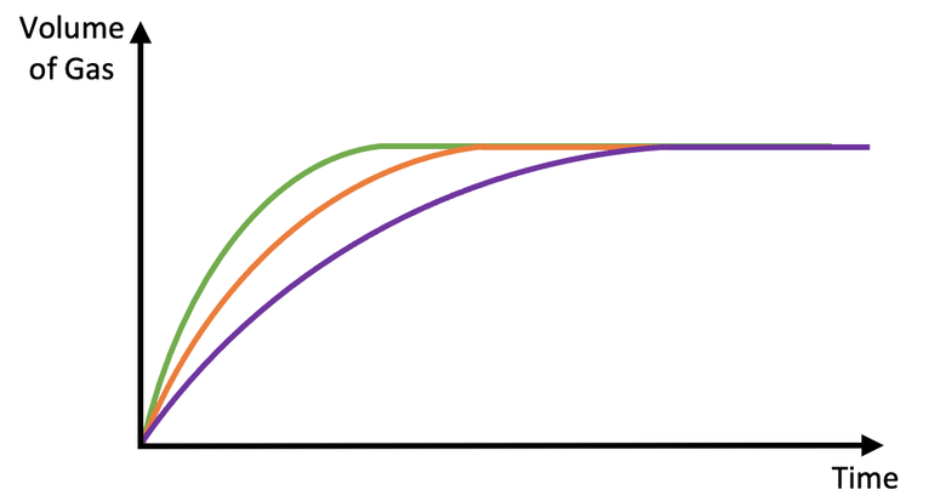
Green!
400
How do you work out the number of neutrons in an atom?
mass number - atomic number.
500
draw a labeled diagram of the structure of an atom on the board. you must include the charge and mass of each particle in your drawing
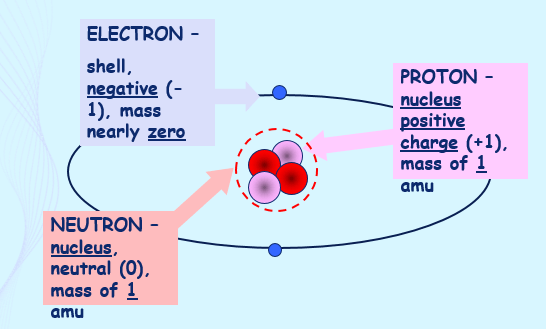
500
Calculate the GFM of Magnesium Nitrate -> Mg(NO3)2
148.5
500
Name the products formed that would be formed in a Neutralisation reaction between copper oxide and hydrochloric acid.
Copper Chloride AND water
500
Using the words particles and collision(s). explain how increasing the temperature of a reaction also increases the rate.
Increasing the temperature increases the rate of a reaction because the particles have more energy and move faster. This means there are more collisions between the particles each second. Therefore, the reaction rate increases.
500
Put the following reactions in order of fastest to slowest. Explain why.
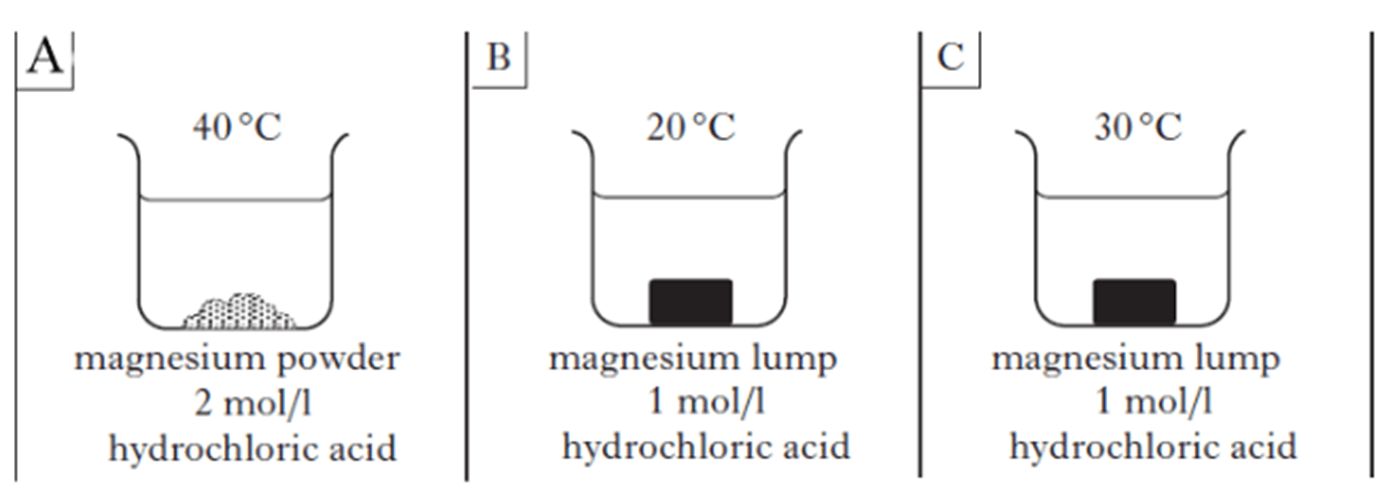
A -> C -> B