Vocabulary
Supporting Concepts
Adaptive
vs. Non-Adaptive
vs. Non-Adaptive
Generation Changes
Mutations
100
Define variation and distribution
any difference in traits between individual organisms
the number of individuals with each trait in a population
100
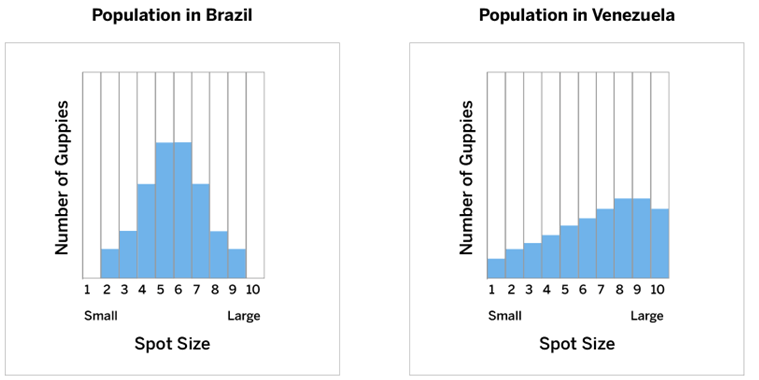 Scientists measured the spot size of guppies (small fish) in two different populations. Which population has more guppies with large spots?
The population in Venezuela has more guppies with large spots.
100

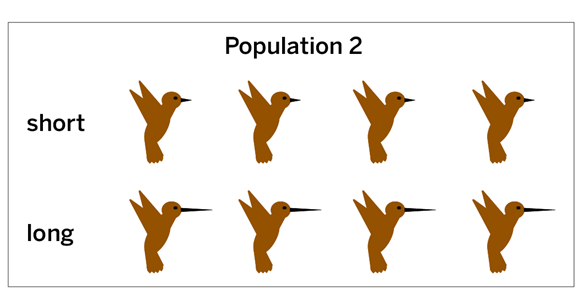

Use the diagram to answer the question. If their environment changes to have only long flowers, which of the following hummingbird populations will most likely survive?
Populations 2 and 3 will survive.
**Bonus: what is the definition of adaptive trait**
100
Eider ducks live in the ocean and have a layer of warm feathers underneath their regular feathers. They can have feathers of different thicknesses.
These feathers helps the ducks stay warm in cold water. Ducks with thicker feathers are more likely to stay warm and survive in cold water. But, in warm water, thicker feathers can make the ducks overheat and die.
The diagram below shows a population of ducks that live in an area of an ocean. At time 1, the population had the same number of ducks with thin and thick feather layers. At time 2, after many generations, there were many more ducks with a thin feather layer and fewer ducks in the population with a thick feather layer.
How did the environment change between time 1 and time 2? How did the population change?
The water became warm. With each generation, more ducks with thin feathers survived long enough to pass on the gene for thin feathers to their offspring.
100
A population of snakes once lived in an environment where there was sand and dirt, but no grass. The environment changed so that green grasses and plants now grow there. 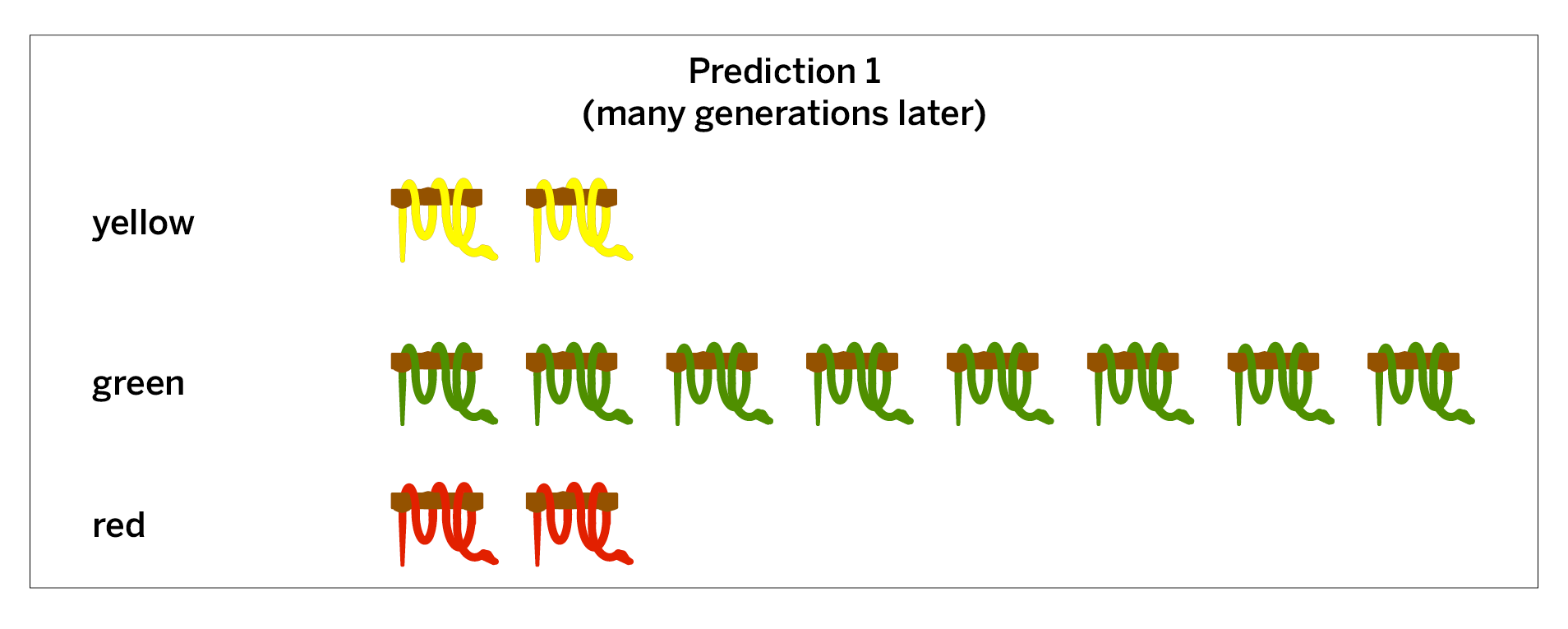
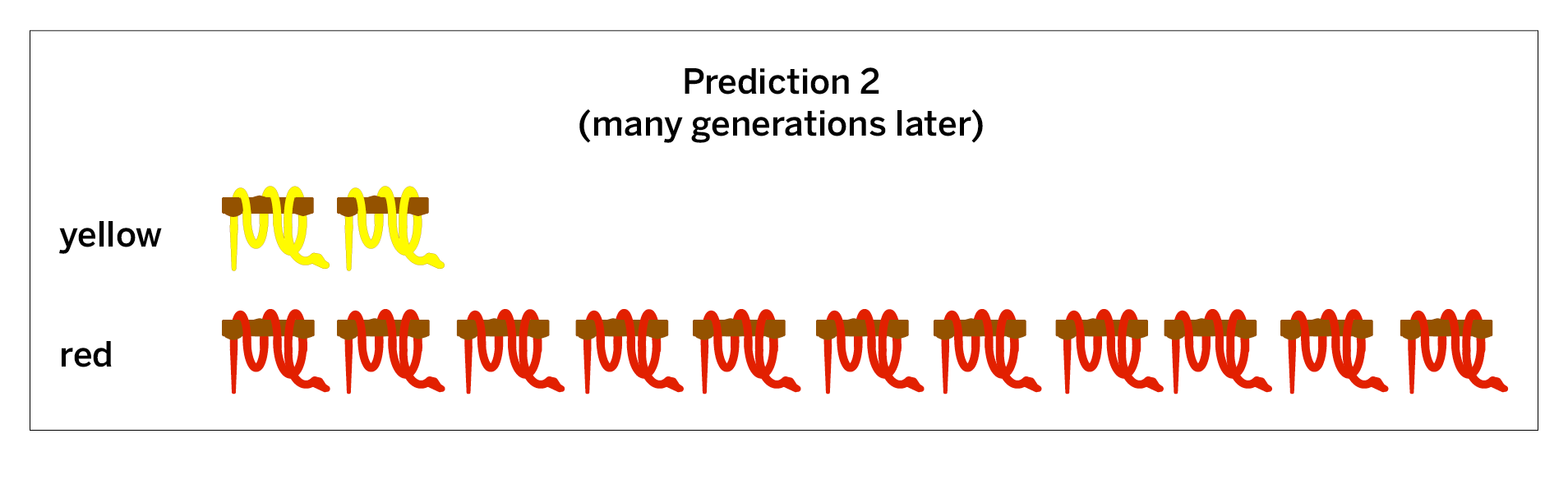
Which prediction best shows what the population could look like after many generations? What caused it to change?
Prediction 1 is best. Two yellow or red snakes had a baby with a mutation in its genes for the green-skin trait. Because green snakes are more likely to survive, that baby survived long enough to pass on its mutation, so the green trait became more common over generations.
200
Define mutation
a random change to a gene that sometimes results in a new trait
200
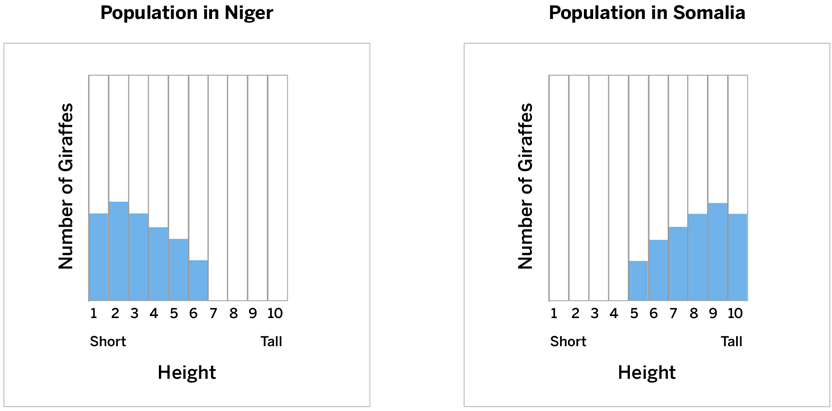
Scientists measured the height of the giraffes in two different populations. Which population has the largest number of tall giraffes?
The population in Somalia has the largest number of tall giraffes.
200
Seals with thicker blubber are more likely to stay warm and survive in cold ocean waters. But, in warm ocean waters, thicker blubber can make the seals overheat and die.
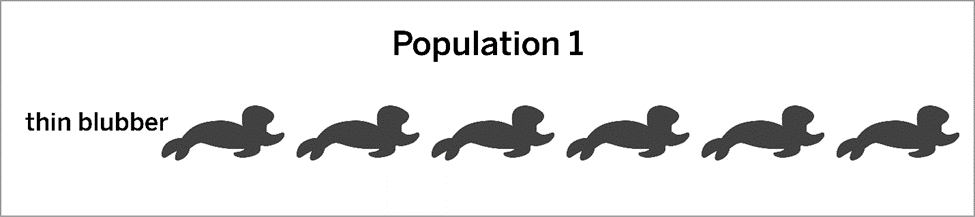
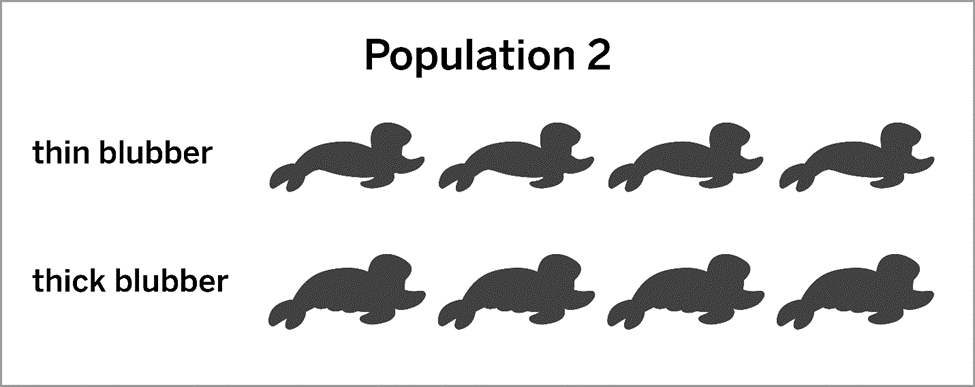
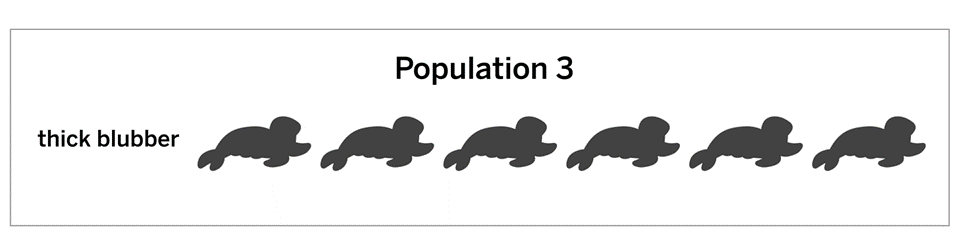 If their environment changes to have warm water, which of the following seal populations will most likely survive?
Populations 1 and 2 will most likely survive.
Bonus: what is the non-adaptive trait in this population?
200
How did the population change between time 1 and time 2?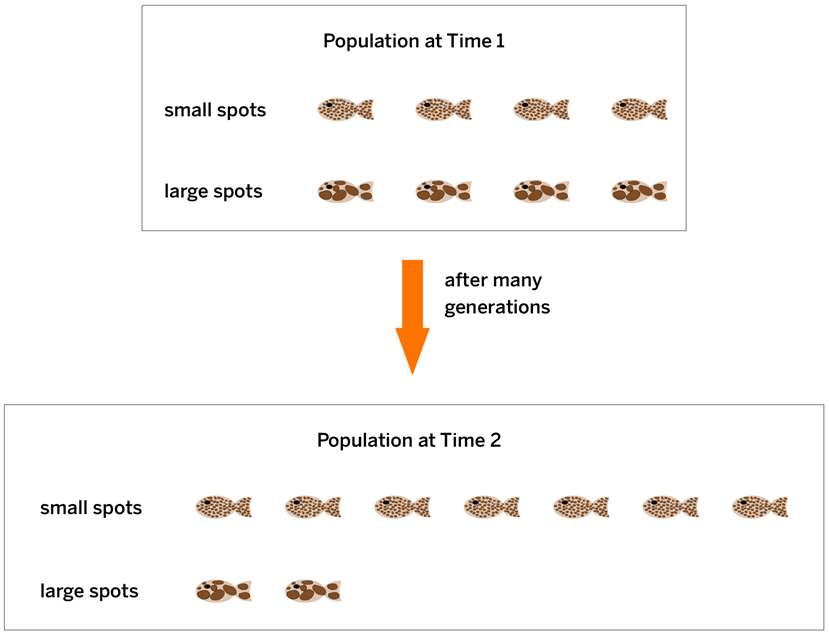
With each generation, more guppies with small spots survived long enough to pass on the gene for small spots to their offspring.
200
A population of foxes once lived in an environment where there was not very much snow. The environment changed so it is now very snowy. 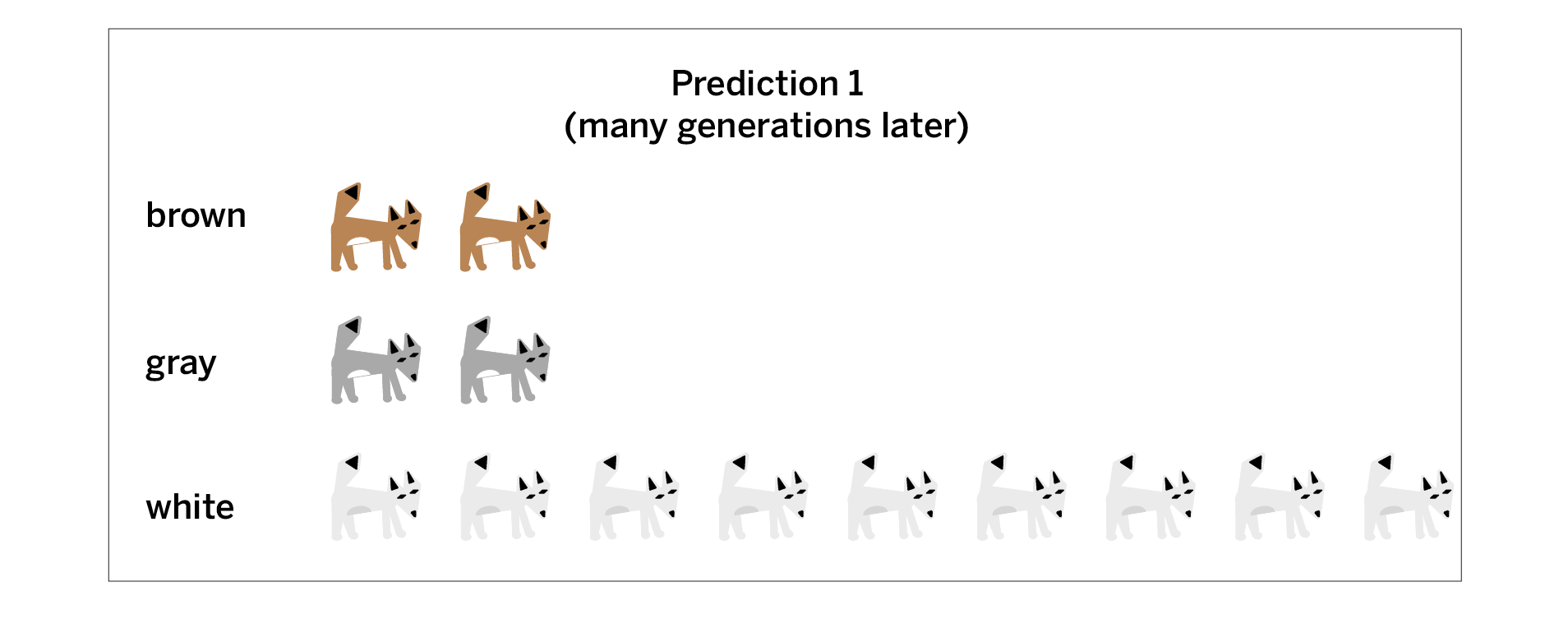
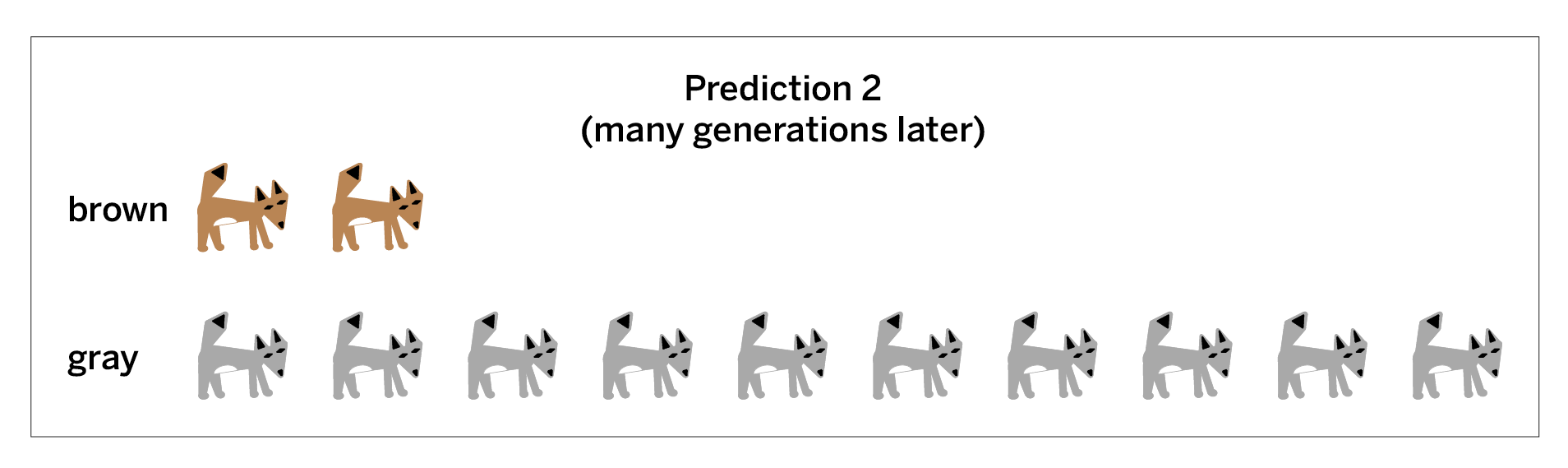 Which prediction best shows what the population could look like after many generations? What caused it to change?
Prediction 1 is best. Two brown or gray foxes had a baby with a mutation in its genes for the white-fur trait. Because white foxes are more likely to survive, that baby survived long enough to pass on its mutation, so the white-fur trait became more common over generations.
300
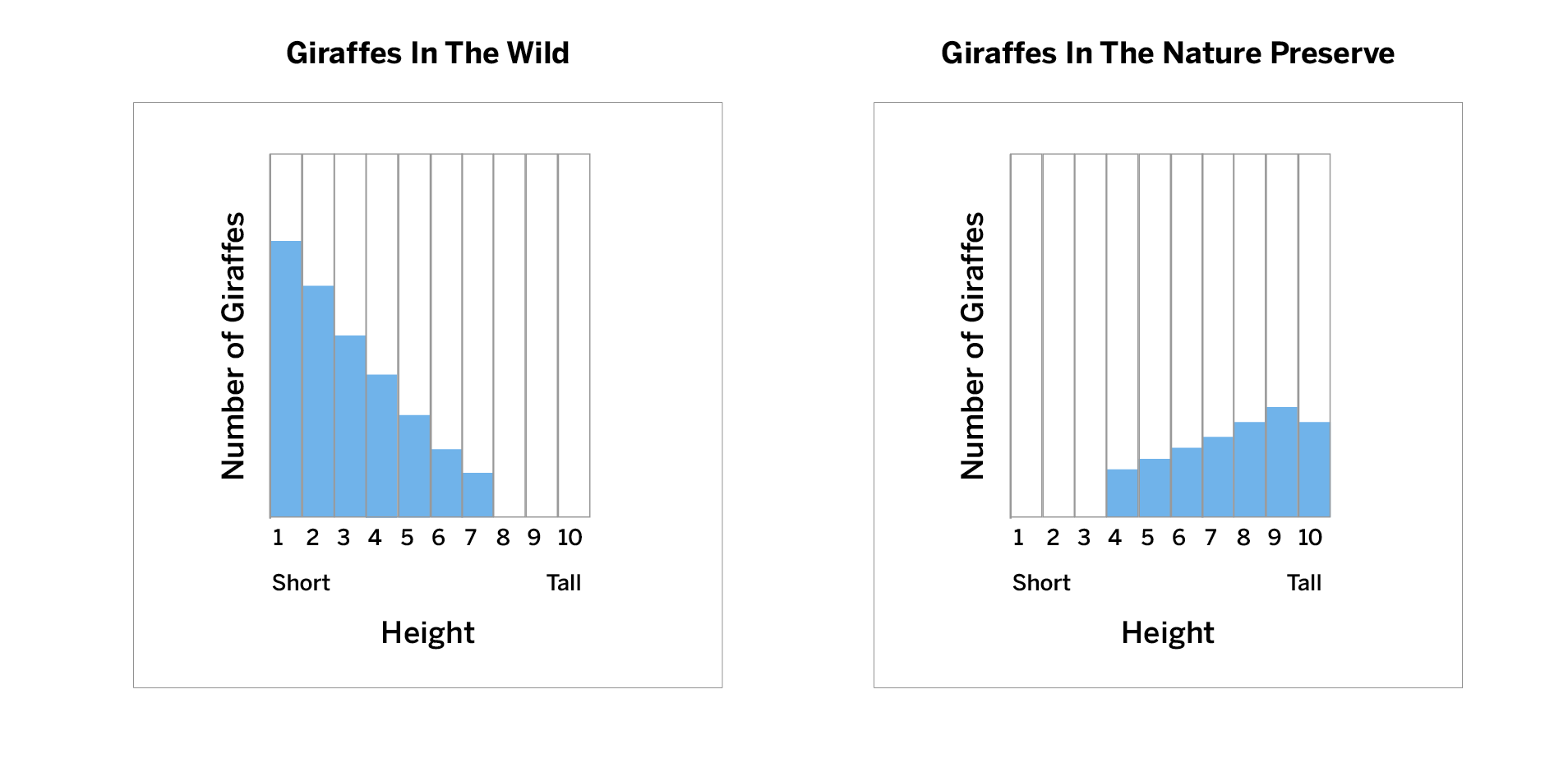 Scientists measured the height of giraffes in two populations—one in the wild and one in a nature preserve. Which statement best describes the difference between the two populations?
The giraffes in the wild are mostly shorter than the giraffes found in the nature preserve.
300
Scientists measured the spine size of a population of cactuses found in an area in 1970. They measured the spine size of the cactus population again in 2015. Which of the statements below best describes the difference in the cactuses at the two time points? 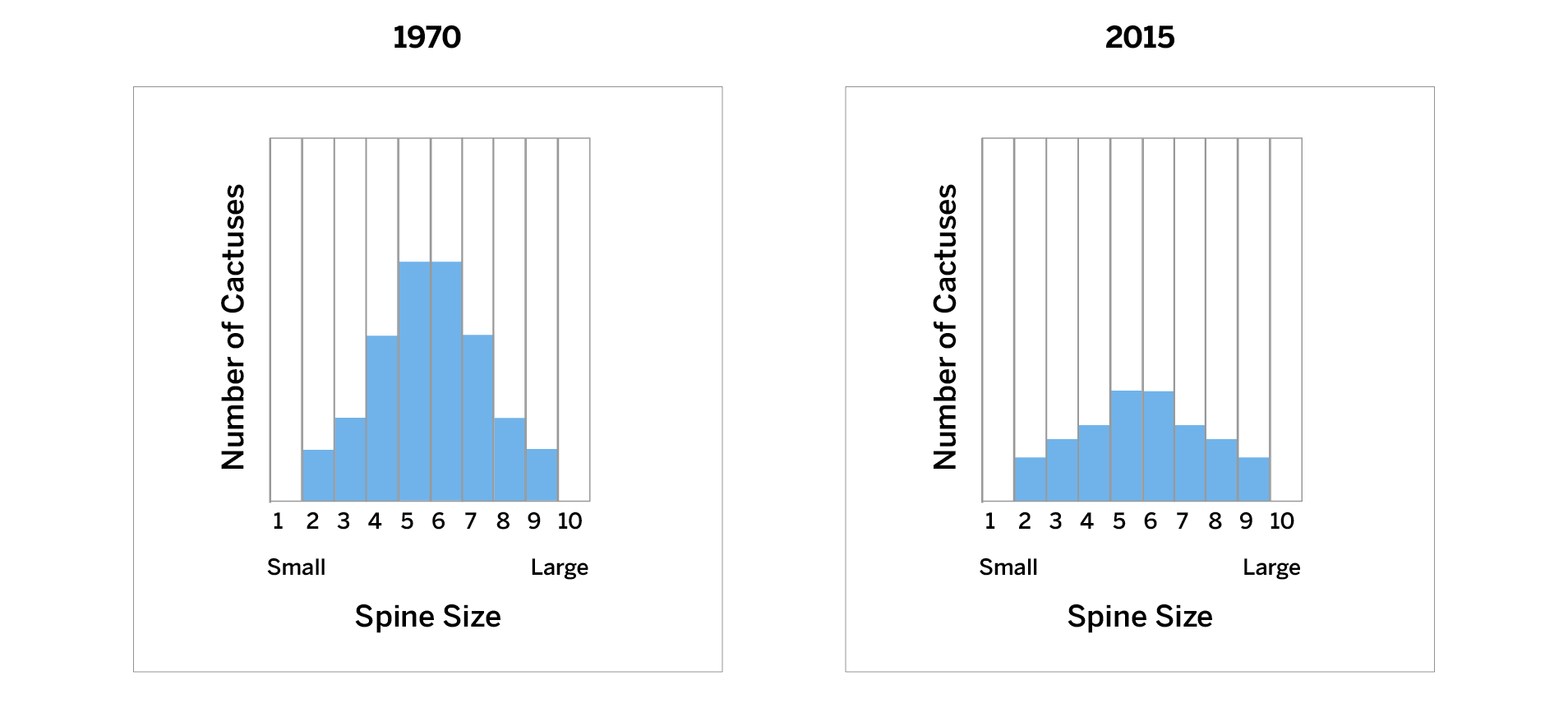
There were more cactuses in 1970 than there were in 2015.
300
Lizards with shorter legs are better at climbing trees than lizards with longer legs. This makes lizards with shorter legs better at escaping from the floods that sometimes cover the islands. 
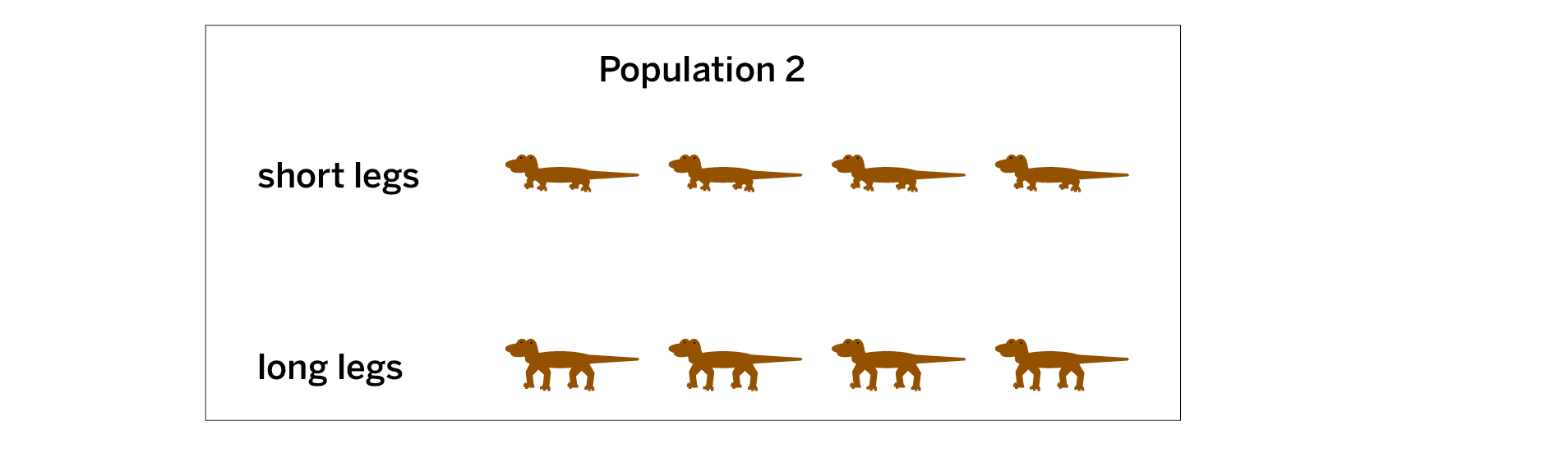
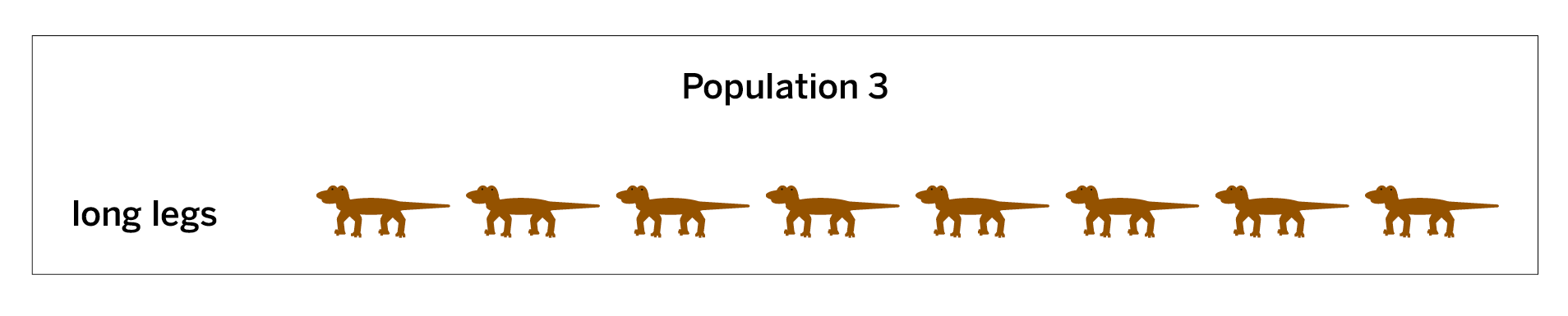 If their environment changes so that there are many floods each year, which of the following lizard populations will most likely survive?
Populations 1 and 2 will most likely survive.
300
How did the population change between time 1 and time 2? 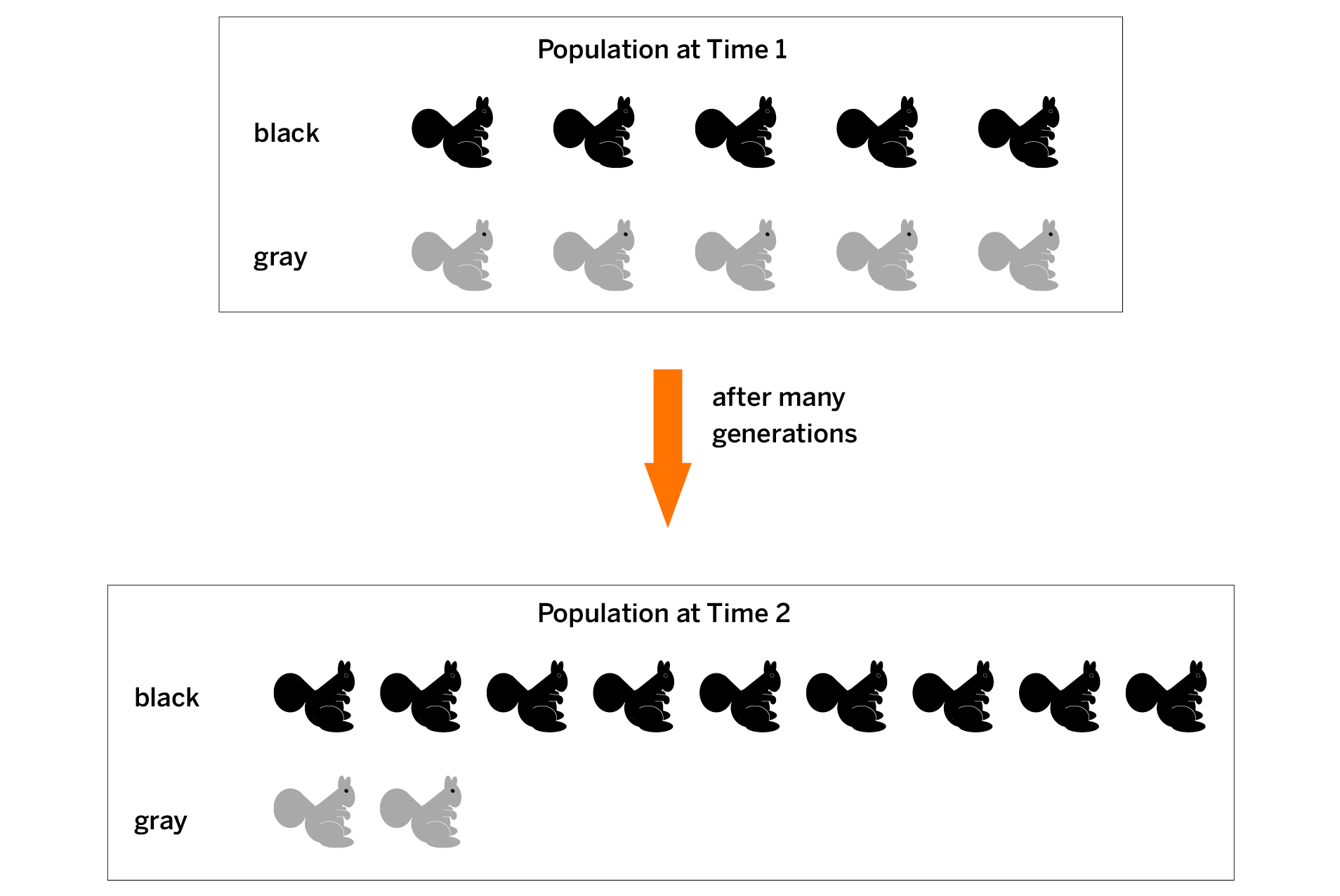
With each generation, more squirrels with black fur survived long enough to pass on the gene for black fur to their offspring.
300
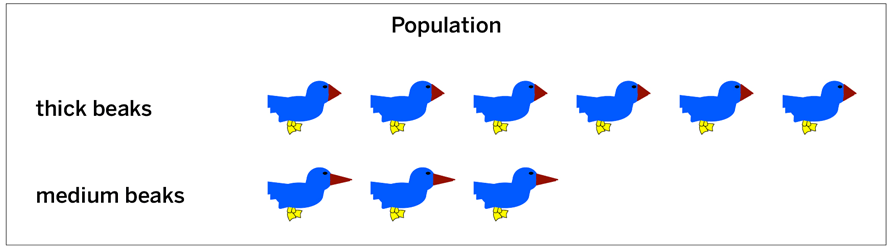
The population of blue jays shown above lives in an environment that has always had seeds with hard shells. Could there ever have been blue jays with thin beaks in this population?
A blue jay could have been born with a mutation in its genes for the thin-beak trait and lived for a little while, but it would have been more likely to die before it had offspring.
400
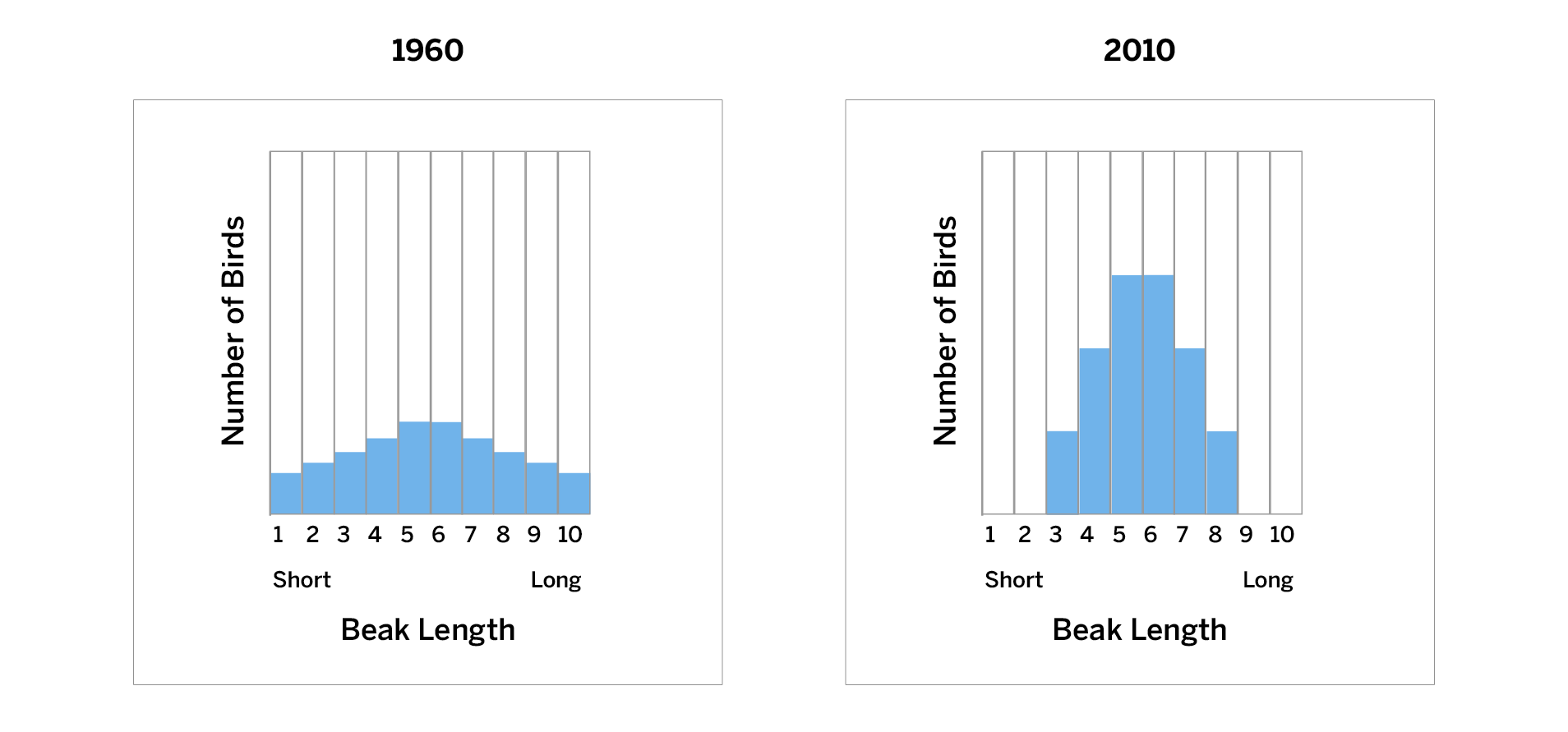 Scientists measured the beak length of a population of birds in a lake in 1960. They measured the beak length of the bird population again in 2010. When was there more variation in the beak lengths of the birds by the lake?
There was more variation in 1960.
400
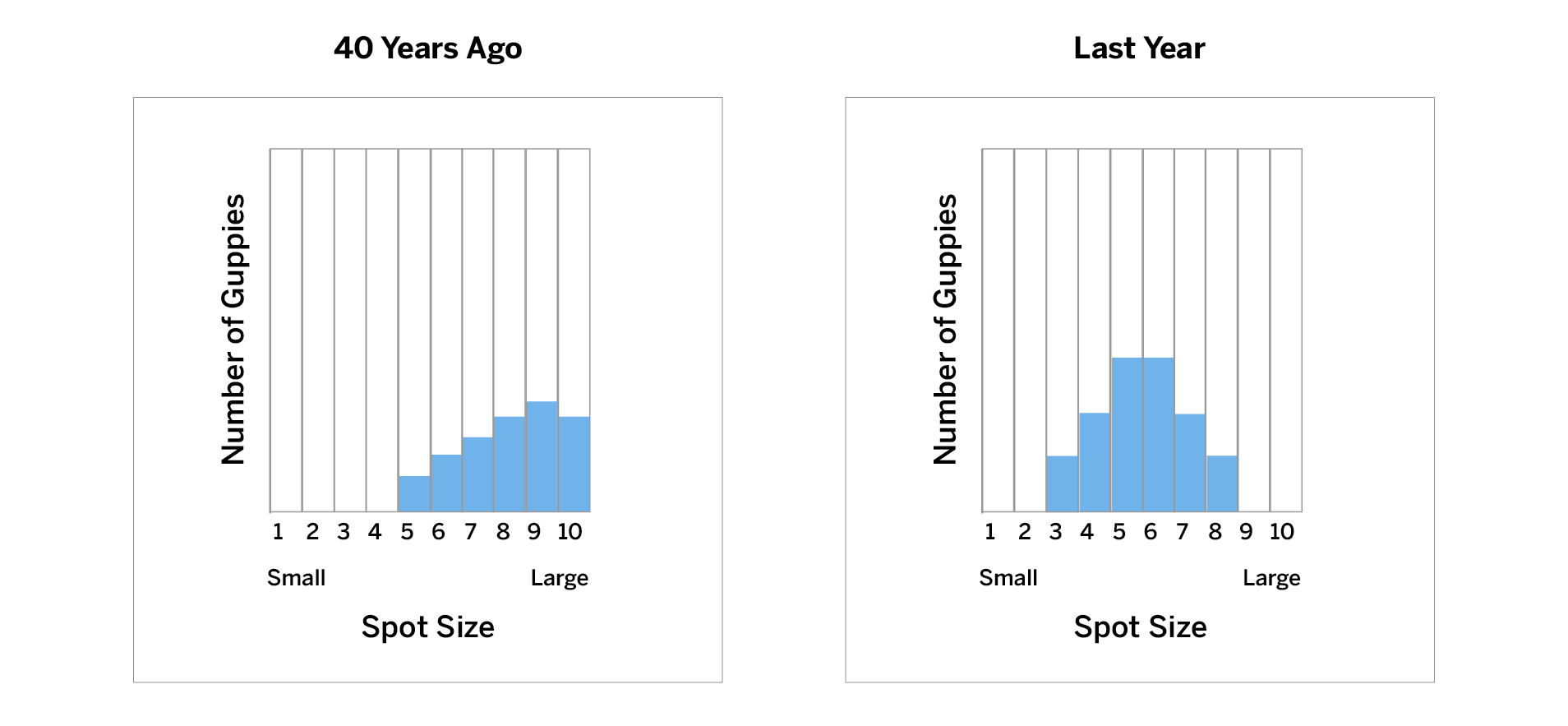 Scientists measured the spot size of all the guppies (small fish) that lived in a river 40 years ago. They measured the spot size of the guppy population again last year. When was there more variation in the spot size of guppies in the river?
There was the same amount of variation in spot size 40 years ago and last year.
400
The foxes hunt squirrels for food. Foxes that have fur the same color as their environment are better at getting close to squirrels and catching them 
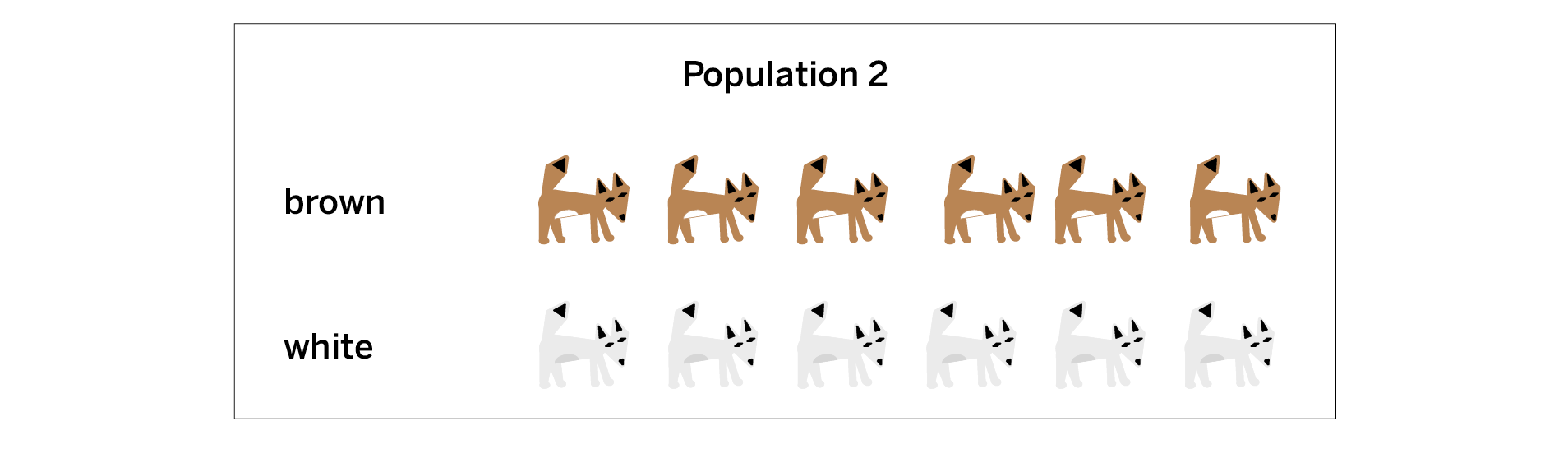
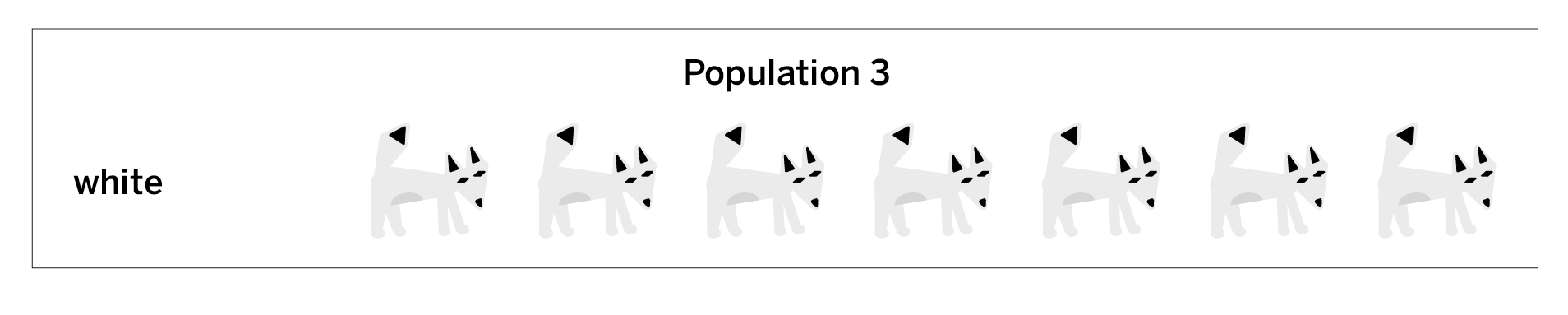 If their environment changes to have only brown dirt, which of the following fox populations will most likely survive?
Populations 1 and 2 will most likely survive.
400
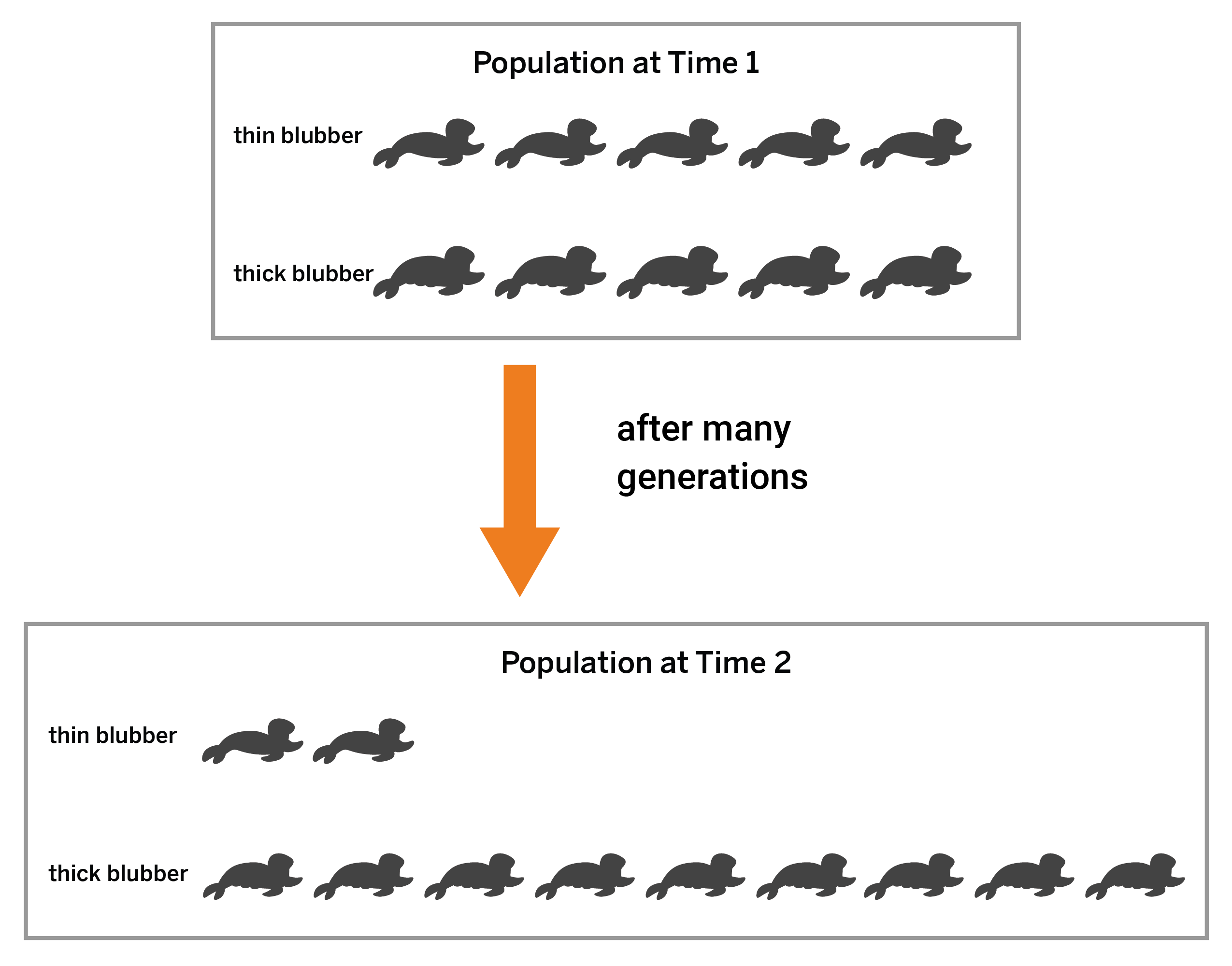 How did the population change between time 1 and time2?
The water became colder. With each generation, more seals with thick blubber survived long enough to pass on the gene for thick blubber to their offspring.
**What do you think caused this change? best answer gets $400**
400
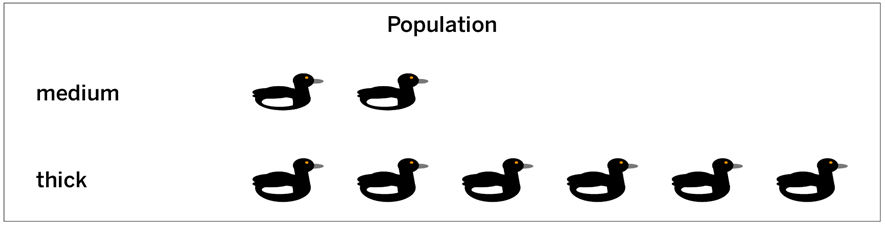 The population of ducks shown above lives in an environment that has always had very cold water. Could there ever have been ducks with thin feathers in this population?
A duck could have been born with a mutation in its genes for the thin-feather trait and lived for a little while, but it would have been more likely to die before it had offspring.