Typhoid Basics
Typhoid Diagnosis
Typhoid Treatment & Complications
Schistosomiasis
Cysticercosis
Echinococcus
Dengue
100
This bacterium causes typhoid (enteric) fever.
What is Salmonella enterica serotype Typhi and paratyphi A, B, and C?
Note: typhoid fever is a severe systemic illness with fever and abdominal pain.
100
The best test to confirm typhoid fever.
What is a blood culture?
Note: Positive in 50-80% of patients, also allows for antimicrobial sensitivity testing. When cultures are negative or not available, the diagnosis is often made presumptively and empiric therapy may be started based on a protracted febrile illness without other explanation. However, the clinical syndrome of enteric fever is nonspecific and the PPV of a clinical diagnosis in high-burden settings is typically <50%.
100
A third-generation cephalosporin commonly used to treat typhoid fever.
What is ceftriaxone?
Note: Most isolates remain susceptible to azithromycin and third-generation cephalosporins (like ceftriaxone). Treat for 7 days for uncomplicated and at least 14 days for complicated (ie, septic shock, encephalopathy) typhoid fever. OpenEvidence suggests continuing treatment for at least 4-5 days after fever clearance. 5-10% of patients will relapse, usually within 1 month.
100
Schistosomiasis is acquired after exposure to this environment.
What is freshwater?
Note: Schistosomiasis is caused by blood trematodes (flukes). Symptoms are not caused by the worms themselves but rather the body's reaction to the eggs.
100
Neurocysticercosis most commonly presents with this neurologic symptom.
What are seizures?
Note: Neurocysticercosis is the term used for human CNS involvement with T. solium cysts, and is the most common presentation of cysticercosis. Intracerebral lesions can cause mass effect and seizures, intraventricular cysts can cause hydrocephalus, subarachnoid lesions can cause chronic meningitis, and spinal cord lesions can cause cord compression syndrome or meningitis. Peri-lesional edema typically occurs around dying cysts, and is frequently found in patients presenting with headache or seizure.
100
Humans acquire echinococcus infection from ingesting eggs found in this animal’s feces in contaminated food or water.
What are dog feces?
Note: Echinococcus is a tapeworm of dogs (definitive host), and the cystic form lives in sheep (intermediate host). Humans are accidental hosts. When we ingest the echinococcus egg, the larvae migrate and then form cystic structures. These hydatid cysts are "watery vessels" surrounded by fibrosis and chronic inflammation triggered by host response.
100
Dengue is transmitted by this mosquito species.
What is Aedes aegypti?
Note: the Aedes aegypti mosquito are typically found in urban and peri-urban habitats, and tend to bite during the day.
200
Typhoid is transmitted through this route.
What is the fecal-oral route through contaminated water, undercooked foods, and fomites of infected patients?
Note: incubation period is 1-2 weeks.
200
This CBC abnormality is common in typhoid fever and may involve neutropenia.
What is leukopenia?
Note: dissemination to the reticuloendothelial system may result in bone marrow involvement and pancytopenia, so can see leukopenia, neutropenia, thrombocytopenia, and/or anemia.
200
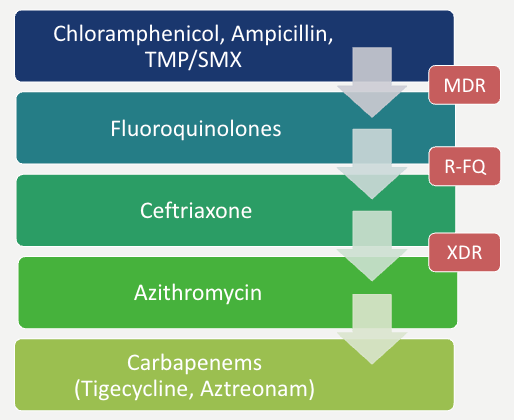
This antibiotic class now has widespread resistance in typhoid worldwide.
What are fluoroquinolones?
200
What are two possible presentations of acute schistosomiasis?
What are cercarial dermatitis and katayama fever?
Note: Cercarial Dermatitis = small, itchy maculopapular lesions caused by a local cutaneous hypersensitivty reaction from cercariae, especially if someone has been sensitized to these invasive worms in the past. Katayama fever = systemic hypersensitivity reaction that usually occurs in previously unexposed hosts during egg-laying, usually 3-8 weeks after initial exposure. Symptoms include fever, cough, myalgias, abdominal pain, diarrhea, and hepatosplenomegaly. Workup will reveal peripheral eosinophilia and increased AST/ALT/ALP, but stool O&P will typically be negative at this point.
200
Cysticercosis is acquired by ingesting these through the fecal-oral route.
What are Taenia solium eggs?
Note: Ingestion of eggs in food contaminated with human feces leads to cysticercosis. Ingestion of larvae encysted in undercooked pork leads to tapeworm.
200
The cysts most commonly exist in these two human organs.
What are the liver (65%) and lungs (25%, usually right lower lobe)?
200
These characteristic symptoms give dengue the nickname “breakbone fever.”
What are severe myalgias and arthralgias with fever?
Note: MSK symptoms are characteristics of dengue. Additional symptoms include headache (50-60%), retro-orbital pain, and rash (50%, typically occurring near defervescence). Severe dengue occurs in ~1% of patients, typically starting around day 3-4 when the patient defervesces, and is associated with a precipitous platelet drop, an increase in hematocrit (due to hemoconcentration and fluid leak), and a mild transaminitis. Approximately 25-50% of patients are asymptomatic.
300
The classic but uncommon heart rate finding seen in typhoid fever.
What is relative bradycardia?
Note: Symptoms of typhoid fever include fever, malaise, anorexia, headache, arthralgias, myalgias, abdominal pain, nausea, vomiting, diarrhea, and constipation. Signs (in addition to relative bradycardia) include dehydration, pallor, +/- jaundice, abdominal tenderness, abdominal distension, hepatosplenomegaly, +/- rash, altered mental status
300
A patient with typhoid develops leukocytosis and worsening abdominal pain. This complication should be suspected.
What is intestinal perforation?
Note: Other possible complications of typhoid fever include encephalopathy, GI bleeding, nephritis, and hepatitis.
300
Severe typhoid fever with shock or encephalopathy may benefit from this adjunctive medication.
What is dexamethasone?
300
These are the two ways that Schistosomiasis can be diagnosed.
What are microscopy and urinary antigen detection?
Note: Microscopy can visualize schistosomes in stool or urine samples in heavy infections, allowing for species identification and evaluation of parasite burden. Because eggs may be passed intermittently or in small numbness, concentration of samples or repeated examinations may be needed to detect lighter infections.
300
This is the definitive diagnostic test of choice if there is a single lesion suspected of causing cysticercosis.
What is tissue biopsy?
Note: Additional ways of definitively diagnosing cysticercosis are if there are multiple cystic lesions each with scolex (the head of the larval tapeworm) on imaging OR if there are retinal cysticercus seen on fundoscopic exam. A presumptive diagnosis can be made if there are suggestive lesions on imaging. Serology can support the diagnosis but is NOT definitive. 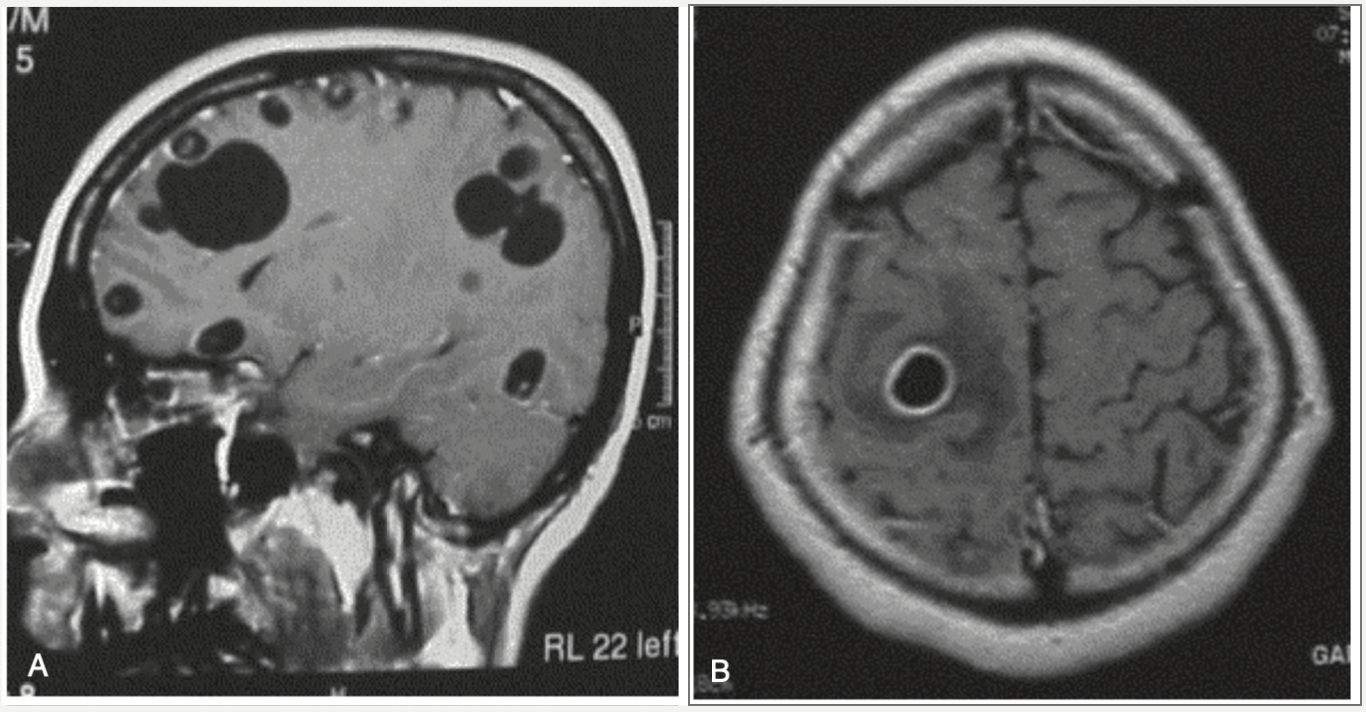
300
Rupture of a hydatid cyst can cause this life-threatening reaction.
What is anaphylaxis?
Note: other common presentations include cholangitis/biliary obstruction due to cyst rupture in the biliary tree, peritonitis due to intraperitoneal rupture, and pneumonia due to cyst rupture in the bronchial tree. Uncommon presentations include bone fracture due to bone cysts, mechanical rupture of the heart with pericardial tamponade, and hematuria/flank pain due to renal cysts.
300
This is the virus and the serotypes that cause dengue.
What is flavivirus and serotypes DEN 1-4?
Note: The incubation period is short (typically 4-8 days). Infection leads to long-term immunity only to the homologous serotype. Serotypes 1 and 2 are known to be in East Africa.
400
Humans are the only _____ for typhoid fever.
What are hosts?
Note: it is only transmitted from an infected person to another person.
400
This serologic test for typhoid has poor sensitivity and specificity and is not recommended in endemic areas.
What is the Widal test?
Note: detects antibodies against O and H antigens, but has limited clinical utility in endemic areas as positive results may represent previous infection.
400
This intestinal structure can undergo necrosis leading to perforation in typhoid fever.
What are Peyer’s patches?
Note: this usually occurs in the ileum during the 3rd week of febrile illness due to necrosis of the Peyer's patches in the bowel wall.
400
Schistosoma haematobium is strongly associated with this malignancy.
What is bladder cancer?
Note: S. haematobium is also associated with granulomatous cystitis, bladder fibrosis, obstructive uropathy, and chronic genital disease. Whereas S. mansoni is associated with portal hypertension due to periportal fibrosis and granulomatous colitis, and S. japonicum is associated with CNS disease with eggs to brain/spinal cord (encephalopathy, myelopathy).
400
This is the initial treatment of cysticercosis if the patient has hydrocephalus or diffuse cerebral edema.
What are steroids and/or surgery?
Note: Avoid anti-parasitic therapy in this setting as it may decrease the risk of FUTURE seizures but has the IMMEDIATE risk of increasing seizures and brain inflammation.
400
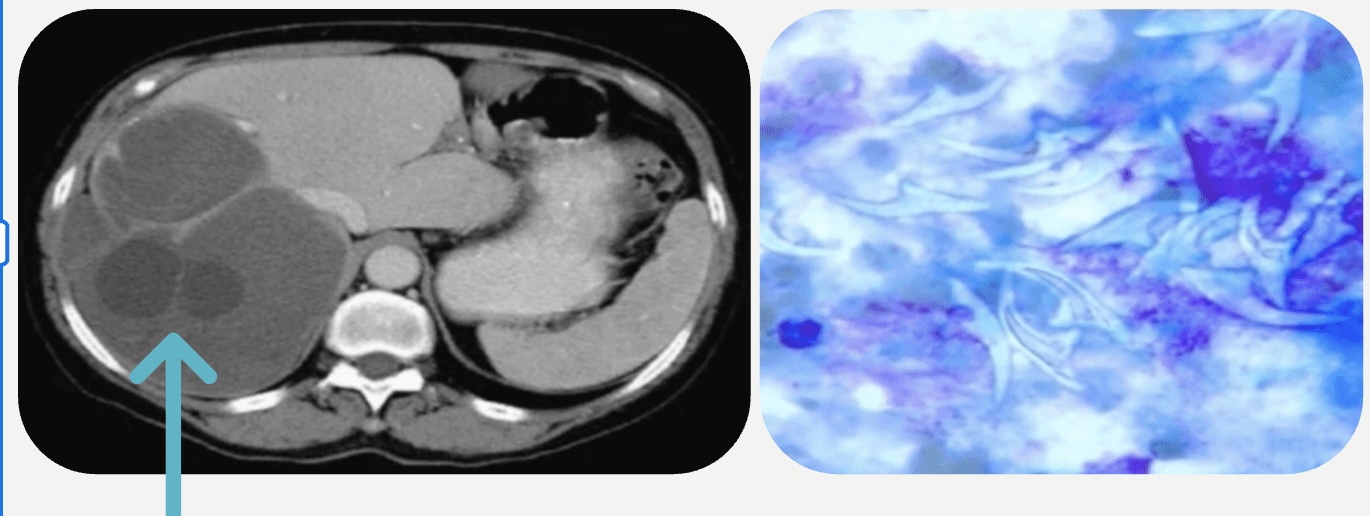
This radiology finding would be very suggestive of echinococcus.
What is a cyst with multiple daughter cysts and septations?
Note: additional diagnostic options include FNA (revealing highly refractile hooklets) and serology (IgG ELISA 85% sensitive for multiple liver cysts, only 50% sensitive for a single pulmonary cyst).
400
Dengue hemorrhagic fever (DHF) usually occurs when this happens.
What is a secondary infection with a different (heterologous) dengue serotype?
Note: It is difficult to predict who will develop DHF but it likely depends on viral serotype and viral load. It primarily affects children with a mortality rate of 0.2-10%.
500
Patients who excrete Salmonella in stool or urine for more than 12 months are called this.
What are chronic carriers?
Note: up to 4% of patients with typhoid fever become chronic carriers. These patients remain asymptomatic after their acute treatment.
500
This culture method remains highly sensitive even after antibiotics have started but is impractical.
What is bone marrow culture?
Note: stool/urine/bile cultures can also be obtained but a positive result may indicate chronic carrier state rather than acute infection.
500
An extensively drug-resistant (XDR) typhoid strain emerged in this country.
What is Pakistan?
500
This medication is recommended treatment for all forms of schistosomiasis.
What is praziquantel?
Note: treatment is indicated for all persons with schistosomiasis, and praziquantel is the recommended treatment against all forms. Cure rates for chronic infection range from 65-95% after a single treatment, and if not cured, egg excretion is reduced by >90%. A second dose several weeks later may increase the rate of cure. Re-infection may occur after treatment, but the risk of developing severe disease is diminished and even reversed when treatment is initiated and repeated in childhood.
500
These are the two anti-parasitic therapies that should be started if the ICP is normal and there are >2 viable cysts.
What is albendazole PLUS praziquantel?
Note: Treat only with albendazole if 1-2 viable cysts. Prescribe corticosteroids FIRST before starting anti-parasitic therapy.
500
This is the typical anti-parasitic used to treat echinococcus.
What is albendazole?
Note: typically treat with albendazole for several days before any procedure (including aspiration, biopsy, or surgery, as rupturing or spilling the cyst can result in anaphylaxis and spilled protoscoleces can re-establish infection) then continue treatment for several months afterwards.
500
This is the timeframe within which a PCR should be checked to diagnose dengue fever.
What is within the first 5 days of symptoms while patients are still viremic?
Note: Additional testing options include serology (IgM is positive at 4-5 days and lasts 3-6 months, IgG is positive at 7-10 days and remains lifelong; but there is cross-reactivity with other flaviviruses including yellow fever, Japanese encephalitis, West Nile virus, and Zika) and NS-1 antigen (detectable at day 1-9, 90% sensitive in primary infection, 60-80% sensitive in secondary infection).
Treatment is supportive - there are no antivirals, steroids do not work, and avoid NSAIDs/aspirin.