Neurons
Nerves
Spinal Cord
Brain
Random
Final Jeopardy(Last Question)
100
This division of the nervous system consists of the nerves and supporting cells. Collects information about the body's internal and external environment.
A. Central Nervous System
B. Motor Nervous System
C. Sensory Nervous System
D. Peripheral Nervous System
D: Peripheral Nervous System
100
Electrical signals generated by the brain that carry messages throughout the nervous system are called
A. Axons
B. Impulses
C. Nerves
D. Dendrites
B: Impulses
100
Division of the nervous system that consists of the brain and spinal cord. Processes information collected and creates a response.
A. Peripheral Nervous System
B. Sensory Nervous System
C. Central Nervous System
D. Motor Nervous System
C: Central Nervous System
100
The biggest part of the brain that controls voluntary activities of the body as well as higher order thinking, reasoning, and memory is called....
A. Cerebellum
B. Medulla
C. Hypothalamus
D. Cerebrum
D: Cerebrum
100
A large cluster of neurons and other cells and is the main communication link between the brain and the rest of the body.
A. Spinal Cord
B. Nerve
C. Corpus Callosum
D. Brain Stem
A: Spinal Cord
200
The basic Cell of the nervous system that carry the electrical signals generated by the brain are called
A. Impulses
B. Axons
C. Neurons
D. Neurotransmitters
C: Neurons
200
Type of neuron that carries impulses from the brain and spinal cord to muscles and glands.
A. Interneurons
B. Motor Neurons
C. Sensory Neurons
D. Cerebral Neurons
B: Motor Neurons
200
The largest part of a neuron which contains the nucleus and much of the cytoplasm.
A. Axon
B. Cell Body
C. Dendrites
D. Synapse
B: Cell Body
200
Lobe of the brain that is responsible for hearing and smell.
A. Frontal Lobe
B. Occipital Lobe
C. Temporal Lobe
D. Parietal Lobe
C: Temporal Lobe
200
Part of the brain that coordinates and balances the actions of muscles.
A. Cerebrum
B. Medulla
C. Corpus Callosum
D. Cerebellum
D: Cerebellum
300
Type of neuron that carries impulses from the sense organs to the spinal cord and brain.
A. Sensory Neurons
B. Motor Neurons
C. Terminal Neurons
D. Interneurons
A: Sensory Neurons
300
Short, branched extensions that spread out from the cell body. Receive impulses from other neurons and carry impulses to the cell body.
A. Axon
B. Dendrites
C. Synapse
D. Myelin Sheath
B: Dendrites
300
Long fiber that carries impulses away from the cell body.
A. Dendrites
B. Neurotransmitter
C. Axon
D. Synapse
C: Axon
300
Part of the brain that controls hunger, thirst, fatigue, anger, and body temperature.
A. Thalamus
B. Hypothalamus
C. Brain Stem
D. Cerebellum
B:Hypothalamus
300
Chemicals that transmit an impulse across a synapse to another cell.
A. Neurotransmitter
B. Synapse
C. Dendrites
D. Axons
A. Neurotransmitter
400
Type of neuron that processes information from sensory neurons and then sends commands to motor neurons.
A. Cranial Neuron
B. Spinal Neuron
C. Central Neuron
D. Interneuron
D: Interneuron
400
The point at the axon terminal where a neuron transfers an impulse to another cell (the space between neurons).
A. Threshold
B. Neurotransmitter
C. Synapse
D. Axon
C: Synapse
400
Fatty membrane that insulates the axon and allows impulses to travel faster down the neuron.
A. Neurotransmitter
B. Axon Terminal
C. Myelin Sheath
D. Cytoplasm
C: Myelin Sheath
400
Part of the brain that receives and relays messages from sense organs.
A. Thalamus
B. Brain Stem
C. Hypothalamus
D. Medulla
A: Thalamus
400
Part of the brain that controls involuntary activities such as heartbeat, breathing, and blood pressure.
A. Cerebellum
B. Medulla
C. Cerebrum
D. Hypothalamus
B: Medulla
500
The parts of a neuron are listed below but are not in order. Place the parts in order from where an impulse first enters a neuron to where it exits.
Axon, Cell body, Dendrites, Axon Terminal, Synapse
1. Dendrites
2. Cell Body
3. Axon
4. Axon Terminal
5. Synapse
500
Describe how the nervous system would function if neurons did not have a myelin sheath.
Reaction times would be much slower as messages would not get from the brain to muscles and glands in a timely manner.
500
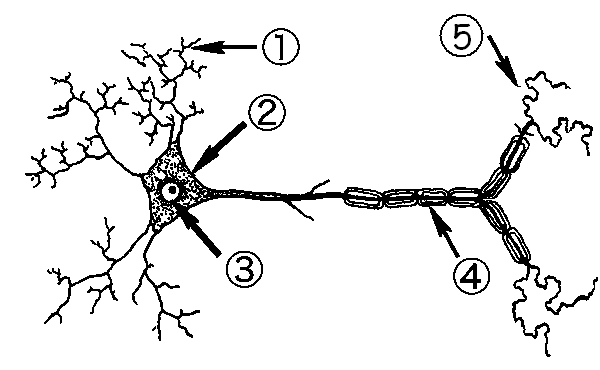
1. Dendrites
2. Cell Body
3. Nucleus
4. Axon
5. Synapse (Axon Terminal is also an acceptable answer)
500
The brain stem is a structure in the brain that regulates the flow of information between the brain and the rest of the body. It is divided into three parts. Name those three parts.
1 correct = 500 points
2 correct = 1,000 points
3 correct = 1,500 points
1. Pons
2. Midbrain
3. Medulla Oblangata
500
What is the name of the band of tissue that connects the right and left hemispheres of the brain?
Corpus Callosum
500
A reflex is a quick automatic response to a stimulus. Reflexes are processed in what part of the central nervous system?
Spinal Cord