Headache / Neuralgia
Stroke / TIA / Neurovascular
Intracranial Hemorrhage
Elevated ICP / Herniation
Miscellaneous
100
A patient with a thunderclap headache has a noncontrast head CT showing subarachnoid blood in the basal cisterns and sylvian fissures. What is the next diagnostic study to identify the source of bleeding?
CT angiography of the head and neck

100
In a patient presenting with a possible acute stroke, what bedside diagnostic test should be obtained immediately to evaluate for an alternative diagnosis that can produce similar neurologic deficits?
Blood glucose.
100
An elderly patient on anticoagulation presents days after a fall with progressive confusion. CT demonstrates a crescent-shaped extra-axial hemorrhage. What is the diagnosis?
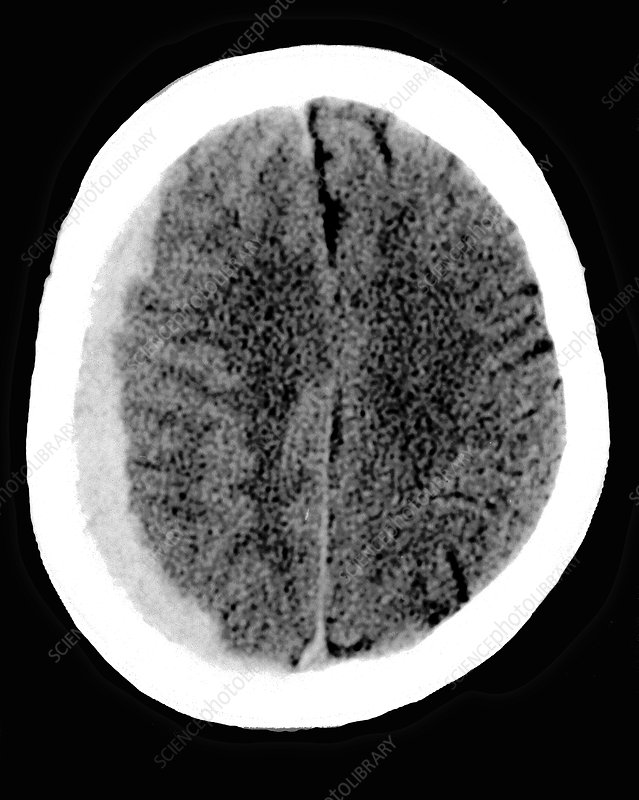
Subdural hematoma.
100
During a lumbar puncture performed in the lateral decubitus position, an adult has an opening pressure of 28 cm H₂O. Above approximately what opening pressure is generally considered abnormally elevated in adults?
25 cm H₂O
100
An 8-year-old with a ventriculoperitoneal shunt presents with progressive headache, vomiting, lethargy, and confusion. The shunt reservoir is difficult to compress. What finding would most likely be seen on head CT?
Ventricular enlargement consistent with recurrent hydrocephalus

200
A patient with recurrent severe unilateral orbital headaches has ipsilateral lacrimation, conjunctival injection, and nasal congestion. What is the diagnosis?
Cluster headache.

200
Vertigo, diplopia, dysarthria, dysphagia, and ataxia should make you particularly concerned about ischemia in what vascular territory?
Posterior/vertebrobasilar circulation.
200
A 58-year-old patient with a spontaneous putaminal intracerebral hemorrhage presents with sudden contralateral weakness and dysarthria. What is the most common underlying risk factor for this pattern of hemorrhage?
Chronic hypertension

200
When using ocular ultrasound to evaluate for elevated intracranial pressure, an optic nerve sheath diameter greater than approximately what measurement is considered abnormal in adults?
5 mm

200
A 55-year-old woman presents one hour after the sudden onset of right-sided facial droop and difficulty speaking clearly. She has no extremity weakness or sensory loss. On examination, she has weakness of the right lower face, incomplete closure of the right eye, and decreased movement of the right forehead. What is the most likely diagnosis?
Bell palsy

300
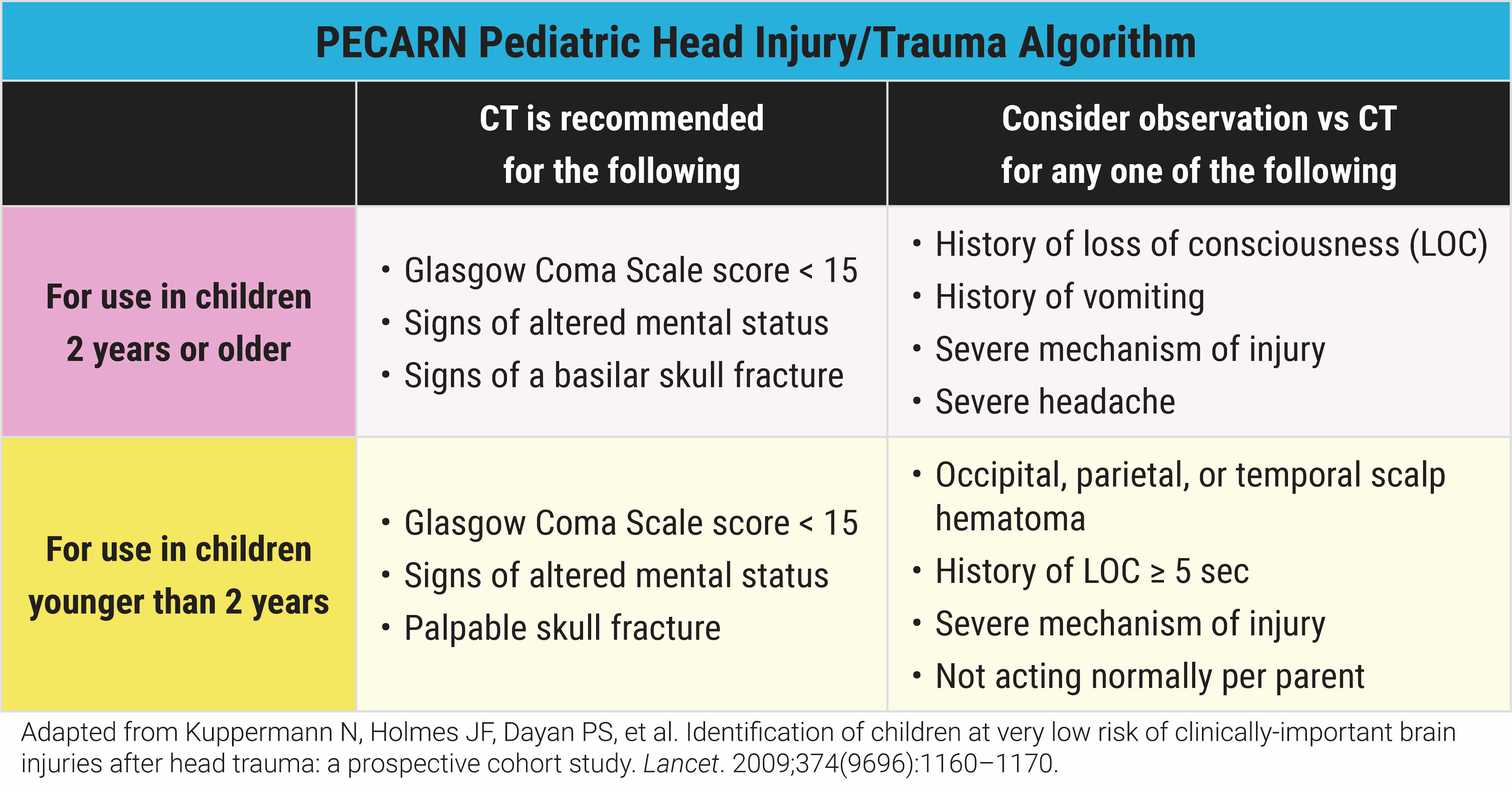
For children 2 years and older with minor blunt head trauma, what six clinical features are included in the PECARN decision rule for risk of clinically important traumatic brain injury?
- Altered mental status (GCS < 15)
- Signs of basilar skull fracture
- Loss of consciousness
- Vomiting
- Severe headache
- Severe mechanism of injury
300
A patient with an acute ischemic stroke has contralateral leg weakness and sensory loss that are much more pronounced than deficits in the arm or face. Which cerebral artery territory is most likely involved?
Anterior cerebral artery (ACA)

300
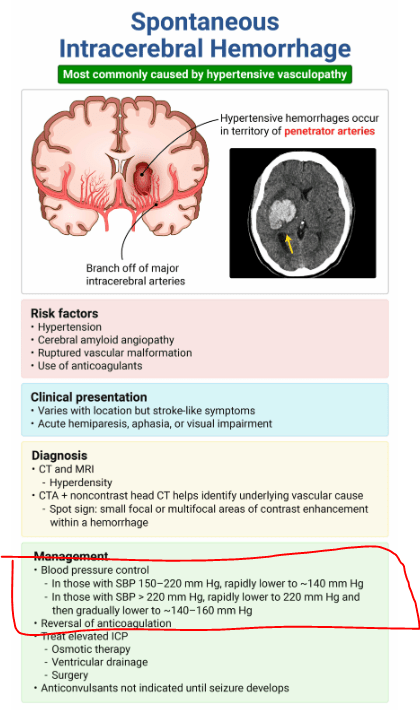
A patient with the following CT Head presents with a systolic blood pressure of 185 mmHg. In a mild-to-moderate ICH without another contraindication, what systolic blood pressure should you acutely target?
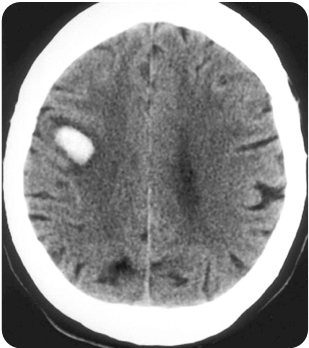
140 mmHg
300
An 82-year-old patient develops progressive gait difficulty described as a “magnetic” gait, followed by cognitive decline and urinary incontinence over several months. What potentially reversible neurologic condition should be suspected?
Normal pressure hydrocephalus
(Gait disturbance, cognitive impairment, and urinary incontinence)

300
A 65-year-old woman has recurrent brief episodes of severe, electric shock-like pain involving the right maxillary and mandibular face, triggered by chewing and brushing her teeth. Her neurologic examination is normal. What is the first-line pharmacologic treatment?
Carbamazepine
(Oxcarbazepine also commonly used)

400
A postpartum patient presents with headache, seizure, and a focal neurologic deficit. What neurovascular diagnosis should be strongly considered?
Cerebral venous sinus thrombosis.

400
When distinguishing a transient ischemic attack from common mimics such as migraine aura or focal seizure, what type of neurologic symptoms more strongly favors TIA?
Negative neurologic symptoms, or loss of function
400
A patient with hemophilia A presents after blunt head trauma with a scalp hematoma but a normal neurologic examination. CT imaging has not yet been obtained. What treatment should be administered immediately?
Factor VIII replacement
**In the case of head trauma, the patient should be assumed to have an ICH until proven otherwise, and factor replacement should not be delayed for CT imaging.

400
A 32-year-old woman in the third trimester of pregnancy develops sudden severe headache, vomiting, progressive visual impairment, and ophthalmoplegia. Examination demonstrates bitemporal visual field loss and signs of elevated intracranial pressure. What diagnosis should be suspected?
Pituitary apoplexy

400
A 65-year-old patient presents with persistent vertigo and nausea. What finding on the neurologic examination would most strongly support a central rather than peripheral cause of the dizziness?
Limb ataxia/dysmetria

500
A 65-year-old woman develops sudden severe headache, unilateral eye pain, blurred vision, nausea, and vomiting shortly after using a scopolamine patch. What ocular examination finding would most strongly support the diagnosis?
A mid-dilated, poorly reactive pupil
(Technically elevated IOP and Corneal Edema also are correct)

500
What underlying vascular disorder is classically associated with an increased risk of the following MR finding in a younger patient?

Fibromuscular dysplasia
(I'm amazed if you got this right - Smola)

500
A 5-month-old infant presents after a generalized seizure with vomiting and persistent lethargy. There is no reported history of trauma. The chest X-ray is shown. What diagnosis should be strongly suspected as the unifying cause of the radiographic and neurologic findings?

Abusive head trauma / nonaccidental trauma

500

Which type of cerebral herniation is associated with the finding above?
Uncal Herniation

500
A 10-year-old recently treated for bacterial sinusitis returns with persistent frontal headache, fever, vomiting, confusion, and a new focal neurologic deficit. What complication should be suspected?
Brain Abscess
