Paraneoplastic I
Paraneoplastic II
Nutritional Deficiency I
Nutritional Deficiency II
100
Paraneoplastic syndromes of the nervous system occur when cancer-fighting agents of the immune system also attack parts of these structures (4 possible answers)
brain, spinal cord, peripheral nerves or muscle.
Note: Also can hit hormone (endocrine), skin (dermatologic), blood (hematologic) and joints (rheumatologic) for systemic presentation
100
Of the two pathways tumor antigens can activate to cause paraneoplastic syndromes, this one is more responsive to immunotherapy.
IgG effectors/B cells and plasma cells/humoral pathway/antibodies
Note: T cell effectors are not as responsive and are more closely associated with tumors -> Look for the tumor
100
In the Mediterranean Lifestyle, fish and poultry would contain these vitamins. (Name 3 of them)
Omega 3, B6, B9, B12, Cu
100
This is the most common vitamin deficiency in the US
Vitamin D
Note:
Worldwide - 2 billion people deficient (especially micronutrients: iron, vitamin A, zinc, iodine and folate in developing world)
Fortification of food in US reduces deficiencies - Folate, niacin, riboflavin, thiamine, vitamin A, vitamin D & iron
200
Name 3 of the Clinical Phenotypes seen with paraneoplastic disorders (10ish possible answers)
Optic neuritis
Meningitis
Encephalitis
Neuropsychiatric manifestations/dementia
Epilepsy
Cerebellar degeneration/Movement disorders
Diencephalic/Brainstem syndrome
Sleep disorders
Myelopathy
Neuropathy/PNS
200
These types of antibodies are associated with T cell effectors involved in paraneoplastic syndromes.
Intracellular Antibodies
Note: Cell surface antibodies involved with humoral pathway. Both can be broken down into glial and neuronal antibodies
200
A patient presents to clinic with nystagmus, an ataxic gait, and issues concentrating. They tell you that they started experiencing these issues relatively recently. You consult with a clinical dietician, you believes that the patient may be deficient in this vitamin
Thiamine
Note: This is Wernicke’s Encephalopathy
often due to severe short term deficiency
200
A 36-yo female presents to clinic with sensory deficits, paresthesia, weakness, ataxia, and gait disturbances. During the interview, she tells you that she had gastric bypass surgery in the past year. When asked about what could be causing this condition, you tell her that her vitamin deficiency are causing degeneration of these structures.
dorsal and lateral columns of the spinal cord.
Note: This is subacute combined degeneration
vitamins: Cu, folate, B12
300
These are possible scenarios when you should consider paraneoplastic syndromes/autoimmune conditions. (4 possible answers).
Encephalitis after ruling out infectious etiologies
Uncontrolled seizures/worsening seizures
Psychiatric presentations (psychosis/personality changes) in someone with no psych history
Rapidly progressive cognitive decline
300
A 49-yo male presents to clinic with weakness and numbness in the left leg. During the interview, he tells you he has no major past medical history besides a thymoma. Physical exam shows additional findings of loss of pain and temperature sensation in the right leg. You decide to order an MRI which shows contrast enhancement in 4 segments of the lumbar spinal cord. Based on the imaging and patient presentation, you suspect this as the primary etiology for the patient's condition.
Transverse myelitis (LTEM)
Note: This is Neuromyelitis Optica
Other etiologies include Optic Neuritis, Area postrema syndrome, diencephalic and tumefactive lesions (more than 1cm and tumorlike)
300
A 23-yo female presents to clinic after experiencing recurrent seizures. She has also had issues with cognitive decline, and her physical exam shows spastic weakness of both legs. You order some blood work and find that her levels of serum homocysteine are elevated at 120 umol/L. At this point you give the patient this to help with their management (4 possible answers).
B9 (folate), B12 (cobalamin), methionine and/or betaine (methylating agent)
Note: This is severe methylenetetrahydrofolate reductase (MTHFR) deficiency
300
A 25-yo male presents to clinic with concerns over recent fatigue and weakness. He also notes having pins and needles sensations in his extremities. During the interview and physical exam, you notice oral ulcers and cracking at the angle of the mouth. Based on the presentation, you think that this process could be the cause for the patient's fatigue and weakness.
Parietal cell destruction; lack of intrinsic factor
Note: This is B12 deficiency manifesting as pernicious anemia and stomatitis
Treat with 1000mg cyanocobalamin SC or IM (daily x 1 week, weekly x 1 month, then monthly 1000mcg thereafter)
400
A 44-yo female presents to clinic with concerns over recent visual impairments. During the patient interview, she states that the vision loss has been painful, being exacerbated by eye movement. You decide to order an MRI which shows thickening of the perineural sheath of the optic nerve. You also test for APQ4 IgG and MOG IgG1, and MOG IgG1 comes back positive. The presence of the MOG IgG1 and not the APQ4 IgG indicates this for the patients visual status.
a greater relapse rate but better visual outcomes.
Note: This is MOGopathy
Aquaporin-4 IgG seropositivity predicts a worse visual outcome than MOG IgG1 seropositivity, or MS diagnosis.
Myelin oligodendrocyte glycoprotein IgG1 is associated with a greater relapse rate but better visual outcomes.
400
A 35-yo female presents to clinic after experiencing a new-onset seizure. In the patient interview, you note that the patient continuously puckers and purses their lips and frequently blinks. They also tell you that they've been going back and forth between excessive and absent sweating, and that their blood pressure has been wildly varied. They note no recent illness. You decide to order a transvaginal ultrasound which shows the following:
Based on this finding, you suspect this paraneoplastic condition.
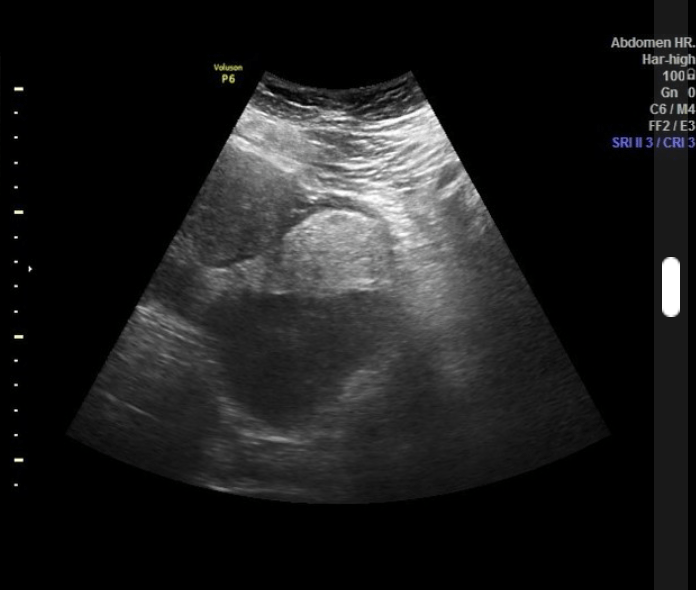
Anti-NMDA receptor encephalitis
Note: Other ssx include behavioral changes, catatonia, and viral prodrome
Etiology in this case is an ovarian teratoma.
400
A 31-yo male presents to clinic with concerns over a reddish-brown photosensitive rash. He also notes issues with abdominal pain and anorexia, and recent memory problems. Based on this presentation, you suspect the patient could be deficient in this vitamin.
Niacin
Note: This is Pellagra
400
A 34-yo female presents to clinic due to concerns over fatigue and weakness. The patient also notes numbness of the left UE. During the physical exam you also notice oral ulcers and a rash on the left UE. Based on the presentation, you suspect the patient is deficient in this vitamin.
pyridoxine (B6)
Note: Can also have toxicity issues as well (areflexia, sensory ataxia, etc.)
500
You are seeing a patient who has been suffering from headaches and recurrent seizures. Additionally, they have been having memory issues as well. You decide to order an MRI of the brain, which shows bilateral inflammation of the meso-temporal lobes. Based on the presentation and imaging, you decide to screen for these antibodies (3 answers)
LGI1, AMPA, GABA A/B
Note: This is Limbic Encephalitis
500
You are doing imaging for a patient that you suspect has a paraneoplastic syndrome. You've already ordered a CT Chest, abdomen and pelvis; a PET scan from the skull to the thigh; and an ultrasound of the ovaries. At this point, you're worried you've missed something. One of your colleagues tells you not to forget about doing this as well (3 possible answers).
Colonoscopy
Mammogram
Tumor markers
500
A 31-yo male presents to clinic with concerns over not being able to see at night. In the interview he notes also having fatty stools, and that his diet consists of mostly rice. Physical exam shows conjunctival dryness and keratinization. You suspect a vitamin deficiency. What would be the presentation if the patient has a toxicity of the same vitamin? (Name 3 ssx)
headaches, insomnia, intracranial hypertension, irritability, osteoporosis
Note: This is vitamin A deficiency/toxicity
500
A 27-yo female presents to clinic due to concerns over pain she states is in her bones. Besides this pain, the patient also notes a severe pain in her left flank that radiates towards the groin and is associated with nausea. Her partner also notes during the interview that her mood has been altered since the pain started. Based on this presentation, you suspect a toxicity of this vitamin.
Vitamin D
Notes: presentation of renal calculi, mood changes, bone pain