Misc
Recovery & Adaptation
Hydration Station
Fueling the Engine
100
What is a reasonable starting point for the timing of a familiar pre-race meal, and what should generally be emphasized?
Approximately 1–4 hours before racing, with the meal emphasizing carbohydrate, familiar foods, and an amount that supports energy availability without causing GI discomfort.
100
Approximately how much high-quality protein is a reasonable target in a post-training recovery meal for many elite athletes?
Approximately 0.3 g/kg of body mass, commonly around 20–40 g, depending on body size and the meal.
100
True or false: Every XC skier should drink as much fluid as possible during training to prevent dehydration.
False. Fluid intake should be individualized. Both excessive dehydration and overdrinking can impair performance or health.
100
What is the primary fuel source for moderate-to-high-intensity XC skiing when intensity rises and carbohydrate availability is adequate?
Carbohydrate, supplied by muscle glycogen, liver glycogen, and blood glucose. Fat also contributes, with the relative contribution depending on intensity and duration.
200
Why might an athlete training or racing at altitude need particular attention to iron status?
Altitude increases the body's demand for red blood cell production and hemoglobin synthesis as it adapts to lower oxygen availability. Iron deficiency may limit this adaptation. Iron supplementation should be guided by appropriate assessment and medical oversight.
200
After a demanding interval session, which nutrient is especially important for restoring the muscle and liver fuel used during training?
Carbohydrate, which replenishes glycogen stores.
200
Which electrolyte is generally lost in the greatest amount through sweat, making it particularly important when replacing substantial sweat losses?
Sodium. Sweat sodium concentration varies substantially between athletes and conditions.
200
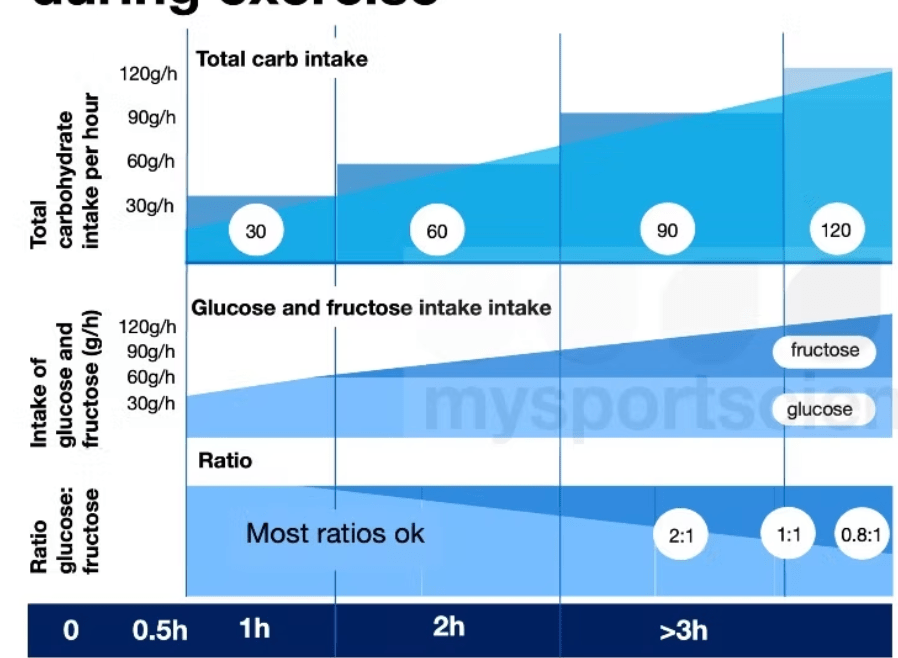
An athlete has a 2.5-hour high-intensity distance session. What is a reasonable starting target for carbohydrate intake per hour?
Approximately 60–90 g/hour, adjusted to intensity, individual tolerance, and the athlete’s practiced fueling plan. Higher intakes require deliberate gut training.
300
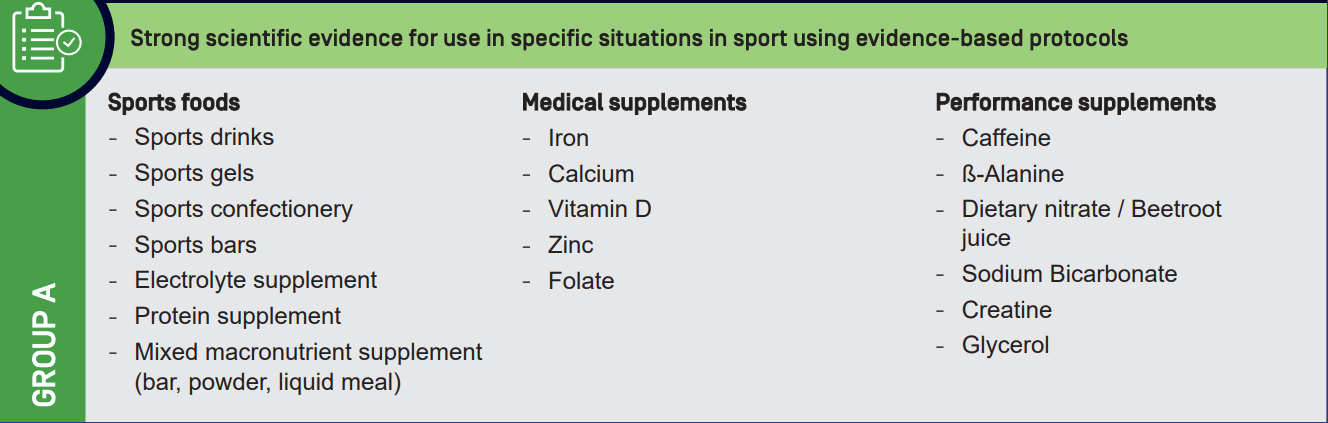
Name 3 of the most backed performance-related supplements? Excluding medical/health supplements.
300
An athlete has two demanding sessions separated by only six hours. What is the main nutritional priority immediately after the first session?
Begin recovery promptly with adequate carbohydrate for glycogen restoration, protein to support muscle repair and adaptation, and fluid plus sodium to replace losses. The shorter the recovery window, the more important early intake becomes.
300
An athlete experiences cramping after switching to a very concentrated sports drink. Name two reasons why this may be happening.
Dehydrated
Imbalance of electrolytes
Improperly fueled
Altitude
Improperly trained
Neurological
300
What is “gut training,” and why might it matter to a skier targeting 90 g of carbohydrate per hour?
Repeatedly practicing carbohydrate intake during training to improve gastrointestinal tolerance and the ability to consume and absorb large amounts of carbohydrate during exercise.
400
An athlete wants to introduce three new supplements the week before a World Cup race. Name three reasons the performance team should pause before approving the plan.
Evidence: The products may not have demonstrated benefits for the athlete's event or intended use.
Safety and anti-doping: Supplements can be contaminated with prohibited substances. Independent third-party testing reduces risk but cannot eliminate it.
Tolerance: New products can cause GI distress, sleep disruption, or other side effects.
Timing: Effective protocols often require advance planning and testing during training.
Fundamentals: Supplement decisions should follow an assessment of energy intake, carbohydrate availability, recovery, and any identified nutrient deficiencies.
400
Is consuming all of an athlete’s daily protein at dinner equivalent to distributing it across several meals for muscle protein synthesis?
No. Distributing protein across several meals and snacks, with meaningful doses every few hours, generally provides more repeated opportunities to stimulate muscle protein synthesis. Total daily intake remains a major priority.
400
Why can dehydration risk remain significant during cold-weather cross-country skiing, even when an athlete does not feel thirsty or sweat appears minimal?
Cold-induced diuresis, respiratory water loss, sweat trapped in clothing, and reduced thirst perception can contribute to fluid deficits despite cool conditions.
400
Why might a glucose-only fueling strategy be less effective than a glucose-plus-fructose strategy when targeting very high carbohydrate intakes?
Glucose and fructose use different intestinal transporters—SGLT1 and GLUT5, respectively. Combining them can increase exogenous carbohydrate absorption and oxidation at high intakes and may improve gastrointestinal tolerance for some athletes.
500
Sodium bicarbonate and beta-alanine both relate to acid-base regulation. What is the key difference between their primary buffering locations?
Sodium bicarbonate increases extracellular buffering capacity, while beta-alanine increases muscle carnosine and thus intracellular buffering capacity.
500
An XC skier completes a morning interval session and an afternoon strength session, then has another demanding training day tomorrow. What should the athlete prioritize across the next 24 hours?
Sufficient total energy to support training and recovery.
Carbohydrate matched to the high training load and the need to restore glycogen.
Regular protein-containing meals and snacks.
Fluid and sodium replacement based on measured or estimated losses.
Adequate sleep and meal timing that minimizes long periods without fueling.
The goal is to support both immediate recovery and adaptation without accumulating an energy deficit.
500
An athlete is preparing for a 50 km race expected to last 2.5–3 hours. Outline a fueling strategy that addresses pre-race carbohydrate availability, intake during the race, and GI tolerance.
Before: Eat a familiar, carbohydrate-rich meal, generally 1–4 hours before the start, with portions and timing tailored to the athlete.
During: Build toward approximately 60–90 g/hour, or an individually tested higher target where appropriate.
Delivery: Use a combination of drinks, gels, and/or easily consumed foods at planned opportunities, accounting for aid stations and course demands.
Practice: Rehearse the exact products, timing, concentration, and fluid plan in training.
Adjust: Consider race intensity, cold conditions, GI history, and whether the athlete can comfortably consume the planned amount.