Phlebotomy
Order of Draw
Additives
Variety
Capillary sticks/Misc
100
Where is the preferred site for patients two years and older?
antecubital space
100
What color tube do you draw after the yellow tube?
Blue (coagulation study-measure your blood's ability to clot, and how long it takes to clot)
100
What additive is in the glass red tube?
NONE- sometimes known as a waste tube
100
What method is the most commonly used for venipuncture?
Evacuated tube method or vacuum tube
100
What are the preferred fingers for a capillary stick?
ring and middle finger
200
Where is the preferred site for 12 months to 2 years?
finger stick
200
What color tube do you draw after the tiger top?
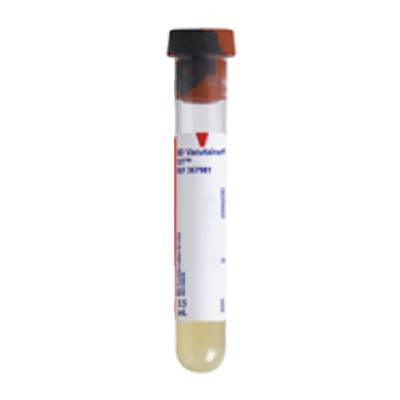
Green-the collection of heparinized plasma or whole blood for special tests
200
What additive is in the tiger top?
Serum Separator Tube (SST): Does not contain an anticoagulant but contains a clot activator and serum separator gel. This tube is used for collecting serum.
200
Why is the syringe method rarely used for drawing blood?
risk of cross contamination
200
Where is the approved sites on the heel to stick? When should you never use the heel?
farthest lateral or medial aspect of the plantar surface of the heel, not on the bottom. Once a baby is walking the heel should not be used.
300
Where is the recommended site for newborns to 12 months?
heel stick
300
What color is drawn after green?
Lavender-This tube is used to for Hematology (CBC, e.g.) and certain Chemistry and Blood Bank testing.
300
What additive is in the green tube?
Contains sodium heparin or lithium heparin-decrease the clotting ability of the blood
300
What is the maximum amount of time you leave a tourniquet on for?
1 minute
300
Where are the three places you can perform a capillary stick?
heel, finger and earlobe
400
Why do tubes need to be drawn in a certain order?
to prevent cross-contamination from the additives
400
What color tube should you draw first?
yellow (blood cultures-test to check for bacteria or other germs in a blood sample)
400
What additive is in the blue tube?
- These tubes contain the anticoagulant sodium citrate.
- They are used mostly for coagulation (clotting) studies.
- They must be completely filled to assure proper ratio of anticoagulant to blood.
- They must be inverted immediately after filling to prevent clotting.
400
What degree do you perform a venipuncture at?
15-30 degrees
400
Why do we perform inversions on the tubes?
to mix the additives in the vial with the blood
500
Name a site restriction
mastectomy, ports, fistulas or other medical conditions
500
What color tube should you draw last?
Grey (Glucose-measures the glucose levels in your blood. Glucose is a type of sugar. It is your body's main source of energy)
500
What additive is included in the Lavender tube?
EDTA-as an anticoagulant
500
When should you use the butterfly method?
smaller or more fragile veins
500
What is the machine called that we use to "spin" or "separate" the blood?
centrifuge