The First Category
The Second Category
The Third Category
The Fourth Category
The Fifth Category
100
Protective phospholipid layer ALL cells have
Cell Membrane
100
This type of eukaryotic cell has a cell wall, a large central vacuole and chloroplasts
plant cell
100
organelle breaks down damaged organelles, waste material, and foreign invaders in the cell
lysosomes
100
Makes Protein; ALL cells have these
Ribosome
100
What process do animal cells use to convert oxygen and glucose molecules to carbon dioxide, water, and ATP?
Cellular respiration
200
Stores food, water, and waste; extra large in plant cells
Vacuole
200
jelly like substance within the cell
cytoplasm
200
organelle that modifies, sorts, packages, and transports proteins and other materials
Golgi complex
200
How does rough ER differ from smooth ER in structure and function?
Rough ER has ribosomes attached to its membrane.
Smooth ER makes lipids and breaks down toxins.
200
What process do plant cells use to convert water and carbon dioxide to oxygen and glucose?
Photosynthesis
300
A web of protein filaments that give shape and support to the cell
cytoskeleton
300
Does not have ribosomes on it; Makes and stores lipids and transports them
Smooth Endoplasmic Reticulum
300
What structures are found in plant cells that are not found in animal cells?
cell wall and chloroplasts
300
Produces, stores, and breaks down starches
Amyloplast
300
When was Cell Theory established?
1830s, edited into the 1850s
400
Where does the gogli complex get its lipids and proteins from
ER
400
Where do lysosomes attach and dispose of the waste they have collected?
vacuole
400
green pigment that absorbs solar energy
chlorophyll
400
assists in the production, processing, and transport of proteins and in the production of lipids.
ER
400
Do plant cells have a cell membrane?
Yes!
500
Rigid layer that protects outside of plant cells.
Cell Wall
500
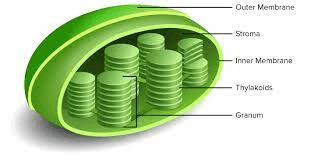 Found ONLY in PLANT cells. Its products are glucose and oxygen during photosynthesis
Chloroplast
500
the cell’s genetic material and controls many of the cell’s activities
nucleus
500
converts energy to food
Mitochondria
500
Omnis cellula e cellula.
Which tenet of cell theory is this?
All cells come from pre-existing cells.