LAB SAFETY
OBSERVATIONS & DATA
SCIENCE TOOLS & SI UNITS
DATA & VARIABLES
CER & SCIENTIFIC THINKING
100
What should you do immediately if you spill something in the science classroom?
Tell your teacher right away.
100
A student writes: "The liquid is blue and cloudy." Is this an observation or an inference?
Observation.
100
What tool would you use to measure the length of a science textbook?
Ruler.
100
What is the difference between data and a dataset?
Data is information collected during an investigation. A dataset is a collection of related data.
100
What does CER stand for?
Claim, Evidence, Reasoning.
200
Why should long hair be tied back during a lab?
To help prevent it from getting caught in equipment or interfering with the investigation.
200
A student sees another student shivering and says, "She must be cold."
Is this an observation or an inference?
Inference.
200
What unit would be appropriate for measuring the amount of water in a small container?
Milliliters (mL).
200
A scientist records the following temperatures:
22°C, 24°C, 21°C, 25°C, 23°C
What do these numbers represent?
A dataset.
200
A student says:
"The paper airplane traveled farther because it was thrown with more force."
Is this statement a claim, evidence, or reasoning?
Reasoning, because it explains why/how something happened.
300
Name two things you should do to stay safe when working with science equipment.
Approved Answers: reading labels, wearing safety goggles when instructed, handling glass carefully, keeping hands away from your face, following directions, no horseplay, or cleaning up afterward.
300
Is this qualitative or quantitative data?
"The rock has a mass of 56 g."
Quantitative data.
300
What unit would you use to measure the mass of a very tiny object?
Milligrams (mg).
300
Three students test different brands of paper towels by measuring how much water each one absorbs.
Give one example of data they might collect.
An acceptable answer would be the amount of water absorbed, such as 35 mL.
300
A student records:
"Plant A grew 12 cm while Plant B grew 7 cm."
Write one sentence of evidence that could be used in a CER response.
"The data shows that Plant A grew 12 cm while Plant B grew 7 cm."
400
A student finishes an investigation and leaves materials scattered around the table. What safety rule did they fail to follow?
They should clean up their lab station and put away equipment before leaving.
400
A student records: "The beaker contains 50 mL of cloudy liquid."
Identify the qualitative and quantitative data.
- Qualitative → cloudy
- Quantitative → 50 mL
400
A student measures a table and gets 2.4 meters. How many centimeters is this?
240 cm
400
A student investigates:
"Does the amount of water given to a plant affect the number of leaves it grows?"
Identify the independent variable and dependent variable.
- Independent → amount of water
- Dependent → number of leaves
400
A student claims that plants grow better when they receive more sunlight.
The data shows that the plant receiving 8 hours of sunlight grew 14 cm, while the plant receiving 4 hours grew 8 cm.
Write one sentence of reasoning that connects the evidence to the claim.
"This shows that the plant receiving more sunlight grew more, which supports the claim that more sunlight can help plants grow."
500
A student sees a broken beaker on the floor. What should they do?
(What should they not do? What should they do, and what tools should be used?)
They should not pick it up with their bare hands. They should tell the teacher and use a broom and dustpan as instructed.
500
A student observes a classmate sitting with their head down and eyes closed.
Give one observation and one inference.
- Observation: The student has their head down and eyes closed.
- Inference: The student might be tired/sleeping.
500
A science sample has a mass of 4,500 grams. How many kilograms is this?
4.5 kg
500
Scientists test three materials to see which one keeps an ice cube from melting the longest.
After 30 minutes:
- Material A: 8 g of ice remaining
- Material B: 15 g of ice remaining
- Material C: 11 g of ice remaining
Which material kept the most ice from melting? Use the data to explain your answer.
Material B. It had 15 g of ice remaining, which was more than Materials A and C.
500
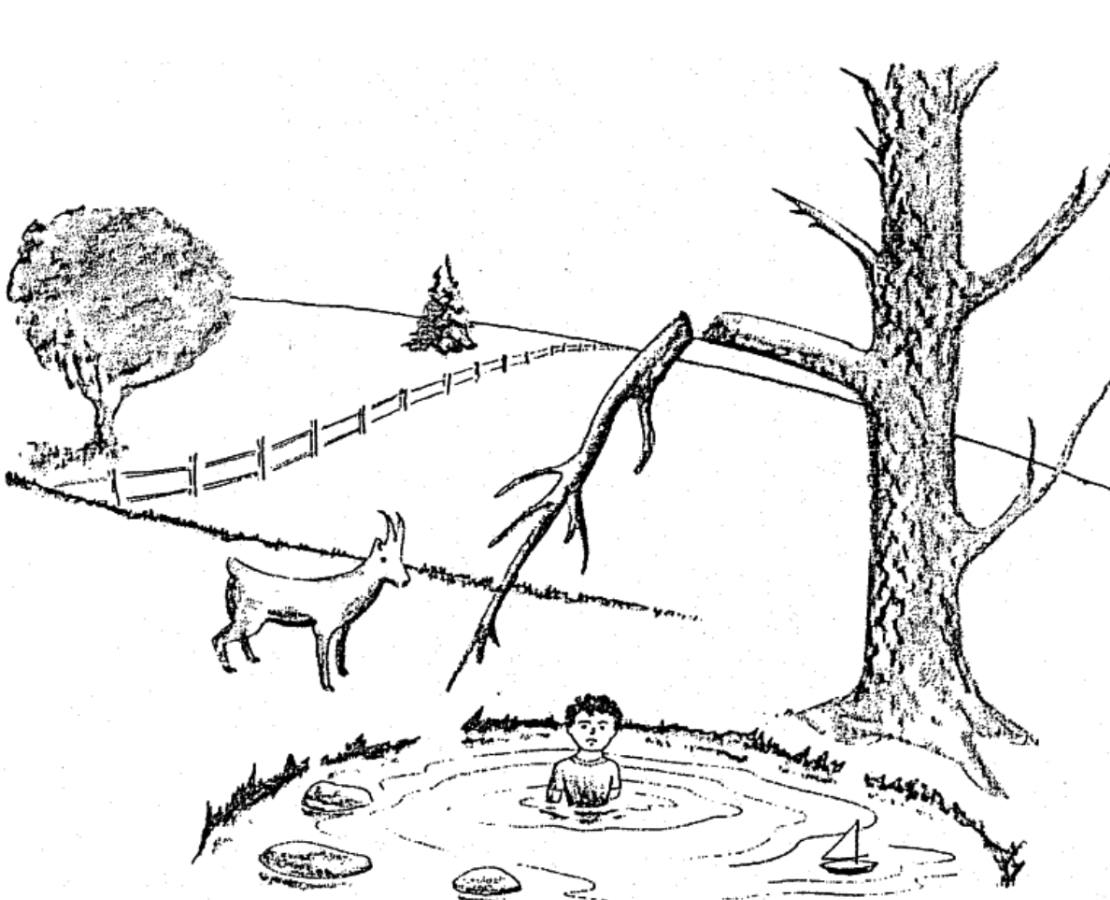 "What happened?"
Write a claim, two pieces of evidence, and reasoning to answer the question.
Answers will vary depending on the picture. Students should include:
- Claim: A statement that answers the question.
- Evidence: Two specific details from the picture.
- Reasoning: An explanation of how or why the evidence supports the claim.