Outdoor Cane Skills
Lack of Curb Detection: Causes and Remedies
Alignment
Veering
Intersections
100
Generally, you can expect what to happen to the long cane skills your student mastered indoors, when you begin teaching outdoor lessons?
The student's cane skills decrease some (suffer) in the new environment. (Jacobson)
100
Cause: The leaner might be overstepping his cane (feet too close to cane)
Remedy: _____________
Extend arm further
100
Using cane tip or foot to contact grass line, landscape strip, fence or wall to determine one's position on the sidewalk is called __________ alignment.
Tactile
100
The first thing a learner should do if she realizes she has veered is __________ and remain aware of her ____________.
Stop and remain aware of her intended line of travel.
100
This type of intersection is called:
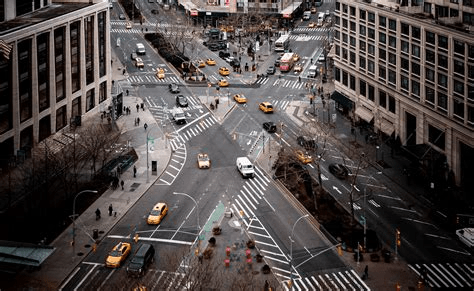
Skewed intersection
200
This can be caused by poor posture, uneven cane arc, overreaction to contact with an edge, or too-slow travel speed.
Veering or poor line of travel (Fazzi & Barlow)
200
Cause: Cane may not be proper length
Remedy: ______________
Longer cane length may need to be selected
200
Standing on the sidewalk and listening to cars pass on the street beside the learner will help him establish ___________ alignment with ___________ traffic
Auditory alignment with parallel traffic
200
The second thing the learner should do when realizing she has veered is check ___________ with the full _____________.
Check the ground on both sides of her body with the full length of his cane.
200
This type of intersection is called:
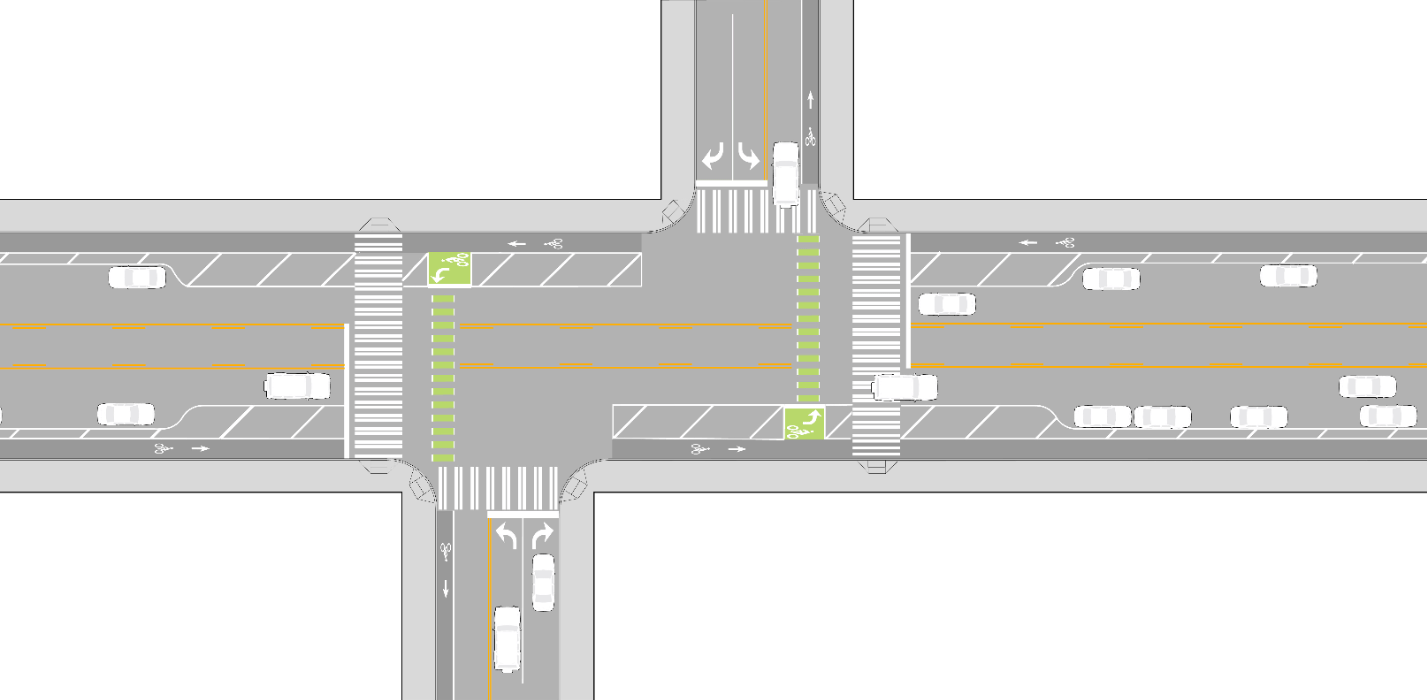
Offset intersection
300
In order to find the curb ramp or downcurb, the learner should do what upon approach?
Slow travel pace, switch from two-point touch to constant contact or touch-and-slide.
300
Cause: The learner's pace may be too fast
Remedy: ________________
Practice walking at more controlled pace
300
The learner listens for vehicles traveling on the street in front of him to establish _________ alignment with __________ traffic.
auditory alignment with perpendicular traffic
300
When the learner locates the sidewalk, she ___________.
Makes the necessary correction to place herself on the sidewalk and continues in the desired direction.
300
If a learner is not properly ________________, analysis of an intersection is very difficult.
Aligned
400
Relaxing the wrist, elbow and shoulder during sidewalk cane travel helps to ___________ .
Absorb the shock of the cane sticking in cracks or grass. (Fazzi & Barlow)
400
Cause: The learner may have poor distance awareness
Remedy: ________________
Practice anticipating length using auditory and sensory cues
400
A downcurb to cross the parallel street, which can throw off a learner's alignment as he tries to travel the block, is called a _________ slope, or a slope ______________ to the line of travel.
Cross slope, or a slope perpendicular to the line of travel.
400
In addition to tactile searching, the learner should use ______________ to determine the location of the parallel street, then travel directly to it.
Available clues such as traffic sounds.
400
This intersection is called:
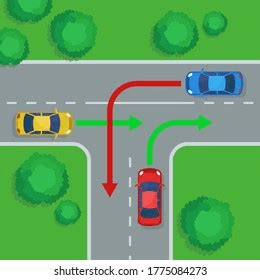
T-shaped or Three-leg intersection
500
The five outdoor cane techniques are _________.
1. Two-point touch
2. Constant contact
3. Touch and drag
4. Touch and slide
5. Three point touch
500
DAILY DOUBLE!
Cause: The learner may have slow reaction time
Cause: The learner may be using ineffective cane skills
Remedy: Focus on auditory and sensory cues, or work with a longer cane or different cane technique
Remedy: Refine current technique or switch to a technique that more easily detects drop-offs
500
When a learner has detected a slope underfoot and with the cane as he travels the block, he should do two things to gather enough information to stay aligned.
Widen cane arc, especially on side away from street, to find inside edge.
Listen for traffic sounds on parallel street.
500
The procedure for navigating around a car in the walking path that is determined not running is to _________________.
Walk around it on the side away from the street (if it turns out to be running, its direction of travel is most likely toward the street).
500
This intersection is a (3 names):
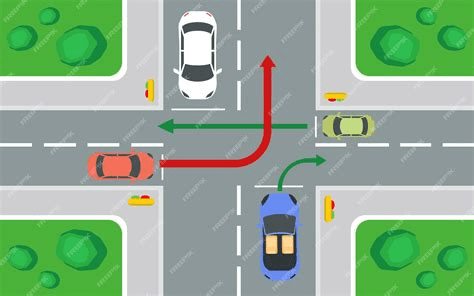
Four-Way or Four-Leg
Right Angle
Plus Shape