Natural Selection
Chemical Reactions
Bacteria and Viruses
Chemical VS Physical Changes
Atoms & Molecules
100
The process of organisms changing over time. Organisms with traits better suited to their environment tend to survive and reproduce.
What is Natural Selection?
100
A process in which new chemicals are formed.
What is a chemical reaction?
100
Single-celled (unicellular) organisms that reproduce by copying their DNA and splitting it in half
What are bacteria
100
A type of change in which a new substance is formed.
What is chemical change.
100
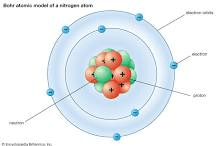
Three particles make up an atom.
What are Protons, Neutrons, and Electrons?
200
A characteristic belonging to a population or organism.
What is a trait?
200
Since matter cannot be created or destroyed, atoms rearrange themselves in the presence of a catalyst and new substances are formed which are called______.
What are products?
200
Bacteria that can cause bad infections from eating undercooked or contaminated food.
What is salmonella?
200
A chemical that provides a lot of oxygen to help things burn.
What is an oxidizer?
200
A chart we can use to find information about all the elements.
What is the Periodic Table?
300
Part of a chromosome that is inherited from the parent(s) and determines some of an organism’s characteristics.
What is a gene?
300
The changes that result in changes of state, or phase changes and not in new substances being formed.
What are physical changes.
300
Not living cells that cannot divide on their own and need a host cell to reproduce by attaching to the surface of a cell, injecting its DNA into the cell, hijacking the cell to make more copies of itself, exploding the cell and killing it.
What is a virus?
300
A gas without any color or smell that is commonly found in soda. It is also called CO2 and comes out of the back of a running car or bus.
What is carbon dioxide?
300
A field of science that studies atoms and molecules.
What is a chemistry?
400
A bacteria that is found in the digestive track of humans and other animals that can reproduce quickly (about every 20 minutes). Some strains can cause severe food poisoning.
What is E. Coli?
400
Magnetism, flammability, density, and odor are examples of _______.
What are properties?
400
Special cells that fight against bacteria and viruses.
What are white blood cells?
400
You hear a popping sound and burst of flames.
How does hydrogen react in a flame test?
400
Name an example of an element. Name an example of a molecule.
What is Oxygen, copper, phosphorus...?
What is water, oxygen, hemoglobin...?
500
A famous biologist and naturalist who is known for his contributions to the study of evolution through the process of natural selection.
Who is Charles Darwin?
500
The law that states that the total number of atoms will not change in a chemical reaction.
What is the Law of Conservation of Matter?
500
A scientist who studies microscopic organisms and infectious agents, such as bacteria, viruses, fungi, algae, and parasites.
What is a microbiologist?
500
A substance that speeds up a chemical reaction.
What is a catalyst?
500
Draw a model of an atom.