Biology
Physics
Chemistry
Earth Science
Space Science
100
What is the largest organ in the human body?
A) The brain
B) The liver
C) The skin
C) The skin
Your skin is the body's largest organ, covering about 21 square feet and making up roughly 15% of your total body weight. It acts as a busy shield, blood vessel network, and self-cleaning system all at once
100
Who was awarded the 1921 Nobel Prize in Physics for his explanation of the photoelectric effect?
A) Niels Bohr
B) Max Planck
C) Albert Einstein
C) Albert Einstein
Einstein proposed that light is made of discrete packets of energy (photons), which successfully explained the photoelectric effect.
100
What is the most abundant element in the universe?
A) Oxygen
B) Hydrogen
C) Helium
B) Hydrogen
Hydrogen makes up about 75% of elemental mass, This invisible, odorless gas powers the stars through nuclear fusion and serves as a key building block for water.
100
What is the outermost solid layer of the Earth called?
A) Mantle
B) Core
C) Crust
C) Crust
The Earth's crust is named after the hard, outermost layer of a loaf of bread or pie because it forms a thin, brittle, solid outer shell over the hotter, softer material underneath. The Earth's crust varies significantly by location. Under the oceans, the oceanic crust is thin, measuring about 5 to 10 kilometers (3 to 6 miles) thick. Under the land, the continental crust is much thicker, averaging 25 to 70 kilometers (15 to 44 miles) deep
100
What is the name of the galaxy that contains our solar system?
A) Milky Way
B) Andromeda
C) Sombrero
A) Milky Way
Our home galaxy is called the Milky Way. It’s a spiral galaxy with a disk of stars spanning more than 100,000 light-years. Earth is located along one of the galaxy’s spiral arms, about halfway from the center. Our solar system takes about 240 million years to orbit the Milky Way just once.
200
How many bones are in the human body?
A) 198
B) 206
C) 218
B) 206
Adult humans have 206 bones, but babies are born with about 300 that fuse together over time. More than half of all your bones live in your hands and feet, and your skeleton completely rebuilds itself every 10 years.
200
Which method of heat transfer primarily involves the bulk movement of fluids (liquids or gases)?
A) Convection
B) Conduction
C) Radiation
A) Convection
Convection occurs when warmer, less dense fluid rises and cooler, denser fluid sinks, transferring heat. For example, warm air rises in the atmosphere to form clouds, wind, and thunderstorms.
200
What is the only metal that is liquid at room temperature?
A) Mercury
B) Gold
C) Iron
A) Mercury
Mercury is a dense, liquid metal used in fluorescent lighting, industrial chlorine and caustic soda production, dental amalgams, electrical switches, and specialized scientific measuring tools, though many traditional uses are now phased out due to toxicity.
200
What scientists study insects?
A) Entomologists
B) Oceanographers
C) Ornithologists
A) Entomologists
Entomologists are scientists who study insects and their relationships with humans, the environment, and other living things. They explore insect behavior, life cycles, ecology, and classification.
200
Voyager 1 and Voyager 2 carry a famous message for extraterrestrial life. What is it made of?
A) Titanium plates
B) Golden records
C) Silicon microchips
B) Golden records
Because both spacecraft would eventually leave our solar system and travel through interstellar space for millions of years, NASA viewed them as a rare chance to leave a trace of human existence. The records on the Voyager spacecraft are plated with gold because gold does not rust or corrode over time.
300
What can be made from the particles of a dead virus to prevent the disease caused by that virus?
A) Vaccine
B) Bacterial Wash
C) Fungal Cream
A) Vaccine
Yes, some vaccines are made from dead viruses, but they are not all made this way. Scientists categorize these as inactivated vaccines. They use heat, chemicals, or radiation to kill the virus so it cannot replicate inside your body, while still training your immune system to fight it.
300
A ball is dropped from a certain height. Neglecting air resistance, what happens to its total mechanical energy as it falls?
A) It increases
B) It decreases
C) It remains constant
C) It remains constant
According to the principle of conservation of mechanical energy, the sum of potential and kinetic energy remains constant if dissipative forces like air friction are ignored.
300
Which gas makes up the majority of Earth's atmosphere?
A) Nitrogen
B) Carbon Dioxide
C) Oxygen
A) Nitrogen
Nitrogen makes up about 78% of our air, and helps to create the bright red, green, and violet colors in the aurora borealis.
300
What is the primary driving force behind deep ocean currents?
A) Wind patterns
B) The Moon's gravity
C) Thermohaline circulation
C) Thermohaline circulation
Thermohaline circulation is a slow, global system of deep-ocean currents driven by differences in water temperature and salinity. Cold water and salty water are denser than warm and fresh water.
300
Which planet in our solar system is the hottest?
A) Mercury
B) Venus
C) Mars
B) Venus
Venus is the hottest planet in our solar system, with a crushing surface temperature of about 867°F (464°C). Venus also spins in the opposite direction of most planets (retrograde rotation), meaning the sun rises in the west and sets in the east.
400
Which of the following is a key requirement for the process of natural selection to occur in a population?
A) All individuals must be genetically identical.
B) There must be heritable variation among individuals.
C) Environmental conditions must remain completely static.
B) There must be heritable variation among individuals.
Natural selection requires genetic diversity so that some individuals are better suited to survive and reproduce than others.
400
What does the First Law of Thermodynamics fundamentally state?
A) Entropy always increases in an isolated system.
B) Energy cannot be created or destroyed, only transformed.
C) Heat flows naturally from a hotter body to a colder body.
B) Energy cannot be created or destroyed, only transformed.
The First Law of Thermodynamics is the law of conservation of energy applied to thermodynamic systems. It means the total amount of energy in a closed system never goes up or down. Energy just moves or takes a new shape.
400
Which two elements are liquid at room temperature?
A) Gold and silver
B) Bromine and mercury
C) Oxygen and nitrogen
B) Bromine and mercury
They are the only two elemental metals/non-metals liquid under standard conditions. Bromine is a heavy, volatile, reddish-brown liquid at room temperature that gives off a choking, noxious vapor.
400
What is the boundary called where two tectonic plates slide past each other horizontally?
A) Transform boundary
B) Divergent boundary
C) Convergent boundary
A) Transform boundary
because two tectonic plates slide past each other horizontally, building up friction and stress that is suddenly released as seismic energy. The most transform boundaries on Earth are located on the ocean floor, where they form zig-zag offset segments along mid-ocean ridges.
400
How many humans have walked on the surface of the Moon?
A) 6
B) 10
C) 12
C) 12
All 12 moonwalkers were American men who flew as part of NASA's Apollo program between 1969 and 1972:
Apollo 11: Neil Armstrong, Buzz Aldrin
Apollo 12: Pete Conrad, Alan Bean
Apollo 14: Alan Shepard, Edgar Mitchell
Apollo 15: David Scott, James Irwin
Apollo 16: John Young, Charles Duke
Apollo 17: Eugene Cernan, Harrison Schmitt
500
Which part of the human brain is primarily responsible for regulating balance, posture, and coordinated voluntary movements?
A) Cerebrum
B) Cerebellum
C) Thalamus
B) Cerebellum
The cerebrum handles conscious actions, including thought, memory, reasoning, speech, and muscle movement. The thalamus acts as the brain's main relay station, processing and passing sensory and motor signals to the cerebral cortex while helping control alertness, sleep, and attention.
500
Which law states that every action has an equal and opposite reaction?
A) Newton's First Law
B) Newton's Second Law
C) Newton's Third Law
C) Newton's Third Law
Newton's first law is also called the law of inertia, where an object at rest stays at rest. Newton's second law explains how force, mass, and acceleration work together.
500
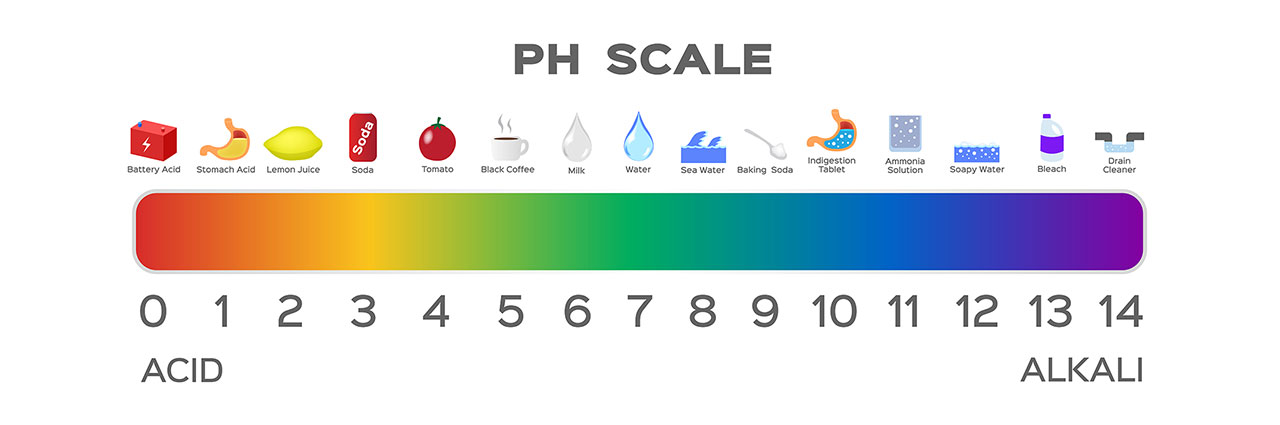
What is the pH value of a neutral solution at 25°C?
A) 0
B) 7
C) 14
B) 7
A pH of 7 is neutral (neither acidic nor basic).
500
What phenomenon is caused by the alignment of the Earth, Moon, and Sun, resulting in the highest high tides?
A) Neap tides
B) Spring tides
C) Rip tides
B) Spring tides
Spring tides are exceptionally strong ocean tides with the highest high tides and lowest low tides, that happen twice a month during the new moon and full moon phases. The name has nothing to do with the season of spring; it comes from the idea that the tide is "springing forth".
500
Which space telescope, launched in 1990, provided the data needed to pinpoint the age of the universe?
A) Kepler
B) Chandra
C) Hubble
C) Hubble
The Hubble Space Telescope orbits Earth at 17,000 mph (27,000 kph) and completes a full trip around our planet every 95 minutes. The hubble helped determine the universe is roughly 13.8 billion years old.