Scientific Investigations
Matter
Plants
Living Systems
Force & Motion
100
the specific plan to test an idea (the steps for an investigation)
scientific method
100
the states of matter
solid, liquid, gas
100
1. attracts pollinators
2. has chlorophyll and is where plants make their food
3. transports water and nutrients to the rest of the plant
4. absorbs water and nutrients from the ground
1. flower
2. leaves
3. stem
4. roots
100
1. makes it own food using energy from the sun
2. consumes (eats) other living things for food
3. breaks down dead organisms or waste, returns nutrients back to the soil
1. producer
2. consumer
3. decomposer
100
this cannot be created or destroyed; only transformed or transferred
energy
200
a prediction that uses what you already know about a topic
hypothesis
200
the smallest particle matter is made of
atoms
200
sunlight, water, nutrients, carbon dioxide are the ______ of photosynthesis.
ingredients
200
1. a consumer that only eats plants
2. a consumer that eats both plants and meat
3. a consumer that only eats meat
1. herbivore
2. omnivore
3. carnivore
200
1. stored energy
2. the energy of motion
1. potential energy
2. kinetic energy
300
the variable that the scientist changes
independent variable
300
the thing that causes phase changes
thermal energy
300
oxygen and sugar (glucose) are the ______ of photosynthesis
products
300
ways to organize living systems
1. one living thing
2. a group of the same kind of living things
3. different populations living together in the same place.
4. all of the living and nonliving things interacting with each other
1. organism
2. population
3. community
4. ecosystem
300
a force that resists (works against) motion
friction
400
the variable that stays the same
constant
400
a combination of two or more substances that do not lose their identifying characteristics when combined
mixture
400
The two ways plants can reproduce
seeds and spores
400
the role or job of an organism in its ecosystem; these can change throughout an organism's life cycle
niche
400
when two objects knock into each other that causes a change in motion (speed/direction) and a transfer of energy
collision
500
the data/results
the variable the scientist measures/observes
dependent variable
500
a special kind of mixture where a substance dissolved in another substance
solution
500
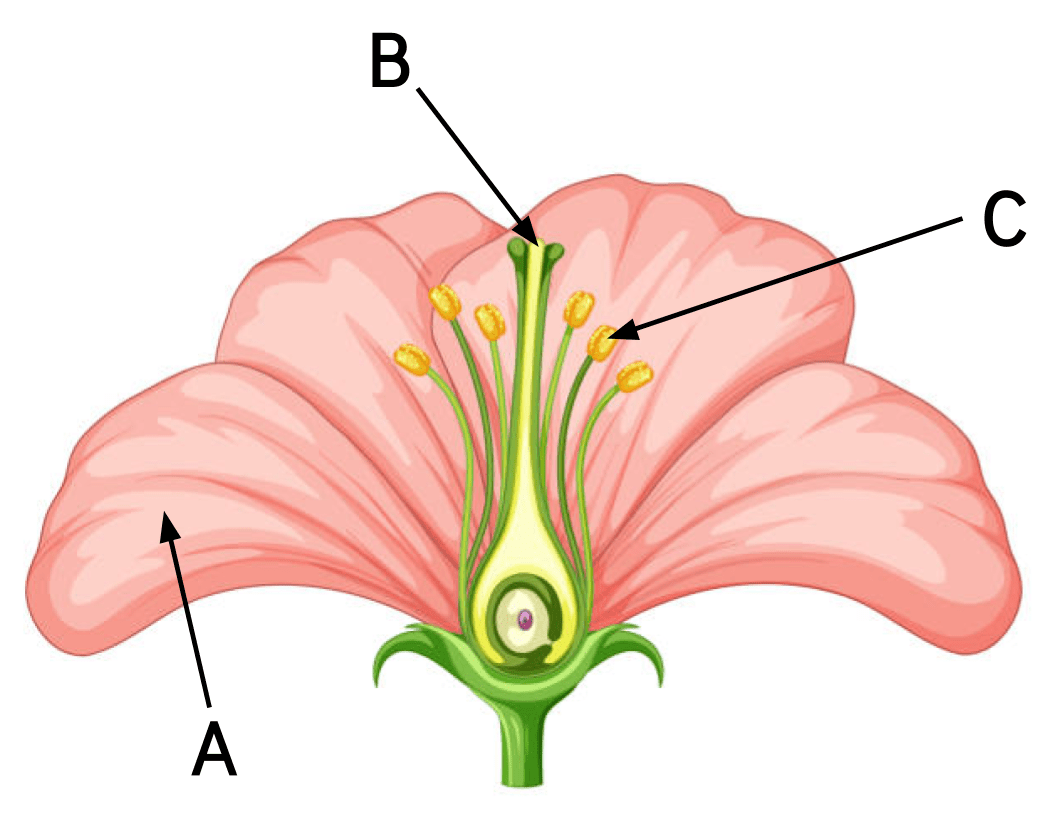 1. the part of the plant that attracts pollinators
2. the part pollinators pick up pollen from
3. the part of the plant that pollinators will drop pollen into to help pollinate the plant
1. A
2. C
3. B
500
1. organism that has a skeleton with a backbone inside its body
2. organism that DOES NOT have a skeleton with a backbone in its body
1. vertebrate
2. invertebrate
500
1. equal forces in opposite directions that cause and object remain in place
2. unequal forces where there is a difference in strength and/or direction of the forces. This causes an object to move.
1. balanced forces
2. unbalanced forces