Scientific Method
Observations
Hypothesis
Variables
Scientific theory
100
What is the second step in the scientific method?
Ask a Question.
100
What are the two types of observation?
What is Qualitative Measurement and Quantitative Measurement.
100
What step of the scientific method do you predict a possible answer to a problem or a question?
What is Hypothesis.
100
What are the two types of variables stated in a hypothesis?
What is Independent and Dependent.
100
A scientific theory supported by evidence collected by many scientists is generally supported as
Truth
200
What step of the scientific method do you test your hypothesis?
What is Experiment.
200
This type of observation is measureable.
What is Quantitative Measurement.
200
Putting my plant in the closet will decrease it's chance of living. What is wrong with this hypothesis?
it is missing "If" and "Then"
200
What is the responding variable or factor that may or may not change due to manipulation?
What is Dependent Variable.
200
A scientific theory is a broad explanation for events that is widely accepted as true. To become a theory, a hypothesis must be tested over and over again, and it must be supported by _______
Evidence
300
anything detected with the senses, which include sight, hearing, touch, smell, and taste.
Observation
300
This type of observation is describable.
What is Qualitative Measurement.
300
If you drink more milk will you get stronger bones? State a good hypothesis for this question.
If you increase the amount of milk you drink, then you will increase the strength of your bones.
300
What is the term we use to describe the manipulated variable or factor that the experimenter intentionally changes?
What is Independent Variable.
300
a _______ is something that always applies under the same conditions.
Law
400
In which step of the scientific method do you present your experiment, observations and conclusions to others?
What is Share Results.
400
Blue, rough, metal are all examples of what type of observation?
What is Qualitative Measurement.
400
I wonder if you smoke more cigarettes, will you have a better chance of getting lung cancer? State a good hypothesis for this question.
If you increase the number of cigarettes you smoke, then you will increase your chance of getting lung cancer.
400
Variables that are not being studied are held constant so that they do not influence the outcome of the experiment
Control.
400
A theory describes ____________________
why something happens
500
List all six steps of the scientific method.
What is Question, Hypothesis, Experiment, Observe and Record, Analyze Results, Share Results.
500
4 feet long with 24 buttons are both examples of what type of observation?
What is Quantitative Measurement.
500
Read the following experiment and state a good hypothesis. I am doing a test to see if there is a connection between how long you run and how fast your heart beats. I will be performing an experiment where a person will run for a 1 minute and I will check their heartbeat. Then they will run for 2 minutes and I will check their heart rate. I will do this up to 6 minutes and see if there is a connection. What do you think my hypothesis should be?
If I increase the amount of time I run, then my heartbeat will increase.
500
Find the IV and DV in the following experiment: If you increase the number of times you practice shooting free-throws, then you will increase your chances of making a basket every time.
What is IV- practice shooting free throws, DV- making baskets.
500
A scientific law describes _______________
What happens
600
Must be based on scientific knowledge, and it must be logical and falsifiable.
Hypothesis
600
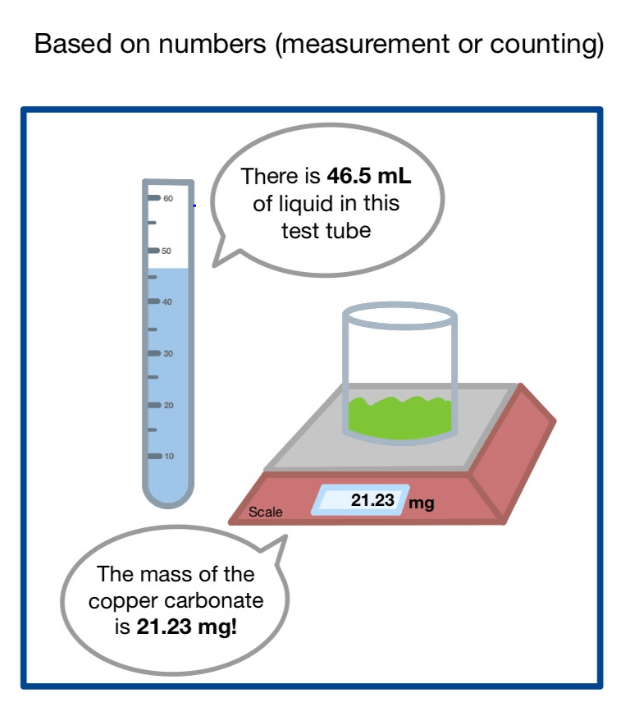
Quantitative
600
Hypotheses should always explain what you expect to happen and also
Be testable and measurable
600
Identify the IV and DV: Vitamins could extend a person's life expectancy.
IV: amount of vitamins
DV: life expectancy
600
This describes a change in the characteristics of living things within a species over time by a process called natural selection.
evolution
700
a statement that tells what will happen under certain conditions.
Prediction
700
The most important step towards collecting data that accurately represents the phenomena under investigation and allows us to make comparisons and assumptions.
measurement
700
The factors that are applied equally to all test subjects of an experiment
Constant
700
Identify the IV and DV: "Do tomatoes grow faster under fluorescent, incandescent, or natural light?"
IV: type of light
DV: growth of tomato
700
This theory says the cell is the smallest unit of structure and function of all living organisms, all living organisms are made up of at least one cell, and living cells always come from other living cells.
Cell theory
800
Any type of data that may either agree or disagree with a prediction, so it may either support or disprove a hypothesis.
Evidence
800
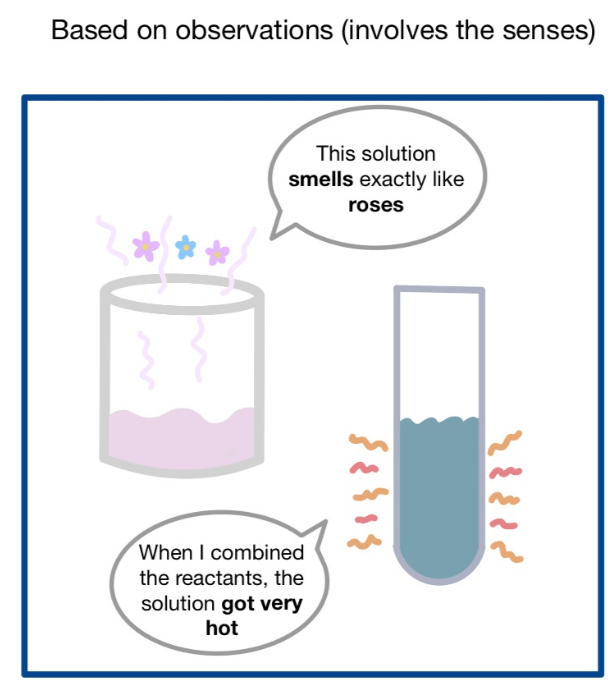
qualitative
800
After data collection, analysis and repeated testing scientists may be able to acquire a well-substantiated explanation of some aspect of the natural world
Scientific theory
800
What would the INDEPENDENT variable be in an experiment testing which type of paper airplane goes farthest?
IV: airplane type/design
800
the pathogenic theory of medicine, is a scientific theory that proposes that microorganisms are the cause of many diseases.
germ theory