Quantitative Research Design
Quantitative Methods
Understanding Your Data
Regression
Potpourri
100
This type of research design in which measurements of independent and dependent variables are taken at the same time - like examining the face of one slice of bread from a loaf.
Cross-sectional design
100
This type of survey question provides respondents with a list of responses from which to choose.
Close-ended questions
100
This is the name for the data we gather since we cannot reasonably gather data on the entire population
Sample
100
As used in class, this concept is represented by either x̄, ȳ, or μ.
Mean
100
This is the number of assumptions for OLS regression
10
200
This type of research design is characterized by examining data across different points in time.
Longitudinal or time-series design
200
This type of survey question does not provide the respondent with any answers from which to choose, and may or may not offer a character limit.
Open-ended questions
200
Given a normal distribution/bell curve, the vertical center of the distribution contain these 3 attributes of the data. 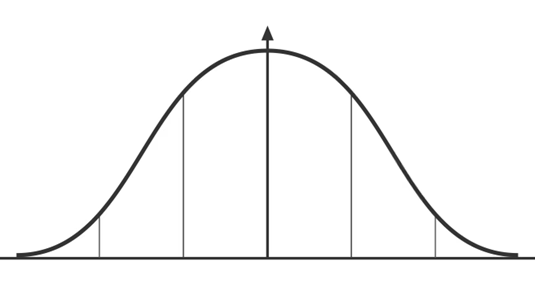
Mean, median, mode
200
OLS (regression) stands for this.
Ordinary Least Squares
200
In math, as taught in this class, what does this symbol represent (don't overthink it):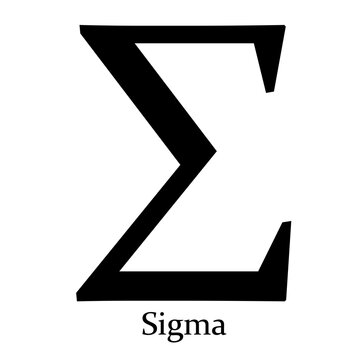
Sum or the summation of a series of numbers
300
This type of non-randomized research design contains treatment and control groups, but the experimenter does not randomly assign individual units to these groups.
Quasi-Experimental design
300
This (not good) type of survey or interview question encourages respondents to choose a particular response because the question indicates that the researcher expects it.
Leading question
300
This is a value that is far greater/smaller than the other values of a recorded variable.
Outlier
300
OLS regression is best suited to this kind of geometric relationship.
Linear
300
An alpha level of 0.05 translates to this confidence interval (as a percentage).
95%
400
This type of randomized experimental design is on in in which the dependent variable is measured after, but not before, manipulation of the independent variable
Posttest design
400
In terms of collecting survey data, this refers to the proportion of persons initially contacted who actually participate.
Response rate
400
This is the square root of the variance.
Standard deviation
400
As a rule of thumb, political science, on average, explains about this much of the variance in its research (as a percentage).
30%
400
This is a type of bar graph in which the height and area of the bars are proportional to the frequencies in each category of a nominal or ordinal variable or of a continuous variable in prescribed intervals.
Histogram
500
As a type of randomized experimental design, this research design includes more than one experimental or control group are created so that different levels of the experimental variable can be compared.
Multiple-Group design
500
This type of data analysis uses data such as bills, speeches , committee hearings, types of city ordinance, executive orders, news articles, court case/decisions, agency reports, campaign ads, Twitter posts, Facebook comments, etc.
Content or text analysis
500
This is the (name of the) theoretical framework in which quantitative probability statistics are grounded.
Central Limit Theorem or Central Tendency
500
This is a line, usually calculated by statistical software in present times, that minimizes the variance (the sum of squares of the errors) - in other words, it minimizes the vertical distance from the actual data points to the regression line’s predicted values.
Best-fit line or line of best fit
500
This is the average (aka mean) of squared deviations and can either be applied to the population (N) or a sample (n).
Variance