Oxidizers/Non-utilizers
Respiratory Pathogens
GI Pathogens
Blood Cultures
Wound Cultures
100
What TSI group contains oxidizers and non-utilizers?
Group V
100
An Optochin disk is used to determine the presence of what organism is this culture type?
Streptococcus pneumoniae
100
What is the purpose of this media? 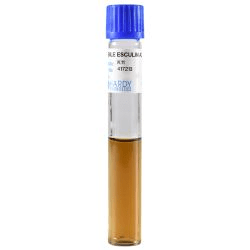
Inhibit normal flora and encourage the growth of pathogens.
100
Blood cultures are collected using this technique:
aseptic
100
What media are included in a routine set up of this culture type?
BAP, MAC, and Thio
200
The following results were obtained from a Group V organism:
Oxidase: negative
Catalase: positive
Motility: negative
OF media: Yellow in uncovered tube
Indole: negative
Urease: negative
MR: negative, VP: negative
Growth at 42: positive
What is the most likely identity of the organism?
Acinetobacter baumannii
200
Respiratory cultures should always be plated:
Under a fume hood
200
A blood agar plate is used to identify what possible organisms in this source?
Yeast and Staphylococcus aureus
200
The following positive bottle indicates the possible presence of: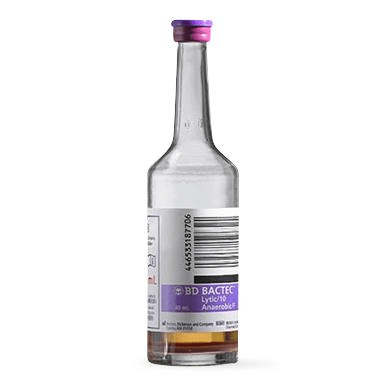
Anaerobe or facultative anaerobe
200
A wound from a groin area might also include the addition of what media?
Choc, Thayer Martin, or Modified Thayer Martin
300
A TSI Group V organism demonstrates the following biochemical results:
Oxidase: negative
Catalase: positive
OF: no change
LIA: positive
Indole: negative
DNase: positive
What is the most likely identification of the organism?
Stenotrophomonas maltophilia
300
The following growth was seen on a respiratory culture. What is this media, and what is the most likely identification of the organism? 
CHOC and Haemophilus influenzae
300
Interpret the following SMAC media. 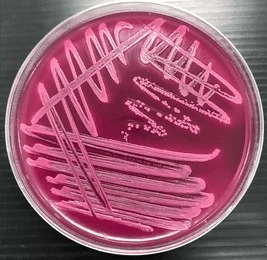
Normal Fecal flora
300
What media are typically included in a standard culture?
BAP and CHOC
300
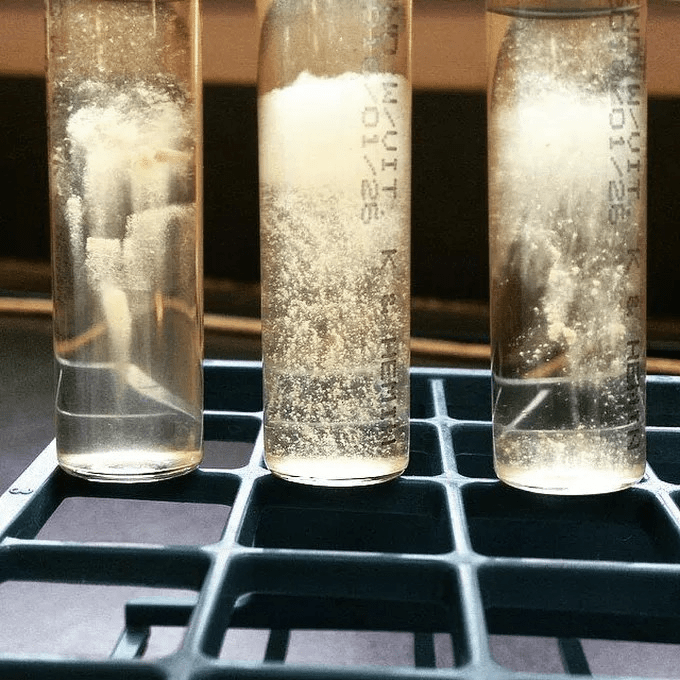 The growth pattern seen here indicates the most likely presence of what type of organism?
Gram positive cocci
400
The following results were obtained from a TSI Group V organism:
Catalase: positive
Oxidase: positive
Urease: negative
Indole: negative
OF: Yellow in the uncovered tube
Nitrate: positive
Citrate: positive
Growth at 42: positive
What is the most likely identification of the organism?
Pseudomonas aeruginosa
400
A respiratory culture demonstrated growth on both BAP and CHOC of white colonies that were oxidase positive. What testing should be performed next?
DNase and butyrate esterase
400
An H2S producing colony demonstrated the following additional tests:
TSI: K/A H2S positive
PAD: Negative
LIA: Positive
Indole: Positive
Interpret the results.
Normal fecal flora
400
The following Gram stain was observed from a positive blood culture after 4 days of incubation. What is the gram stain interpretation and the most likely organism? 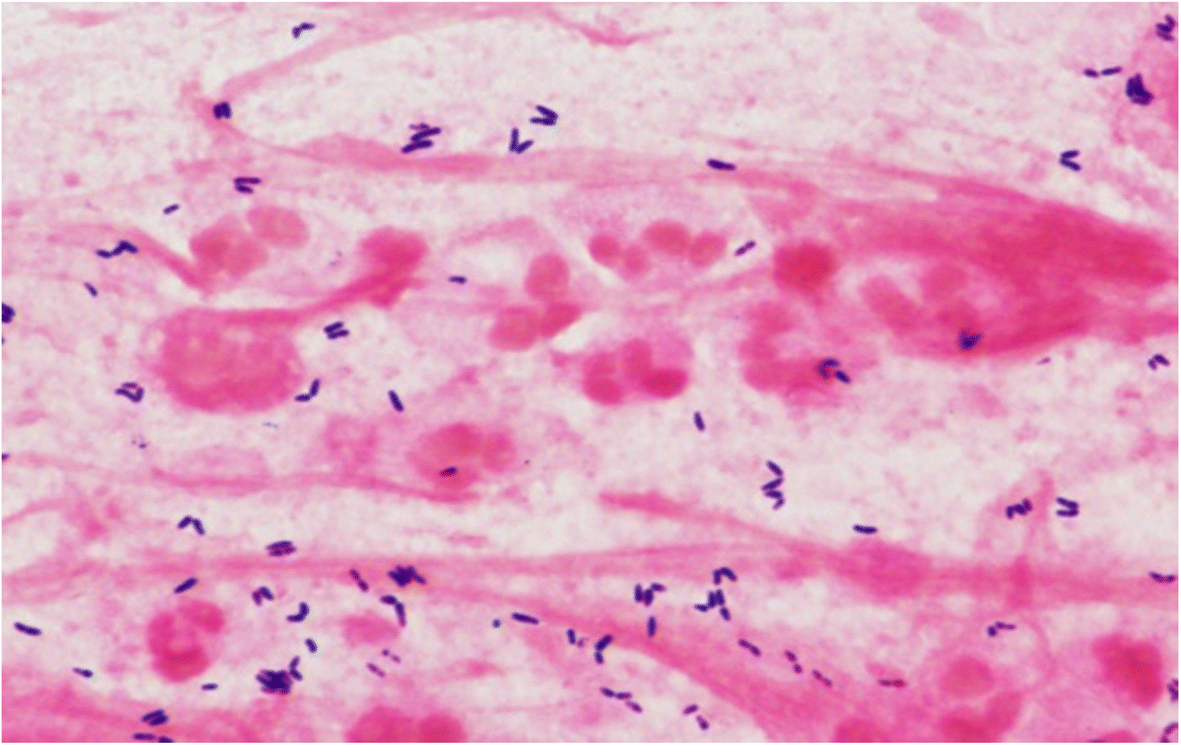
Gram positive bacilli.
Corynebacterium spp.
Most likely skin contamination.
400
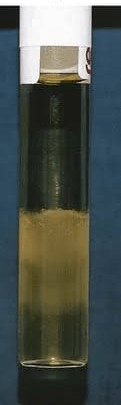 The growth demonstrated here indicates the presence of what type of organism?
Anaerobic
500
The following results were obtained from a TSI Group V organism:
Catalase: positive
Oxidase: negative
Motility: negative
OF: no change
Indole: negative
Urease: negative
Nitrate: negative
Growth at 42: negative
Acinetobacter lwoffii
500
What is this stain and what organism is this stain primarily used to identify in this culture type?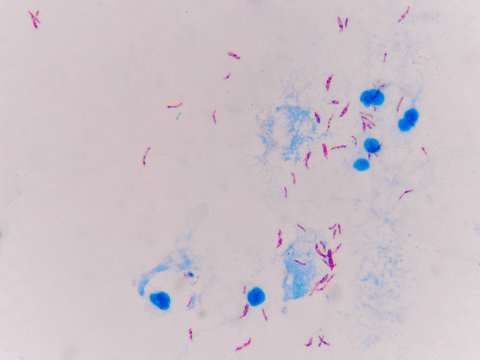
Kinyoun or Ziehl Neelsen stain
Mycobacterium tuberculosis
500
A non-lactose fermenter demonstrated the following tests results:
TSI: K/A H2S negative
MR: Positive, VP: Negative
SIM: Negative, Negative, Negative
Ornithine: Negative
PAD: Negative
Urea: Negative
Interpret the results
Shigella isolated.
500
The following gram stain was obtained from a positive blood culture. What is the interpretation and are any specialty media necessary? 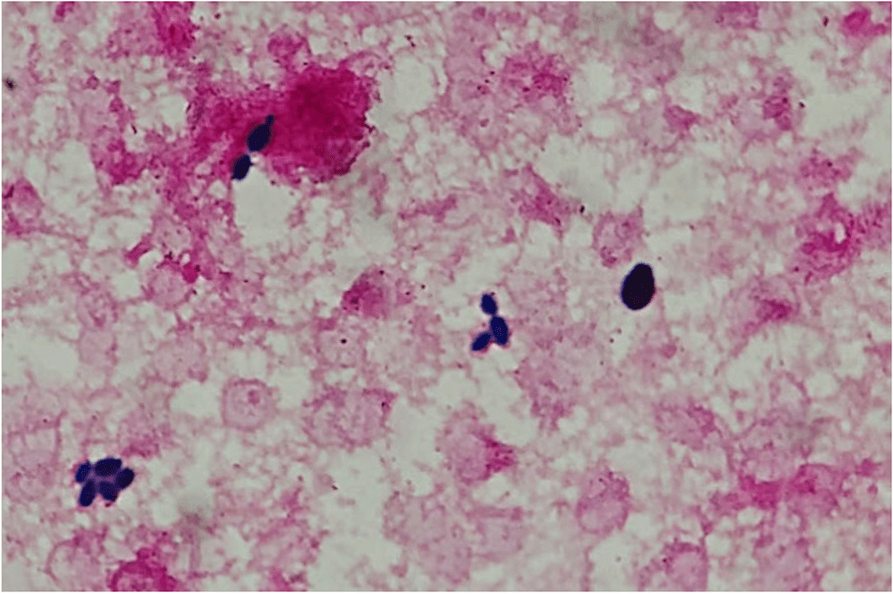
Yeast present.
Fungal media would speed up the growth of the organism.
500
Growth from a wound culture demonstrated the following morphology. This indicates the wound is:
polymicrobic