SKIN BASICS
Connective Tissue
Epidermis
Structure->Function
What's in this layer?
MCQs
Visual Qs
100
What is the most superficial layer of the skin?
Answer: Epidermis.
100
What type of connective tissue stores fat and functions in energy storage and insulation?
Adipose tissue.
100
Which epidermal layer is found in thick skin?
Answer: Stratum lucidum.
100
Which sensory structure detects vibration?
Answer: Pacinian corpuscle.
100
Which major skin layer contains keratinocytes?
Answer: Epidermis.
100
Which layer of the skin is the most superficial?
A. Dermis
B. Hypodermis
C. Epidermis
D. Reticular layer
Answer: C. Epidermis
- A. Dermis — Incorrect: The dermis is the middle layer of the skin.
- B. Hypodermis — Incorrect: The hypodermis is the deepest of the three listed skin layers.
- C. Epidermis — Correct: The epidermis is the superficial layer of the skin.
- D. Reticular layer — Incorrect: The reticular layer is a layer within the dermis.
100
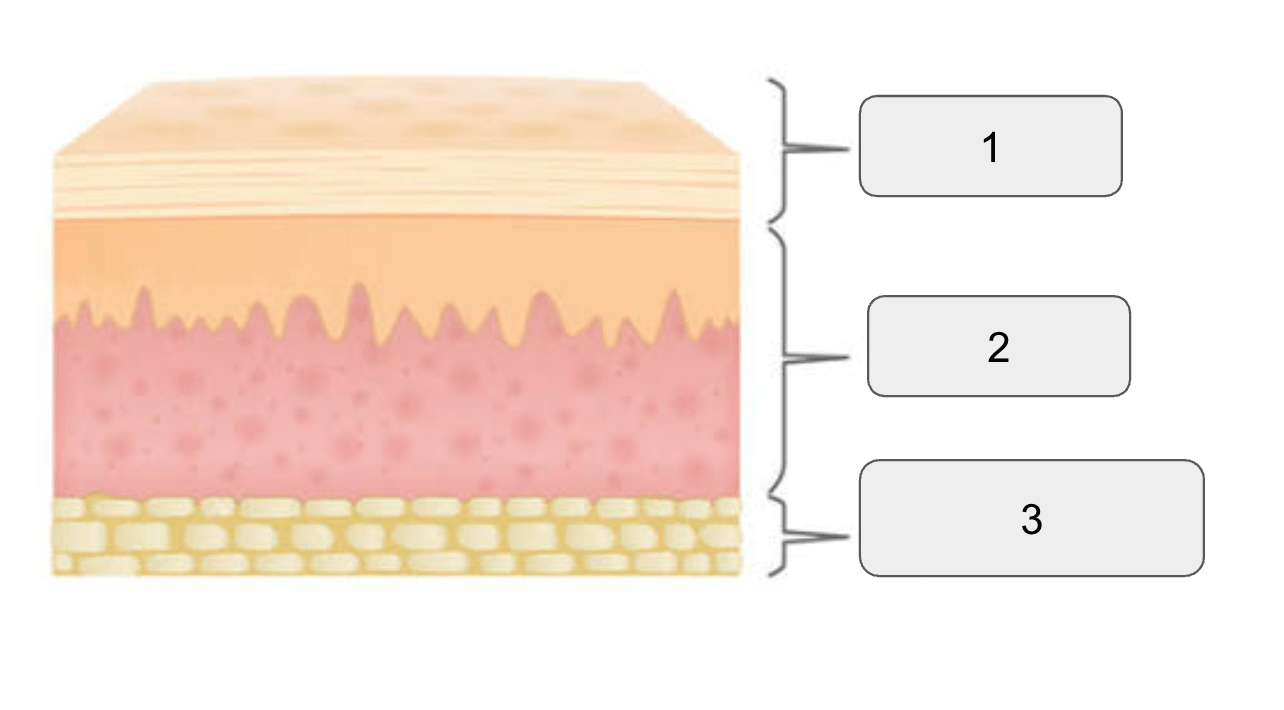
What layer does 2 represent?
Dermis
200
A skin layer has no blood vessels. What term describes this characteristic?
Answer: Avascular
200
What loose connective tissue surrounds blood vessels and supports organs?
Answer: Areolar tissue.
200
Which epidermal layer is known as the germ layer?
Answer: Stratum basale.
200
Which corpuscle functions as a tactile receptor?
Answer: Meissner corpuscle.
200
Which epidermal layer is associated with Merkel cells?
Answer: Stratum basale.
200
Which epidermal layer is found only in thick skin?
A. Stratum basale
B. Stratum spinosum
C. Stratum granulosum
D. Stratum lucidum
Answer: D. Stratum lucidum
- A. Stratum basale — Incorrect: The stratum basale is the germ layer and is not restricted to thick skin.
- B. Stratum spinosum — Incorrect: The stratum spinosum is characterized by structures such as desmosomes and is not restricted to thick skin.
- C. Stratum granulosum — Incorrect: The stratum granulosum contains keratohyalin and is not identified as exclusive to thick skin.
- D. Stratum lucidum — Correct: The slides specifically associate the stratum lucidum with thick skin.
200
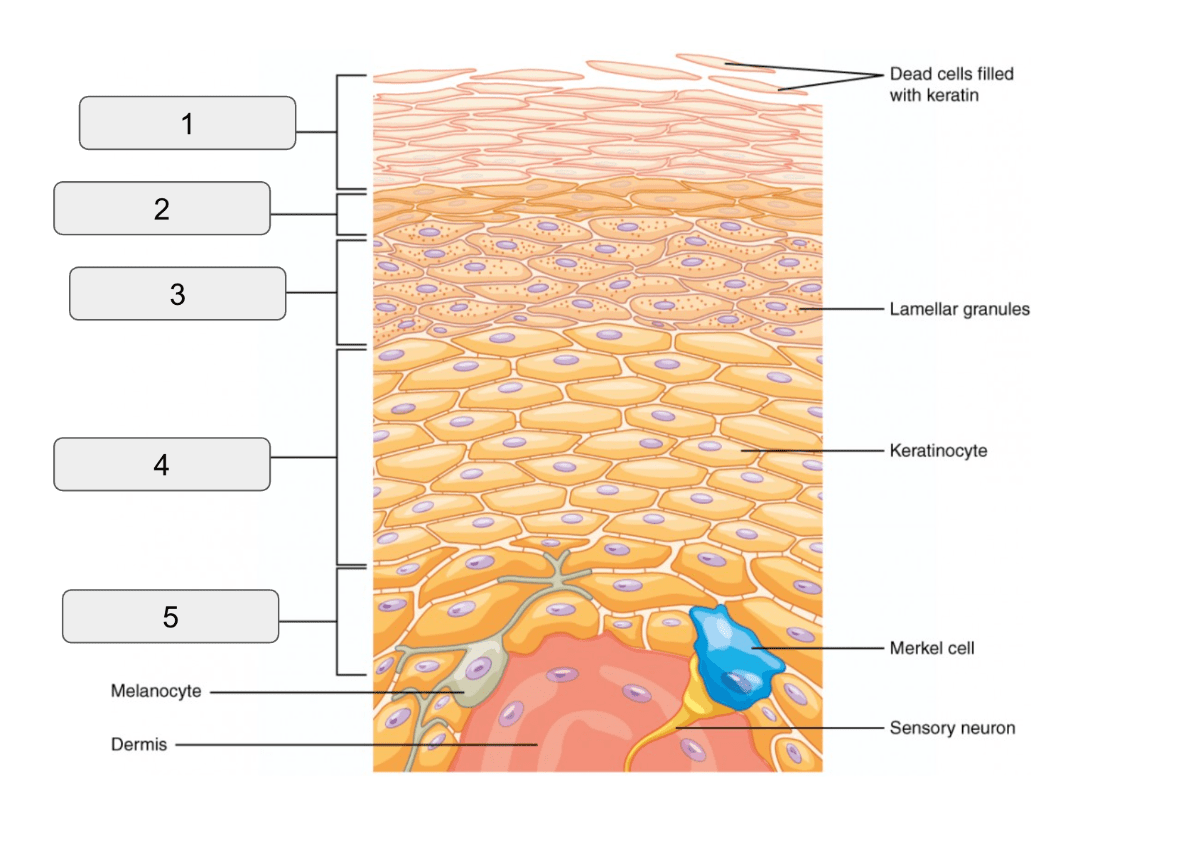
What layer is 4?
Stratum Spinosum
300
Which major skin layer connects the skin to fascia?
Answer: Hypodermis.
300
The papillary layer of the dermis is composed of what type of connective tissue?
Answer: Areolar connective tissue.
300
Langerhans cells and desmosomes point to which epidermal layer?
Answer: Stratum spinosum.
300
Damage to both Meissner corpuscles and Merkel cells would most directly interfere with what type of sensation?
Answer: Tactile sensation.
300
Which epidermal layer contains Langerhans cells?
Answer: Stratum spinosum.
300
A person can feel a light touch on their skin. Which structure is MOST directly associated with detecting this stimulus?
A. Pacinian corpuscle
B. Meissner corpuscle
C. Sweat gland
D. Melanocyte
Answer: B. Meissner corpuscle
- A. Pacinian corpuscle — Incorrect: Pacinian corpuscles are identified as vibration sensors.
- B. Meissner corpuscle — Correct: Meissner corpuscles function as tactile receptors and therefore detect touch.
- C. Sweat gland — Incorrect: Sweat glands primarily contribute to thermoregulation rather than tactile sensation.
- D. Melanocyte — Incorrect: Melanocytes are associated with skin pigmentation rather than touch detection.
300
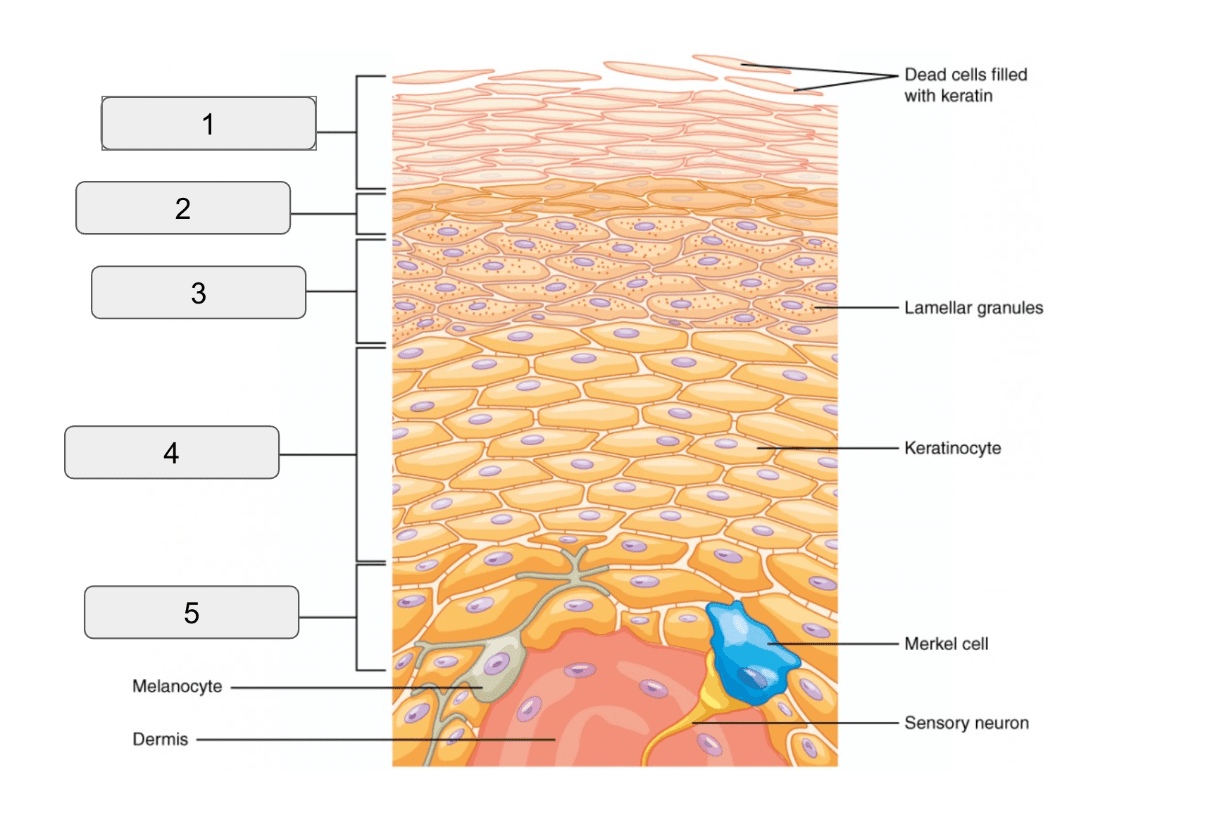
Where might you find the eleidin material?
2 - Stratum lucidum
400
A sample from the skin contains blood vessels, nerves, hair follicles, and sweat glands. What major layer was sampled?
Answer: Dermis.
400
A dermal tissue sample contains dense irregular connective tissue with collagen and elastin fibers. What dermal layer was sampled?
Answer: Reticular layer.
400
A skin sample contains an epidermal layer with keratohyalin. Identify the layer.
Answer: Stratum granulosum.
400
During activity, body temperature rises. What change in the skin's arterioles would promote heat loss?
Answer: Arteriole dilation.
400
You find a Meissner corpuscle in a skin sample. Which specific dermal layer are you in?
Answer: Papillary layer.
400
A tissue sample contains blood vessels, nerves, hair follicles, and sweat glands. Which skin layer was MOST likely sampled?
A. Epidermis
B. Dermis
C. Stratum corneum
D. Stratum lucidum
Answer: B. Dermis
- A. Epidermis — Incorrect: The epidermis is avascular and therefore would not contain blood vessels.
- B. Dermis — Correct: The dermis contains blood vessels, nerves, hair follicles, and sweat glands.
- C. Stratum corneum — Incorrect: The stratum corneum consists of layers of dead cells rather than these deeper structures.
- D. Stratum lucidum — Incorrect: The stratum lucidum is an epidermal layer associated with thick skin.
400
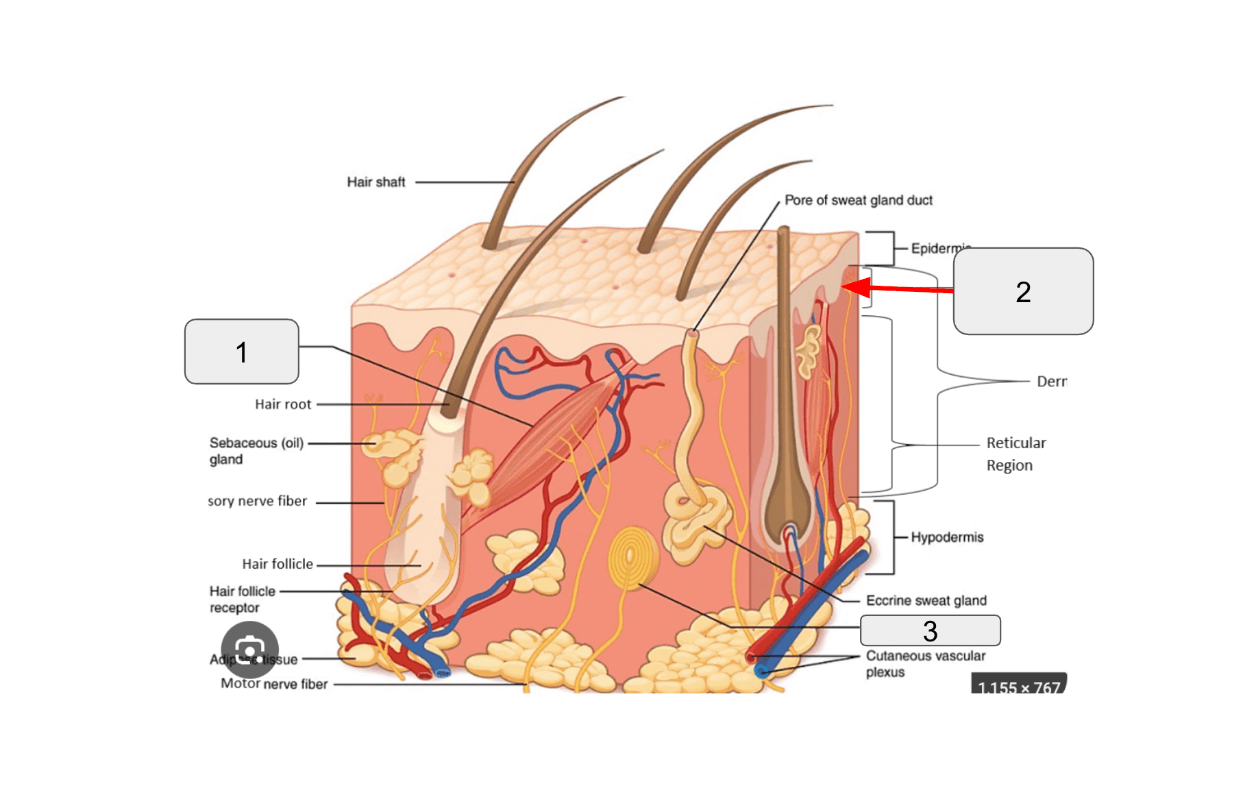 What structure is marked as "3"
Pacinian Corpuscle
500
Two samples are collected from different depths. Sample A is avascular and keratinized. Sample B is well vascularized and contains adipose tissue. Identify A and B.
A = Epidermis
B = Hypodermis.
500
A skin sample contains areolar connective tissue rather than dense irregular connective tissue. This sample contains the ________ layer of the dermis?
Answer: Papillary layer.
500
A researcher is examining thick skin and identifies eleiden in an epidermal layer. Which layer has been identified?
Answer: Stratum lucidum.
500
A disorder prevents normal sweat-gland activity and normal changes in skin arteriole diameter. Which major function of the integumentary system would be most directly impaired?
Answer: Thermoregulation.
500
A skin sample contains a highly vascularized region with sensory structures and accessory structures embedded within connective tissue. The tissue lies immediately deep to an avascular, keratinized stratified squamous epithelium. What major skin layer are you examining?
Dermis
500
A person becomes overheated while exercising. Which response would BEST help the integumentary system lower body temperature?
A. Decreased sweat production and arteriole constriction
B. Increased melanin production and arteriole constriction
C. Increased sweat production and arteriole dilation
D. Increased hair growth and arteriole dilation
Answer: C. Increased sweat production and arteriole dilation
- A. Decreased sweat production and arteriole constriction — Incorrect: These responses would reduce mechanisms that help the skin release heat.
- B. Increased melanin production and arteriole constriction — Incorrect: Melanin is associated with pigmentation, while arteriole constriction would not promote heat loss.
- C. Increased sweat production and arteriole dilation — Correct: Sweating and arteriole dilation work together as integumentary responses involved in thermoregulation.
- D. Increased hair growth and arteriole dilation — Incorrect: Although arteriole dilation is associated with thermoregulation, increased hair growth is not an immediate thermoregulatory response.
500
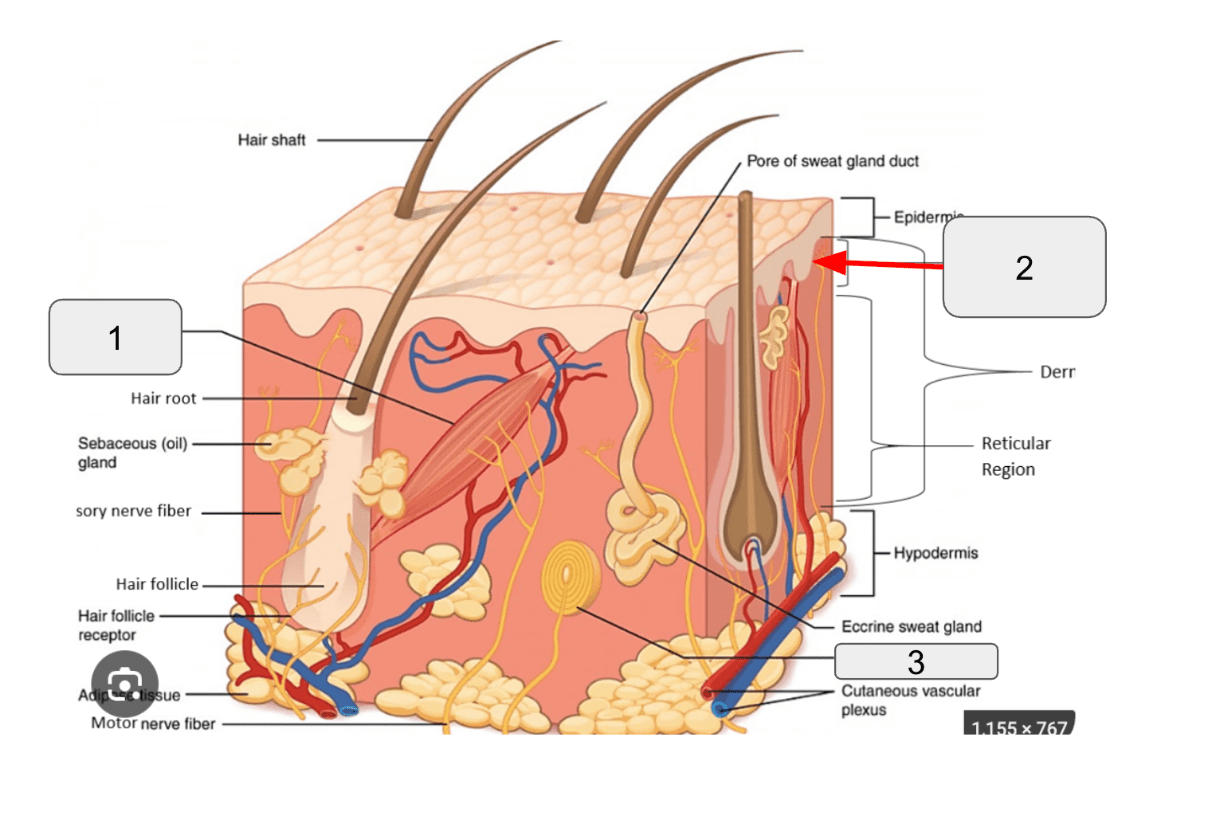 Where is the dermal papillae
2