Eye muscles
Middle/inner ear structures
Receptor cells and sensory tissues
Miscellaneous vision questions
Miscellaneous hearing & equilibrium questions
100
There are this many extrinsic muscles of the eye
6
100
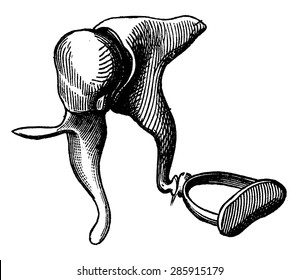
The name of this group of bones.
Ossicles.
100
Basilar Membrane
One of the membranes of the organ of corti
100
The anterior chamber is located between these two structures
Cornea and Iris
100
Inner ear is divided into
Bony Labyrinth and Membranous Labyrinth
200
The trochlear nerve innervates this muscle
Superior Oblique
200
Technical term for ear canal
External Auditory Canal
200
Tectorial Membrane
one of the membranes of the organ of corti
200
The posterior chamber is located between these two structures
Behind the iris and anterior to the lens
200

These ring-like structures on the left side of the image are partly responsible for our sense of equilibrium.
Semicircular canals.
300
The Lateral Rectus is innervated by this cranial nerve
Abducens CNVI
300
Technical term for ear drum
Tympanic Membrane
300
One of the two types of photoreceptors found in the retina
cones or rods
300
The technical term for our "blind spot".
Optic disc.
300
Fluid found in the Vestibular duct
Perilymph
400
This muscle contracts in response to bright light.
Radial muscle(s) of the iris.
400
Three main structures of the inner ear
Vestibule, semicircular canals, and cochlea
400
One of the two types of photorecteptors found in the retina
Cones or Rods
400
The two main structures of the fibrous tunic
Cornea and sclera
400
Function of the Auricle
Acts like a funnel to collect and modify sound waves
500
Superior Rectus, Medial Rectus, Inferior Rectus, and Lateral Rectus are all innervated by this cranial nerve
Oculomotor CNIII
500
What tube equalizes pressure between the middle ear and the environment
Eustachian
500
The name of the "hairs" that bend to facilitate hearing and equilibrium.
Stereocilia.
500
The Fovea Centralis allows for the sharpest, most saturated vision because this
High concentration of cones
500
Fluid found between the two labyrinths
Endolymph