Eye muscles
Middle/inner ear structures
Receptor cells and sensory tissues
Miscellaneous vision questions
Miscellaneous hearing & equilibrium questions
100
Main function of cornea
Refracts light
100
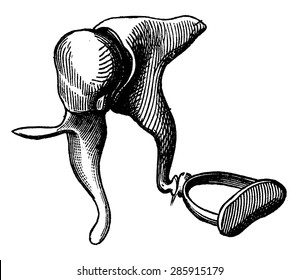
The name of this group of bones.
Ossicles.
100
Most involved in bending of the stereocilia
Tectorial membrane
100
2 main structures of the fibrous tunic
Sclera and cornea
100
Function of auricle
Direct sound waves in the ear canal
200
What is the macula lutea?
Part of the retina that has the highest density of cones
200
What does the auditory tube connect?
Ear and throat
200
Photoreceptor responsible for dim light vision
Rod
200
What two structures do the fibers of the suspensory ligament connect?
The lens and ciliary bodies
200

These ring-like structures on the left side of the image are partly responsible for our sense of equilibrium.
Semicircular canals.
300
What focuses light rays to the retina?
Lens
300
Function of round window in the inner ear
Absorbing pressure waves
300
Photoreceptor responsible for bright vision
Cone
300
The technical term for our "blind spot".
Optic disc.
300
When hair cells bend, what happens?
Ion channels open
400
This muscle contracts in response to bright light.
Radial muscle(s) of the iris.
400
Fluid found between the two labyrinths?
Perilymph
400
Moves as a response for fluid waves
Basilar membrane
400
Why do we call the optic disc the blind spot?
It lacks photoreceptors
400
What is the vestibule nerve for?
Balance
500
Why is this layer named the vascular tunic?
Contains blood vessels that have oxygen and nutrients.
500
Fluid found within the membranous labyrinth?
endolymph
500
The name of the "hairs" that bend to facilitate hearing and equilibrium.
Stereocilia.
500
Main function of the aqueous humor
Nourishes and protects the eye
500
This structure serves as the boundary between the outer ear and middle ear
Tympanic membrane