Heat Illness
Exercising Outdoors
General Fitness
Let's Workout!
100
True or False: Heat exhaustion cannot turn into heat stroke.
False
When someone does not receive treatment, heat exhaustion can evolve into a heat stroke.
100
What are some things to consider when deciding where to exercise outdoors?
A. Traffic
B. Temperature
C. Safety
D. All of the Above
D. All the above
Be sure to assess your surroundings/the space you are looking to exercise in so that you can have the best and most safe workout!
100
True or False: If you do not sweat, you are not working.
False
Sweat is the body’s way of regulating body temperature. Some people run warmer than others so they may sweat more.
100
Show what 10 squats looks like
Awesome!
200
Is a heat rash a mild or serious type of heat illness?
Mild
A heat rash is a mild irritation of the skin caused by heavy sweating.
200
Exercising outdoors allows you to absorb which of the following vitamins?
A. Vitamin A
B. Vitamin E
C. Vitamin C
D. Vitamin D
D. Vitamin D
Vitamin D is the vitamin that you get through sunshine.
Vitamin A is a fat-soluble vitamin naturally present in many food.
Vitamin E is a fat-soluble vitamin that is found in many foods.
Vitamin C is a water-soluble nutrient that is found in some foods.
200
True or False: When you stop weight training, muscle turns into fat.
False
Muscle and fat are two different types of tissue; one cannot turn into another. You will just lose muscle mass, helping slow your metabolism, which is how you gain fat mass.
200
Show what 10 push-ups looks like

YOU GO!
300
Why does heat exhaustion occur?
A. Over-heating
B. Drinking too much coffee
C. Loss of salt and fluid through heavy sweating
D. Laying in the sun for too long
C. Loss of salt and fluid through heavy sweating
300
When is the best time of day to exercise outdoors?
A. Midday
B. Early morning
C. Late evening
D. Both B and C
D. Both B and C
Usually, temperatures are cooler by 5 to 20 degrees on average in the early morning or late evening. If going to exercise in the dark, be sure to wear reflective clothing or lights (if you are riding a bike)!
300
True or False: Outdoor running works more muscles than running on a treadmill.
True
Running on actual ground requires more hamstring and glute activation to propel you forward, and studies have shown that outdoor running can increase leg strength and ankle flexibility more than running on a treadmill.
300
Show what 30 mountain climbers look like

Amazing!
400
How can you get a heat stroke?
A. Your body cannot cool itself
B. Body temperature increases to dangerous levels
C. Sitting in a sauna
D. Both A and B
D. Both A and B
Sweat cannot evaporate as quickly as usual, which is why your body may not be able to release heat to cool itself. Your body temperature can rise to 106 degrees or more in 10-15 minutes.
400
What type of fabric is best to wear while exercising in the heat?
A. Wool
B. Wicking fibers
C. Cotton
D. Silk
B. Wicking Fibers
Even though cotton is soft and strong, the friction while working out outdoors in the heat can cause blisters. Wearing wicking fibers allows you to stay dry and cool (DryFit, SwiftWick).
400
When is the best time to stretch?
A. During the workout
B. Before the workout
C. After the workout
D. All the above
C. After the workout
Stretching at the end of an exercise session has been shown to be safer and more productive for your muscles, since they are already warm, which can help facilitate recovery and make you less prone to injury.
400
Show what 50 Jumping Jacks look like.
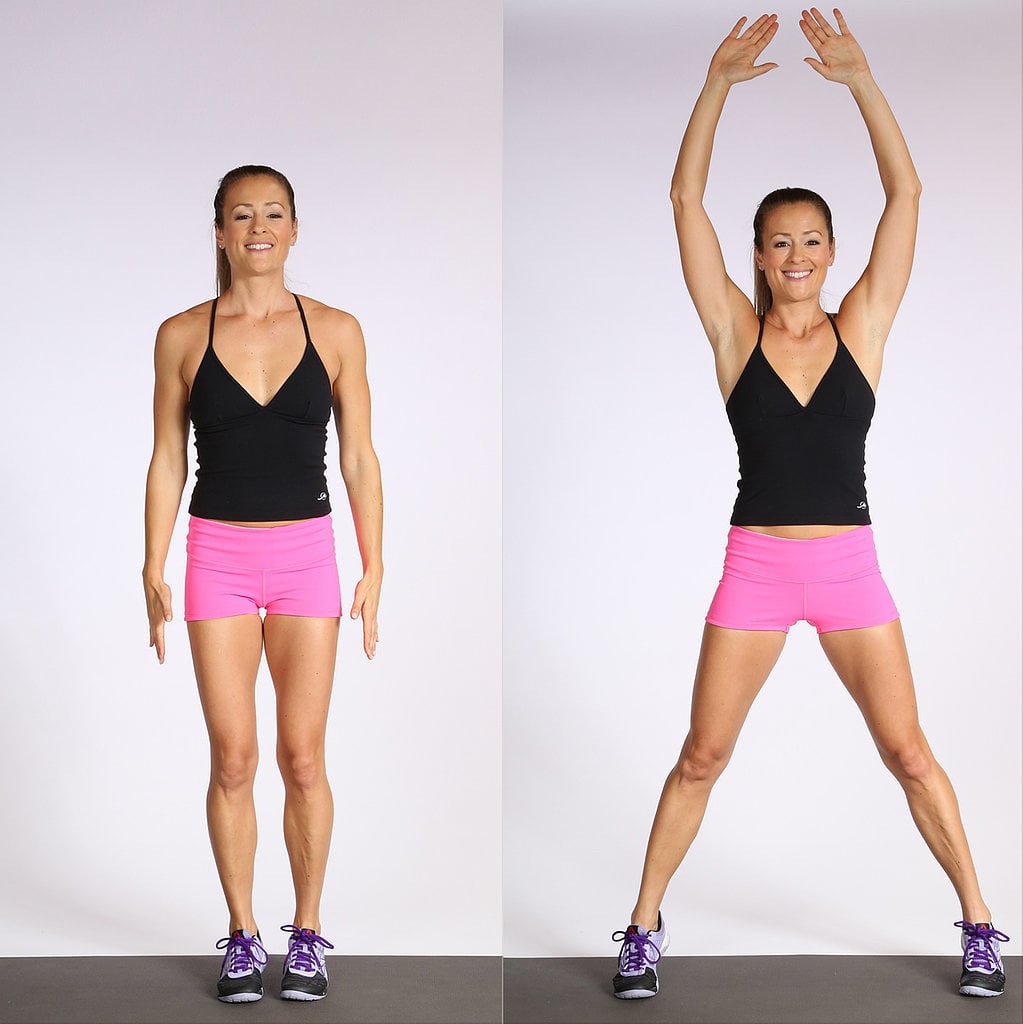
Wow!
500
What is the most serious form of the heat illnesses?
A. Heat Rash
B. Heat Cramp
C. Heat Stroke
D. Heat Exhaustion
C. Heat Stroke
Heat stroke can cause blood disorders and damage to the heart, liver, kidneys, muscles and nervous system.
500
What are some benefits to exercising outdoors?
A. Enhanced Self-Esteem
B. High Cost
C. Easy Access
D. Both A and C
D. Both A and C
Research shows that as little as 5 minutes of outdoor exercise can improve self-esteem, especially anywhere near greenery or water.
Lack of time is a huge barrier for most people, but avoiding traffic and commuting to a facility is a benefit of taking advantage of the outdoors.
500
True or false: ACE (American Council on Exercise) recommends that you intake 1 gallon of water 2-3 hours before exercise on a typical day.
False: 17-20 ounces is recommended 2-3 hours before exercise on a typical day.
500
Show what 15 burpees look like.
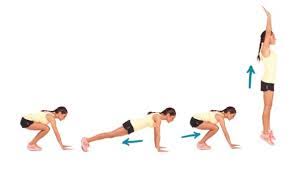
Great Job!