Historical Connections
Maybe it's Maybelline, or Maybe it's Communism
She doesn't even go here!
Acronyms
WAR! What is it good for?
We are the world
Guess Who
100
This technological innovation is known as the "network of networks" and is a carrier of vast information, resources and services. This technology reduced challenges around sharing ideas and communication. This technology assisted in the Arab Spring in 2010.
The Internet
100
This event lasted through the 1950s and the 1960s. It is when the USSR and the United States were building up their nuclear arsenals.
Nuclear Arms Race
100
Communalism, the boycott of British goods, and passive resistance were strategies that were used by Mohandas Ghandi, Jawaharlal Nehru as well as the Indian National Congress and the Muslim League to push for independence of this Asian country.
India
100
NATO
North Atlantic Treaty Organization
100
Saddam Hussein invaded Iran in 1980 which resulted in this 8 year long conflict that was followed by the Gulf War.
Iran-Iraq War
100
The movement of people from one place to another.
Migration
100
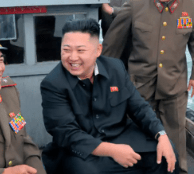 This person is the current leader of North Korea, a friend of former NBA star Dennis Rodman, and a "girl dad".
Kim Jong Un
200
This conflict of ideologies led to proxy wars across the globe. Notably in Latin America, Africa, and Asia.
The Cold War
200
This event in China was overseen by Mao Zedong and sought to reassert his authority through eliminating rivals, crushing his opposition, and purging "capitalist" elements. This resulted in about 2 million deaths and the persecution of intellectuals, educators, and professionals. It also contributed to economic instability in China
The Cultural Revolution - Mao mobilized the youth, also known as the "Red Guard" to carry out the "revolutionary spirit" that was lost after The Great Leap forward failed.
200
This is an ideological movement with the main goal of political unification of the Arab world.
Pan-Arabism
200
GATT
General Agreement on Tariffs and Trade
200
This is also known as the European Recovery Program which was a massive financial aid program to help war-torn Europe and to lessen the appeal of communism. The USSR rejected this offer.
The Marshall Plan
200
This is the idea of interdependence and interconnection of world economies to facilitate unrestricted movement of goods and trade across international borders.
Globalization
200
This person was Ghana's first leader and an advocate of Pan-Africanism.
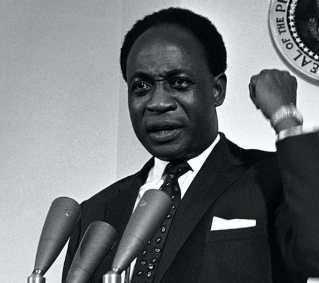
Kwame Nkrumah
300
This years long struggle in South Africa was ended due to immense international pressure through economic sanctions as well as the election of Nelson Mandela.
Aparthied
300
This is a policy that was adopted by the United States and the USSR during the Cold War in an effort to reduce tensions between the two superpowers over the arms race and control of developing countries.
Detente
300
This country was created due to a British mandate and led to a large number of people migrating to this place which caused many people who were already there to be displaced. Even though the British pulled out of this country in 1948, fighting over this territory is still going on in 2026.
Israel
300
FSLN
Sandinista Front for National Liberation
300
The U.S. got involved in this conflict in Asia when the French were defeated by the communist faction.
The Vietnam War
300
This disease was one of the most destructive pandemics worldwide. As of 2025, about 39-41 million people worldwide living with this disease due to advancements in medical treatments.
HIV/AIDS
300
This person replaced Mao Zedong as leader of communist China and introduced reforms in economics, agriculture, industry, science, technology, and defense. The individual political rights of people were still limited. 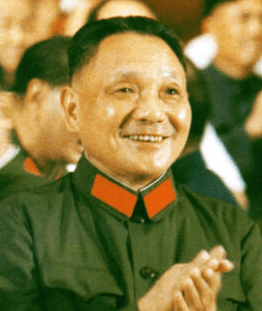
Xiaoping Deng
400
After World War 2, people challenged old assumptions about human rights. New ideas about government and politics emerged such as this ideology as a solution to solve social issues such as poverty.
Liberation Theology - A religious movement centered in Latin America where elements of catholicism and socialism to improve society. Liberation theology advocated for using faith to to improve conditions for the poor and oppressed; such as education and healthcare.
400
This is the name for soviet-occupied nations.
Satellites States/Countries/Nations
400
This is a nationalist movement that advocated for the creation of the country of Israel.
Zionist
400
INC
Indian National Conference
400
This term is often used by Western sources to describe an extreme movement to replace secular states with Islamic ones. An example of this movement happen in Iran in 1979.
Islamic Fundamentalism
400
This is an event that introduced new methods of farming to increase the production of staple crops through fertilizers, pesticides, Genetically Modified Organisms, and improved irrigation systems. This event led to an increase in food supply globally.
The Green Revolution
400
This person was the last. leader of the USSR and backed reforms that were in violation of the communist economic philosophy. He was awarded a Noble Peace Prize in the 1990s for his efforts to end the Cold War and the removal of Soviet troops in Afghanistan. 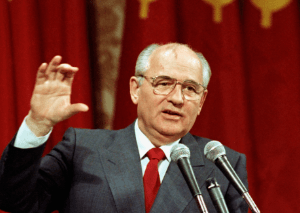
Mikhail Gorbachev
500
This is a movement that seeks to raise awareness of the struggles of women face worldwide in terms of unfair treatment.
Feminism/Feminist Movement
500
This is an alliance made up of communist nations designed to counter NATO.
The Warsaw Pact
500
This event was the compromise that was the result of violence between Hindus and Muslims in India after independence from the British.
India/Pakistan Partition
500
OPEC
Organization of Petroleum Exporting Countries
500
This was a Cold War peace conference held in 1954. At this conference, it was established that Vietnam would be divided between the communist north and the noncommunist south.
The Geneva Conference
500
This document was adopted by the UN in 1948 after the atrocities committed in World War 2. This document specifies human rights violations.
The Universal Declaration of Human Rights
500
This person became South Africa's first black President in 1994 after serving a 27 years of a life prison sentence for speaking out against Apartheid.
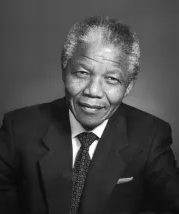
Nelson Mandela
600
This African country was first ran by Germany and then by Belgium. Both countries indirectly controlled this country by utilizing Tutsi leadership. Tensions throughout the 20th century between the Tutsis and another ethnic group the Hutus led to the mass and purposeful killing of the Tutsi minority by the Hutu majority for about 100 days in 1994. What was the name of this conflict?
The Rwandan Genocide
600
First coined by Prime Minister Winston Churchill of England, this term refers to the symbolic separation of Europe after World War 2. Nikita Khrushchev constructed the Berlin Wall turned this symbolic term into a visual representation.
The Iron Curtain
600
This is a term used to describe the process of one country pulling out of a another country that it exhibited imperial power over.
Decolonization
600
COMECON
Council for Mutual Economic Assistance
600
This phrase is used to describe the relationships that exist among lawmakers, the armed forces, and the arms industry and includes contributions made to politicians, legislative approval for military appropriations, and lobbying to support those agencies that inform military policy.
Military Industrial Complex
600
This term, often associated with globalization, suggests that the consumer culture developed in the U.S. during the mid-20th Century has spread throughout the world due to advertising
Americanization or McDonaldization
600
This person co-founded the non-alignment movement and was President of Egypt.
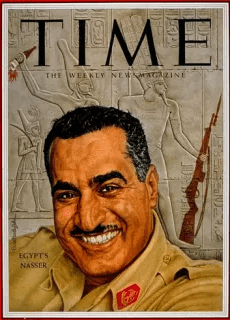
Gamal Nasser
700
The failure to invade Afghanistan contributed the decline and fall of this superpower.
The Soviet Union/USSR
700
This was an alternative "third path" to the allying with the United States or the USSR during the Cold War. The goal was to avoid involvement in the the Cold War while still accepting economic aid by both sides.
Non-alignment Movement
700
This is the idea that developed industrial nations in North America (Canada, U.S., Mexico) and Europe, dominated the international economy and profited at the expense of less developed and industrialized nations.
Dependency Theory
700
BRICs
Brazil, Russia, India, China
700
A pro-Soviet coup in this country resulted in a civil war that pulled in the USSR, U.S., Iran, China, Saudi Arabia, and Pakistan. The USSR pulled out in 1989, but continued until 1992.
Afghanistan
700
This group made up of economists and scientists issued a report that concluded the earth's carrying capacity is limited due to the earth's limited resources. The work of this group has drawn criticism due to some inaccuracies and "negativity".
The Club of Rome
700
This person came to power in Chile after the U.S. sponsored a coup to removal the socialist government. The U.S. did not want what happened in Cuba to happen in other places in Latin America, so they sponsored dictators who were not aligned with the Soviets.
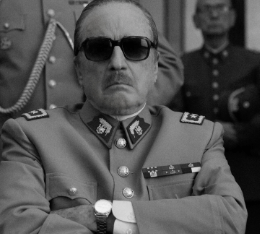
Augusto Pinochet