GCS
EMS Point of Entry (POE)
TBSA
Geriatric Considerations
Final Jeopardy
100
Patient is unresponsive, does not move extremities, has no verbal response, and has no eye opening response.
GCS 3T for E-1, V-1, M-1. The lowest score a patient can have is 3.
100
You (BLS unit, no ALS available) arrive to find a patient unresponsive after falling from a fourth story window. Your patient presents with agonal respirations. The closest community hospital is 10 minutes away and the closest Level 1 trauma center is 20 minutes away. Where do you transport?
Closest community hospital to stabilize airway for transport to trauma center.
100
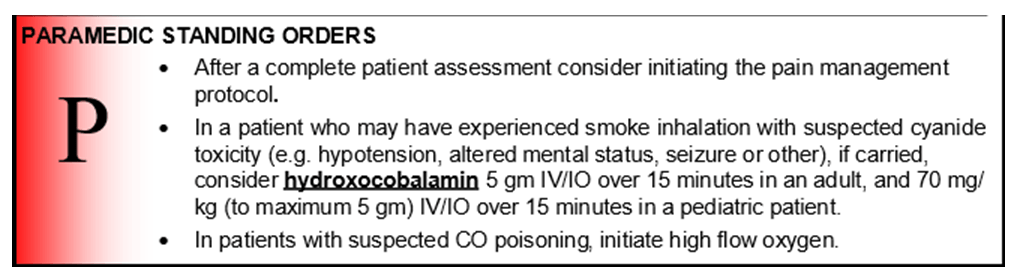
EMS is dispatched to a structural fire. Patient is brought out by FD and doesn't appear to have any physical injuries but GCS is 10, E-2, V-3, M-5. What is your priority intervention for this patient and what medication would you anticipate administering?
High flow/ Non-Rebreather O2
100
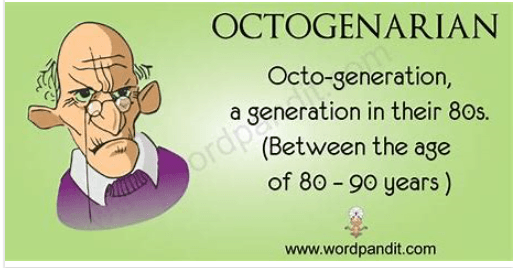
An Octogenarian is described as a person of what age?
A. 65 or older
B. 80-89
C.70-100
B. 80-89
200
Patient is awake, displays confusion when answering questions, obeys commands.
GCS 14, E-4, V-4, M-6
losing 1 point for verbal.
200
Based on Anatomical Criteria in the EMS POE Plan, a patient with a depressed skull fracture and a stable airway should be transported where?
Closest Trauma Center (Level I, II, III)
200
Patient presents to triage and states that she spilled boiling water on herself while making pasta. Upon examination you find her to have superficial burns to the upper portion of her chest, over the right breast and nipple. She also has a superficial circumferential burn to her right hand. What are your next steps?
Full assessment and vitals, assess for trauma. Cleanse wounds, superficial burns do not meet trauma activation criteria. Supportive care- bacitracin and dry dressings if needed.
200
What additional information would you want when presenting a geriatric patient's MIST? Name two
Code status, MOLST, advanced directive, medication, history, baseline mentation
300
EMS called for a 30 y/o M s/p fall from ladder. Patient opens their eyes when spoken to, +ETOH use, confused conversation, he cannot feel or move his extremities.
Daily Double- Is this a trauma alert? What level?
GCS 8 E-3, V-4, M-1,
Category 1 trauma for traumatic paralysis and GCS 8
300
Based on Physiologic Criteria in the EMS POE Plan, a pedestrian struck by a motor vehicle with a BP of 80/40 should be transported to what facility?
Closet Trauma Center (Level I, II, III)
300
EMS is dispatched for a gasoline explosion. Upon arrival you find a 68 year old male who was working on his snow blower when it exploded. He was thrown against the wall in his garage. He has partial thickness burns on his chest and abdomen and a laceration to his posterior scalp. What is his TBSA %?
Daily Double: Would you activate this patient, to what level, and why?
18%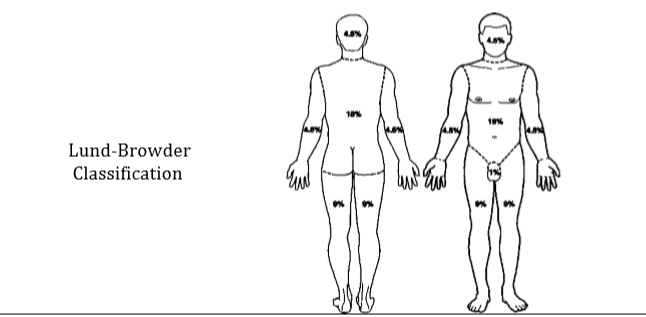
300
Undertriage of the elderly is associated with a two-fold increase in the risk of death. What factors increase the risk for undertriage by both EMS and ED personnel for geriatric patients?
Alterations in mentation due to delirium or dementia, medications (beta blockers) that prevent the normal physiologic response to injury, vital sign changes due to aging and pre-exiting disease. ACS Geriatric Trauma Management Guidelines pg.3
400
Patient with a question of spinal cord injury can shrug their shoulders but cannot move their lower extremities. What motor score do they receive?
Motor-6.
"GCS motor response may not be reliable in the patient with SCI. Score GCS as their highest level of motor response" TNCC pg 179
400
You are working for a rural EMS agency. You arrive to an ATV accident in the woods involving a 16 y/o M who is unresponsive with agonal respirations. You are 45 minutes from the Level I Trauma Center and 20 minutes from the Community Hospital. What are your next steps?
Call for air medical immediately.
400
You are treating a 7 year old burn victim. The patient displays second degree burns to circumferential lower extremities. What is the TBSA affected?
34%
(Each leg is 17% for ages 5-9)
ENPC pg.239
400
What is the number one mechanism of injury for geriatric patients?
Falls. One in three adults ago 65 and older fall annually. Falls are the most common cause of TBI in the elderly. BMC Geriatric Trauma Presentation
Falls are the leading cause of the loss of independent living. CDC
500
GCS 9-12 is associated with which brain injury severity?
Moderate TB I. TCAR pg. 127
500
65 y/o M with AFIB and diabetes taking Coumadin and insulin, involved in a highway MVC at 60 MPH. Distended abdomen. + LOC. BP 90/60. Trauma Center is 40 minutes away. Community Hospital is 10 minutes away.
What is your next step in determining appropriate destination?
Call Online Medical Control for assistance and direction. Consider Trauma Center or Air Medical.
500
You are treating a 9 month old burn victim. The patient displays second degree burns to upper chest, upper back and full head. What is the TBSA affected?
34%
Chest (6.5), Upper back (6.5), full head (21) for infant < 1 year.
ENPC pg. 239
500
List 3 anticoagulation medications:
Which one can be monitored by INR levels
Coumadin (warfarin)
Pradaxa (dabigatran)
Xarelto (rivoxaban)
Eloquis (apixaban)
TEG is useful in identifying the presence of dabigatran or rivoxaban effect. TEG will also identify the effects of platelet inhibitors such as clopidogrel.
ACS Geriatric Trauma Management Guidelines
500
What does MIST stand for?
Mechanism Injuries Signs/Symptoms Treatment