Color Doppler
Spectral Doppler
Gray Scale
Harmonics
Power Doppler
100
In color doppler ultrasound, this artifact causes blood flow to display as the incorrect color when the flow is too fast for the machines sampling limit.
Color Aliasing
100
In spectral doppler ultrasound, this artifact makes blood flow velocities to "wrap around" the spectral display when the velocity exceeds the system's sampling limit.
Spectral Aliasing
100
This artifact causes structures behind fluid filled tissue to appear with a hyperechoic column because sound travels through fluid will less attenuation.
Posterior Acoustic Enhancement
100
This artifact occurs when harmonic imaging fails to display certain areas of tissue, making parts of the image appear missing or darker.
Harmonic Dropout
100
In power doppler ultrasound, this artifact appears as a color continuously changing rapidly while behind a highly reflective object, when there is no real flow.
Twinkling Artifact
200
In color doppler ultrasound, this artifact causes a false burst of color to appear when tissue or the transducer moves, even when there is no blood flow.
Flash Artifact
200
In spectral doppler ultrasound, this artifact causes the waveform to appear thicker or wider, making it seem as if there was a wider range of blood flow velocities than actually exists.
Spectral Broadening
200
This artifact occurs when sound bounces repeatedly between two highly reflective surfaces, creating multiple spaced echoes on the image.
Reverberation Artifact
200
In harmonic ultrasound, this artifact makes anechoic or fluid-filled areas appear falsely bright.
Pseudoechogenic Artifact
200
In power doppler ultrasound, this artifact falsely shows blood flow in still tissue, caused usually by movement, probe motion, or patient breathing.
Pseudoflow
300
In color doppler ultrasound, this artifact makes color "spill" out beyond the blood vessel boarders, making the vessel appear larger than it really is.
Color Bleeding
300
In spectral doppler ultrasound, this artifact makes it more difficult to determine whether the blood is moving toward or away from the transducer, most commonly because the doppler angle is almost perpendicular.
Directional Ambiguity
300
This artifact occurs when sound reflects off of a highly reflective surface before returning to the transducer, this creates a false duplicated image on the opposite side of a strong reflector.
Mirror Image Artifact
300
This artifact occurs when low frequency noise appears on the image, obscuring real structures.
Harmonic Clutter
300
This artifact occurs when movement from the patient, tissue, or transducer produces color signals that are not true blood flow.
Motion Artifact
400
In color doppler ultrasound, this artifact causes an area or the entire blood vessel to show no color even though blood is flowing.
Color Dropout
400
In spectral doppler ultrasound, this artifact creates a duplicate waveform on the opposite side of the baseline, showing falsely that there is flow in both directions.
Mirror Image
400
This artifact occurs when the sound beam bends as it passes between tissues of different speeds, making structures appear in the incorrect place.
Refraction Artifact
400
This artifact makes a tissue or wall appear thicker than it actually is due to volume effects or harmonic beam distortion.
Pseudothickening
400
This artifact produces random color signals or noise on the image due to an interference from nearby equipment or the machine itself.
Electronic Interference
500
Guess The Artifact: Color Doppler
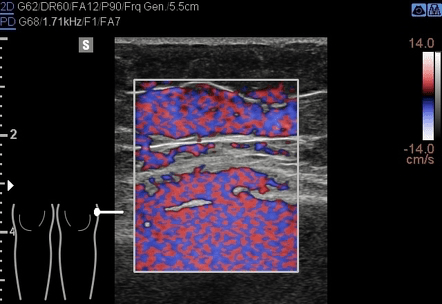
Flash Artifact
500
Guess The Artifact: Spectral Doppler
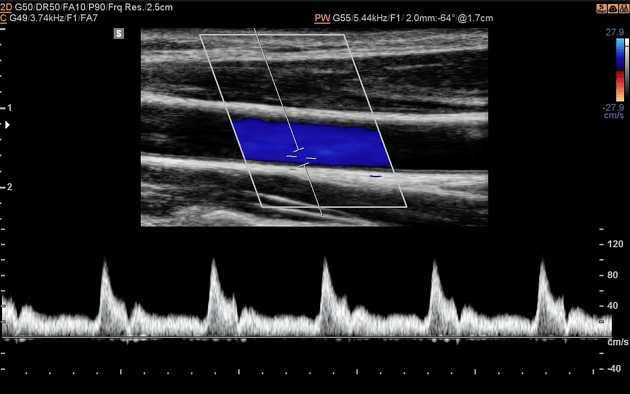
Spectral Broadening
500
Guess The Artifact: Gray Scale
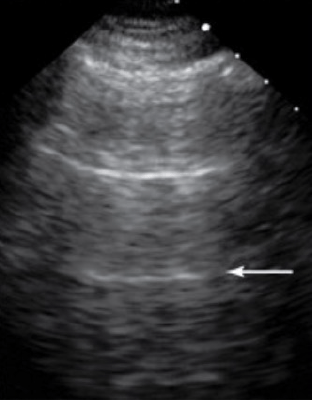
Reverberation Artifact
500
Guess The Artifact: Harmonics
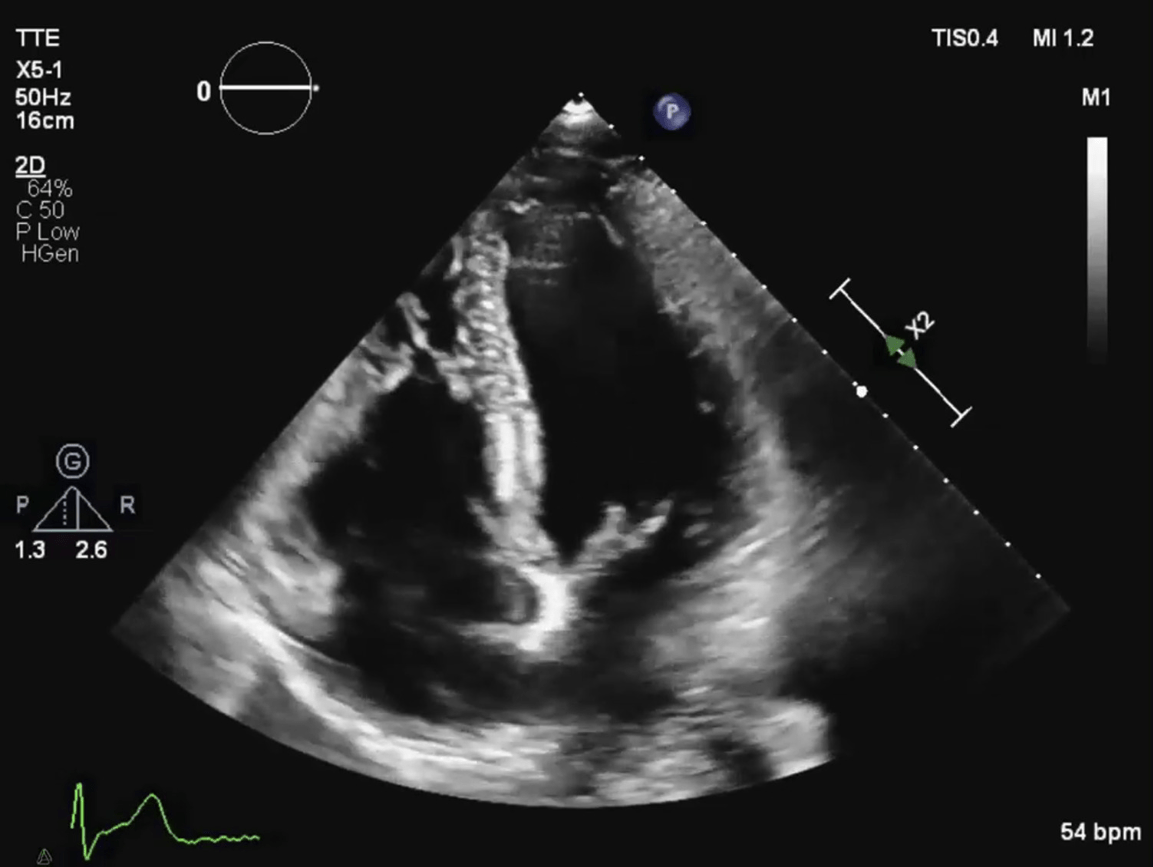
Harmonic Clutter
500
Guess The Artifact: Power Doppler
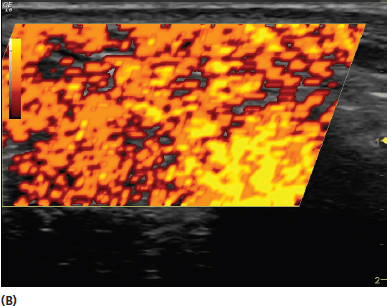
Power Doppler Flash Artifact