Abiotic vs Biotic
Interactions
Population Size and Growth
Levels of Organization
Ecosystem Dynamics
100
Which factor is abiotic?
A severe drop in nighttime temperature reduces lizard activity.
Temperature
100
Define what a Keystone species is
an organism that has a massive, essential impact on its ecosystem. (Has many interactions directly and indirectly with the other components)
100
What is the carrying capacity of Species 5?
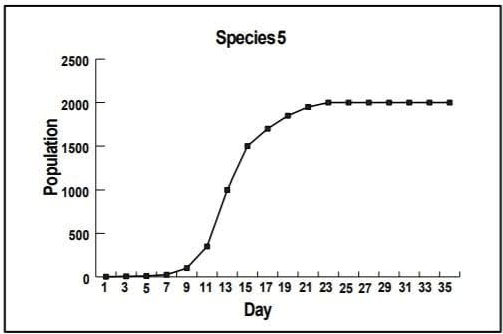
2,000 individuals
100
State the level or organization.
A group of Zebras in the Serengeti.
Population
100
Why does an ecosystem with high biodiversity generally have higher resilience to disturbances (such as drought or disease) than an ecosystem with low biodiversity?
Redundant species and complex interaction networks allow the system to maintain function even if one species declines.
200
A fungal pathogen spreads through a population of salamanders.
Is the fungal pathogen abiotic or biotic?
Biotic (fungus are living)
200
Predict the result if you remove the interaction from the Sun.
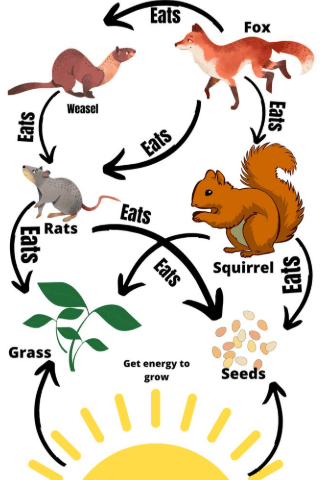
Everything eventual dies due to running out of energy. Bad bad bad.
200
Which days represent exponential growth?
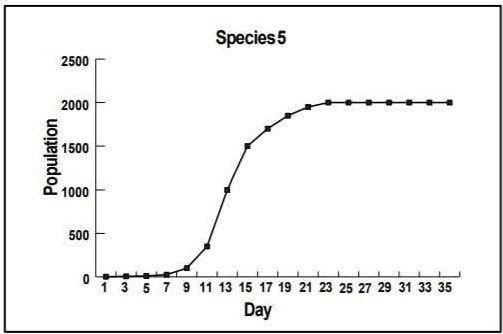
Day 11-17
200
A single colony on the petri dish represents which level of organization in ecology?
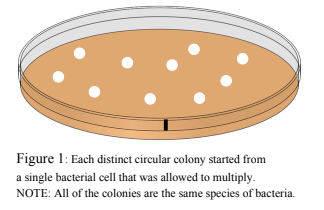
Population
200
Provide an Example of a population density dependent limiting factor?
Diseases (via contagious-spreads)
Food (via competition)
Space (via competition)
Available Mates (Via Competition)
300
A volcanic eruption releases ash that blocks sunlight and reduces plant growth.
This is an example of abiotic or biotic?
Abiotic
300
Wildebeest travel in very large populations. There must be trade offs (with the pros leading to an overall benefit of the species).
List 2 pros and 2 cons of traveling in large groups.
Cons-
Less food for all
Easier to be seen by predators
Pros-
Better protection from predators
More individuals to "help" out the young and elders.
300
Define carrying capacity
the maximum number of individuals of a specific species that an environment can sustainably support over a long period without damaging the habitat
300
Which of the following is an example of an organism?
a. A school of fish
b. A herd of sheep
c. Nevada
d. A single lizard
A Single Lizard
300
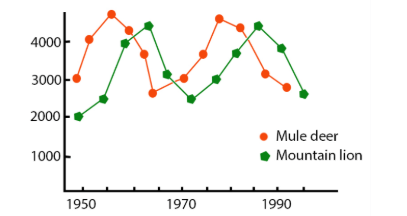
Describe the dynamics of a predator and prey relationship. (Think of the interactions between a predator and prey over time)
400
A decline in bee populations leads to reduced pollination in wildflowers.
Is the interaction an biotic or abiotic interaction?
Biotic.
400
What is the correlation of the interaction below?
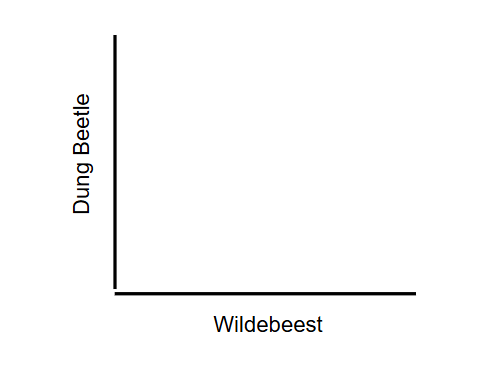
Positive since the wildebeest provides much needed dung for the beetles.
Without wildebeest, the dung beetle population would shrink, leading to a buildup of waste, reduced soil fertility, and a decline in plant and animal health. In short, wildebeest act as the primary dung supply chain for dung beetles, making them an indirect but essential partner in maintaining the Serengeti’s ecological balance
400
Predict the birth and death rate relationship (B>D, B<D, or B=D) in a population of predators on a remote island under the provided condition. And Explain why
Condition: Humans discovered the island and decided to build a massive casino on the island for tourists.
Births < Deaths since the casino took up some of the island's habitat which was being used by the plants and animals. Less prey = less predators.
400
Which level of organization in ecology were the students observing overall?
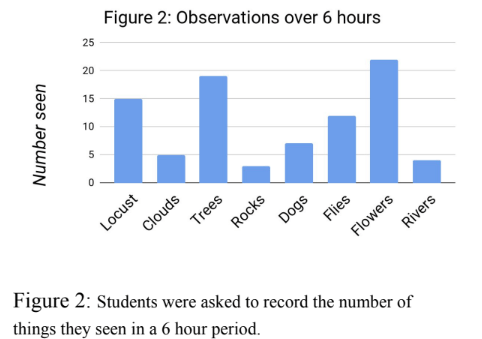
Ecosystem
400
Beavers build dams that create wetlands, increasing biodiversity.
Beavers are an example of what?
Keystone Species
500
Put the following into the category Abiotic or Biotic:
Rocks, Sunlight, Trees, Plants, Cats, Water
Biotic: Trees, Plants, and Cats
Abiotic: Sunlight, Rocks, Water
500
What high school did Mr. Perreault graduate from?
Clark (A.O.F)
500
In a coastal forest ecosystem, scientists observed a rapid increase in the deer population after a viral disease called hoof‑rot was eliminated through vaccination. Before its removal, what role was hoof‑rot playing in the deer population?
a limiting factor (Abiotic if its viral according to the idea that viruses do not have cells)
500
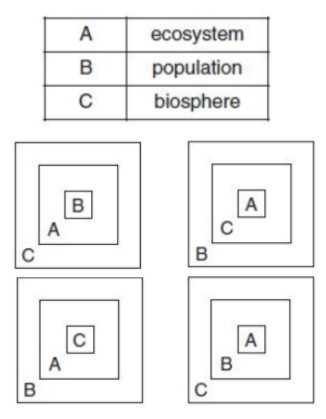
Correctly sort these three levels of organization in ecology.
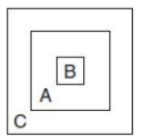
500
A parasite spreads more easily in dense populations of rodents, reducing their numbers and increasing plant growth.
The parasite is an example of what type of factor?
density-dependent factor