Lab Safety
Lab Equipment
Significant Figures, Rounding, and Sci. Notation
Dimensional Analysis
Miscellaneous
100
During a lab you need to heat up a test tube full of liquid. Which of the following should you do?
A. Hold the test tube with your hand and point the opening of the tube towards your face.
B. Hold the test tube with a test tube holder and point the opening of the tube away from your face.
C. Hold the test tube with your hand and point the opening of the tube away from your face.
D. Hold the test tube with a test tube holder and point the opening of the tube towards your face.
B. Hold the test tube with a test tube holder and point the opening of the tube away from your face.
100
Which of the following would be the best equipment to use to measure the volume of a liquid?
A. A beaker
B. An Erlenmeyer flask
C. A graduated cylinder
D. A scale
C. A graduated cylinder
100
How many significant figures are in the following measurement?
502 mL
3
100
How many centimeters are in 1.32 meters?
132 cm
100
Does Mrs. Kupiecki care if your answers have unit? Why or why not?
YES! Without units, quantities in science don't have meaning.
200
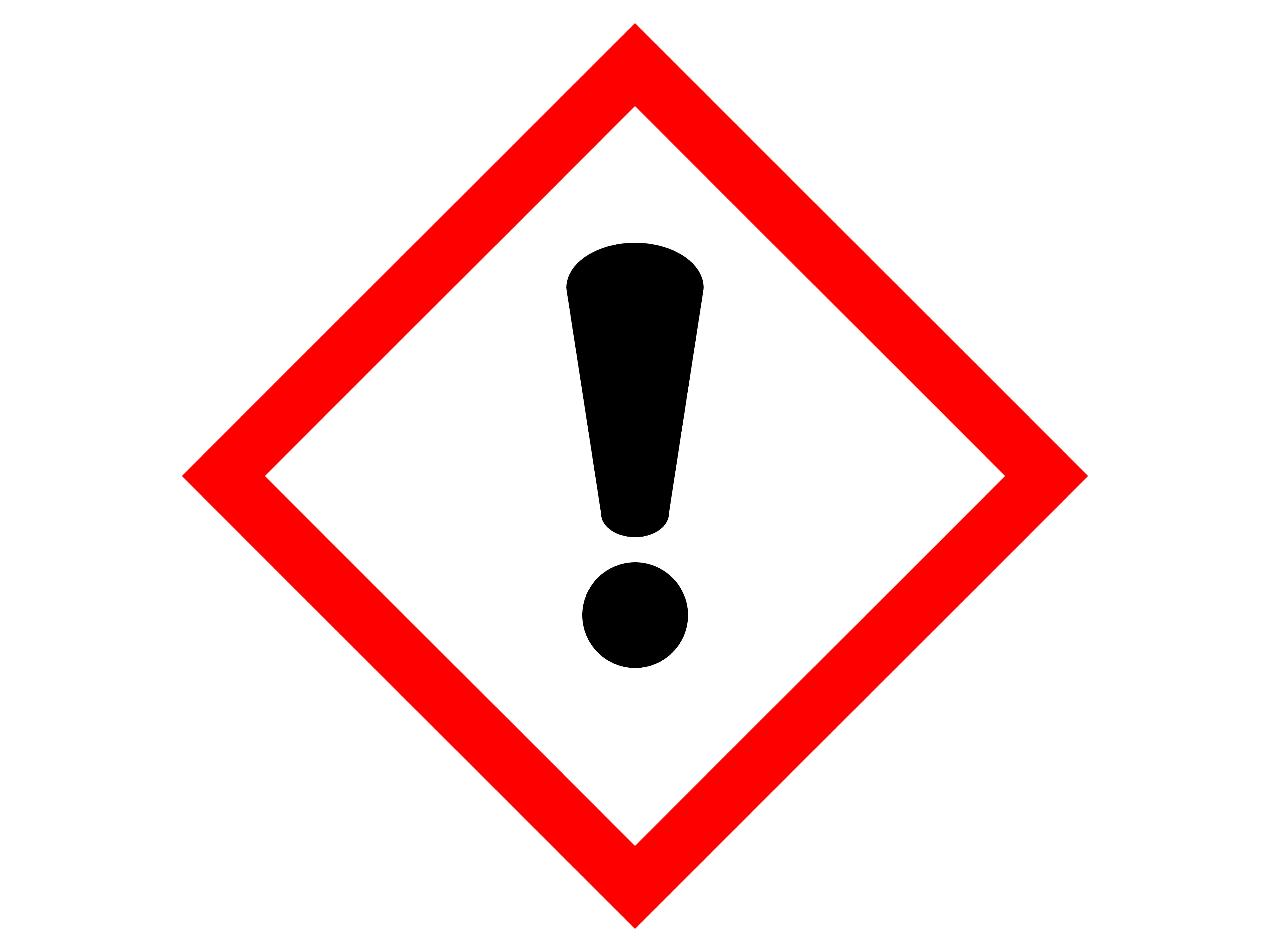 Which of the following best describes the meaning of this hazard?
A. This substance can cause breathing difficulties.
B. This substance can cause death if swallowed or inhaled.
C. This substance can cause damage to skin and clothing.
D. This substance can cause moderate skin irritation.
D. This substance can cause moderate skin irritation.
200
A student is reading the length of material from a ruler. The ruler has markings for centimeters and millimeters. How many digits should the student estimate beyond what they see on the ruler?
1
200
Round the following measurement to four significant figures:
50.07689g
50.08g
200
When setting up the "train tracks" for dimensional analysis, the given units that we are trying to cancel should go on the ____________ of the conversion factor so that they cancel out.
bottom / denominator
200
Significant figures are important because they:
A. Communicate information about the precision of the instruments used.
B. Force us to do more math.
C. Have special rules about whether or not zeros count.
A. Significant figures convey information about the precision of results.
300
What is the name of this hazard symbol and/or what hazard does it represent?
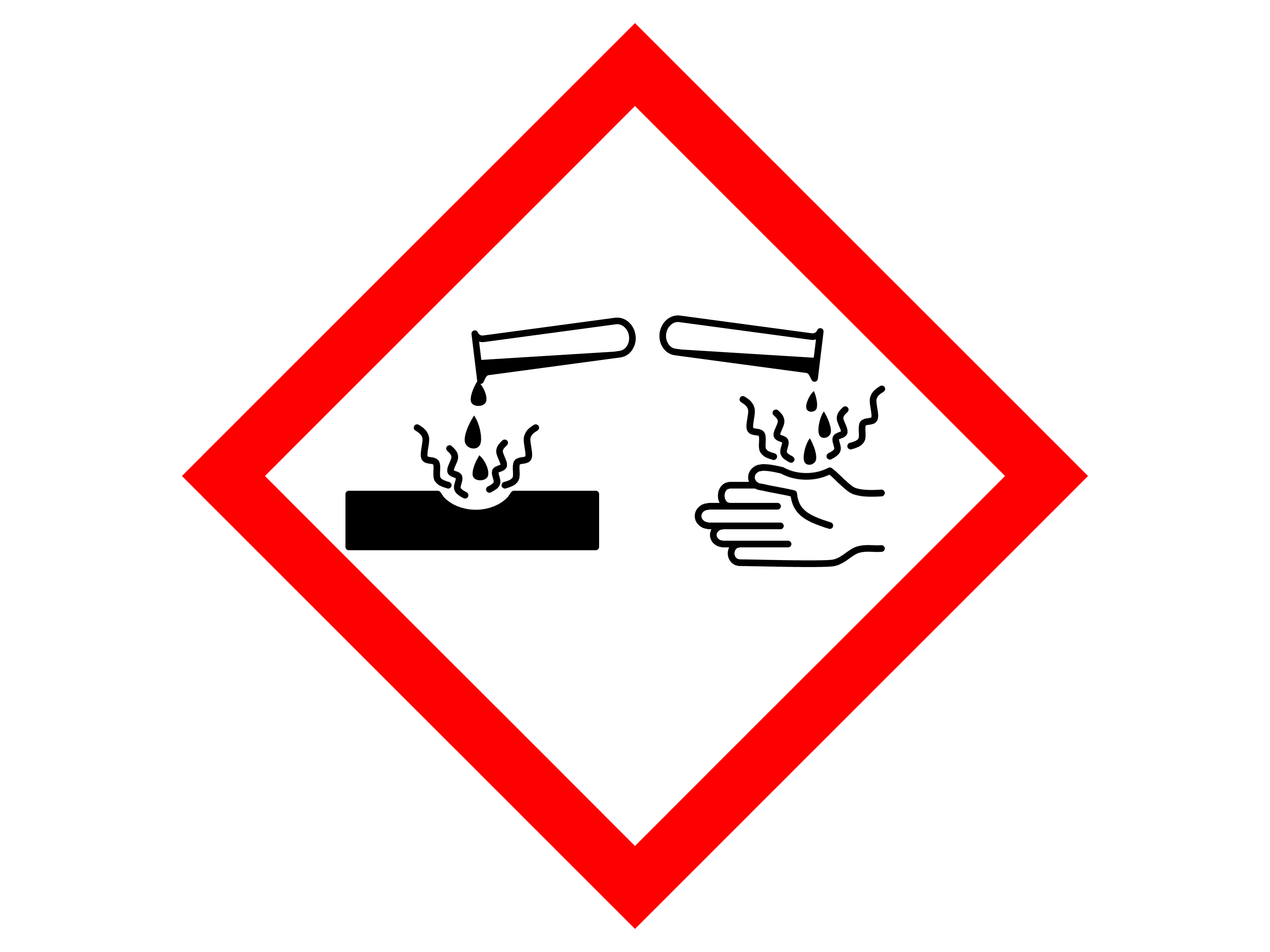
Corrosive; This substance can cause damage to skin and clothing.
300
What is this piece of equipment called?
A beaker
300
Write the following number in scientific notation:
7,001,000,000,000 meters
7.001 xx 10^12 meters
300
Set up "train tracks" to convert from 3 days into minutes; find the answer.
4320 minutes
300
Work assigned throughout a unit can be turned in late by ______________ for 70% credit. (Your answer should be relative to the date of the test)
Two weeks after the test / the deadline for the re-take.
400
What is the name of this symbol and what hazard does it describe?
Oxidizer; This substance enables other flammable substances to burn more easily.
400
What is the name of this piece of equipment and when would it be used?
Striker; to light the gas from a Bunsen burner.
400
A jeweler has 4.9 moles of silver. Each mole contains
6.02xx10^23
atoms of material. In scientific notation with correct significant figures, how many atoms of silver does the jeweler have?
2.9xx10^24
atoms of silver
400
Convert from 2.0 gallons into milliliters.
1.0 gallon = 3.8 liters
1.0 liter = 1000 milliliters
Write your result in scientific notation.
7.6xx10^3 mL
400
What is a valid and accurate measurement for the volume of liquid in this graduated cylinder? Assume the units are milliliters.
21.70mL or 21.69 mL
500
Describe what is meant by a 3 in the blue quadrant of the safety square and the special symbol in the white quadrant.
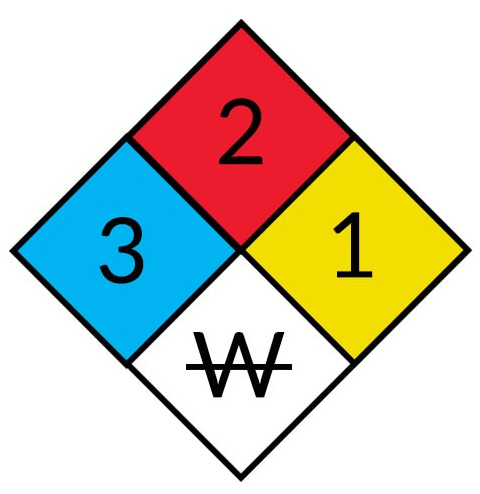
This material poses an extreme hazard to health and the special symbol indicates NO WATER should be used.
500
Name three pieces of safety equipment in the lab and describe when they would be used.
*Answers Vary*
500
A student needs to calculate the area for a disc of material with negligible thickness. The disc has a radius of 2.74cm, the student uses the formula
A=pir^2
to calculate area and uses 3.14159 to represent pi. What is the area of the disc?
23.6cm2
500
Using dimensional analysis convert 4.2 minutes into years. Report your answer in scientific notation with the correct number of significant figures.
1.0 hours = 60. minutes
1.0 days = 24 hours
1.0 years = 365 days
8.0xx10^-6 years
500
Calculate the percentage error for a student who ended up with 4.256 g of product and who calculated they should end up with 5.000 g of product.

Report your answer with correct significant figures.
14.88%