Causes of WWII
European Theater
Pacific Theater
U.S. Home Front
Leaders of WWII
End of WWII
100
This treaty forced Germany to pay reparations and accept blame for WWI.
What is the Treaty of Versailles?
100
This German strategy used fast, overwhelming attacks with tanks, planes, and troops.
Blitzkrieg
100
This surprise attack on Dec. 7, 1941 brought the U.S. into WWII.
Pearl Harbor
100
This policy limited goods like food and gas to support the war effort.
Rationing
100
This leader’s invasion of the Soviet Union was a major mistake that led to Germany’s downfall.
Adolf Hitler
100
This top-secret U.S. program developed the atomic bomb.
Manhattan Project
200
This event officially started WWII in Europe.
Germany’s invasion of Poland?
200
This battle was the first major time Hitler was stopped, as Britain defended itself from air attacks.
Battle of Britain
200
This U.S. strategy involved capturing some islands while skipping others to move closer to Japan.
island hopping
200
This order forced Japanese Americans into internment camps.
Executive Order 9066
200
This U.S. president led the country through most of WWII and delivered the “Day of Infamy” speech after Pearl Harbor.
Franklin D. Roosevelt (FDR)
200
Known as the “father of the atomic bomb,” this scientist led the scientific team for the Manhattan Project.
Robert Oppenheimer
300
Hitler sent troops into the Rhineland — a buffer zone between Germany and France where he wasn’t allowed to go — and later took the Sudetenland in Czechoslovakia. Britain and France let it happen, hoping he’d stop. What policy was this?
Appeasement
300
Germany broke a pact and invaded the Soviet Union in this operation.
Operation Barbarossa
300
This battle was the turning point of the Pacific after the U.S. destroyed four Japanese carriers.
Battle of Midway
300
This famous figure symbolized women working in factories.

Rosie the Riveter
300
British Prime Minister who inspired his people during the war.
Winston Churchill
300
This conference was held before Germany was defeated, where Allied leaders planned the end of the war.
Yalta Conference
400
The global economic crisis of the 1930s helped extremist leaders rise to power. What was this crisis called?
Great Depression
400
This brutal winter battle turned the tide in the East, costing nearly 1 million Soviet lives and stopping Germany’s advance.
Stalingrad
400
Japan used these suicide pilots late in the war, crashing planes into U.S. ships to cause maximum damage.
kamikaze pilots
400
Americans were encouraged to grow their own food during WWII using these.
Victory Gardens
400
Leader of the Soviet Union who joined the Allies after being invaded.
Joseph Stalin
400
This conference took place after Germany surrendered and showed rising tensions between the U.S. and Soviet Union.
Potsdam Conference
500
This book, written by Hitler, outlined his beliefs and future plans.
Mein Kampf (My Struggle)
500
This invasion on June 6, 1944 opened a Western Front in France.
D-Day
500
This iconic photo shows U.S. Marines raising the American flag during this Pacific battle.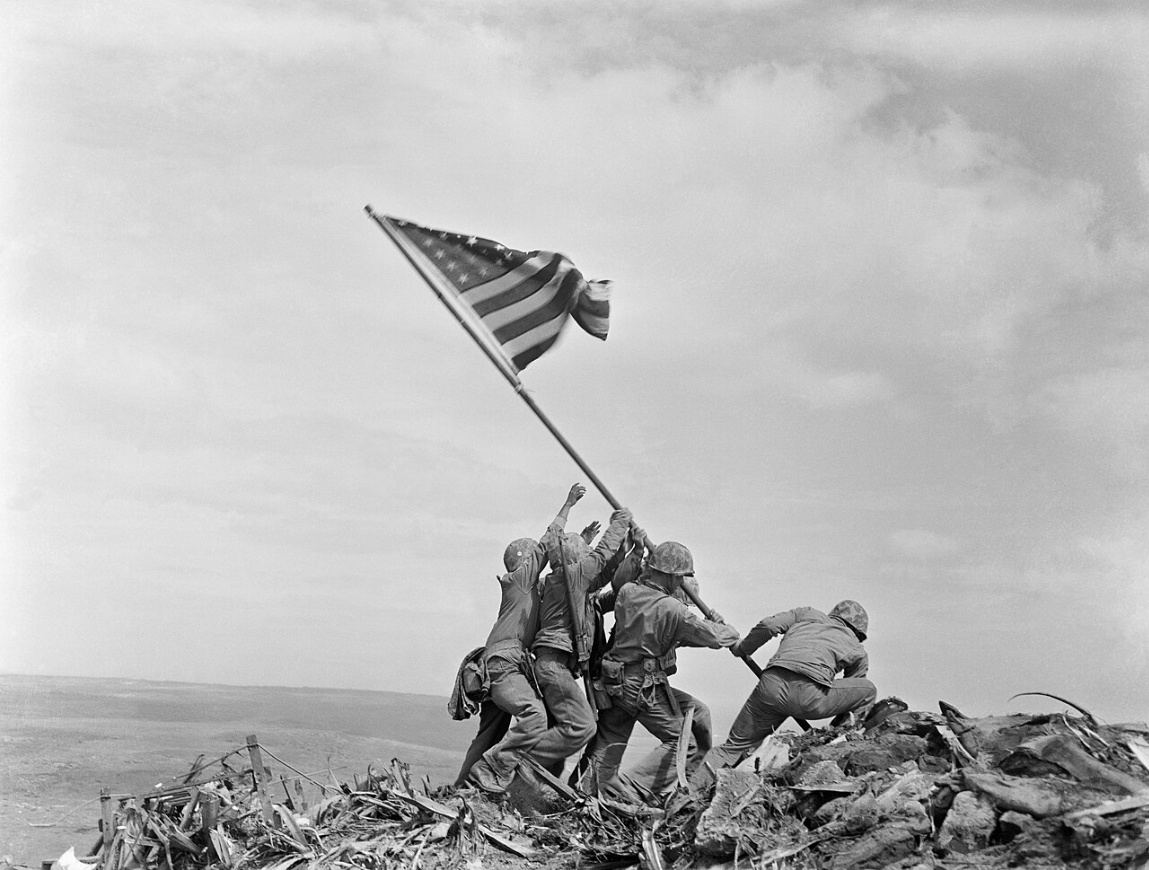
Iwo Jima
500
Disney helped the U.S. government by creating cartoons that encouraged Americans to financially support the war. Citizens bought these as a loan to the government to fund weapons, planes, and supplies.
war bonds
500
U.S. president who decided to drop the atomic bomb
Harry Truman
500
These two Japanese cities were hit with atomic bombs, leading to Japan’s surrender.
Hiroshima and Nagasaki
600
Claiming he was simply “uniting all German-speaking people” — and even pointing out that he was born there — Hitler took over this neighboring country in 1938, an act the Allies did nothing to stop.
Austria
600
This 1942 North African battle stopped German expansion toward the Suez Canal.
El Alamein
600
This battle showed how deadly an invasion of Japan would be due to massive casualties.
Battle of Okinawa
600
This government agency controlled factories, set production goals, and converted car and appliance plants into wartime industries, helping the U.S. become the “Arsenal of Democracy.”
War Production Board (WPB)
600
Supreme Allied Commander who led D-Day.
Dwight D. Eisenhower
600
This planned invasion of Japan was never carried out because of the atomic bombs.
Operation Downfall