Elements and Molecules of Life
Cell Basics
Organelles
Cells Again
Homeostasis
Miscellaneous
100
Triple points
Identify the 6 most important elements for life.(Hint: CHNOPS)
carbon, hydrogen, oxygen, nitrogen, phosphorus, sulfur
100
These types of cells do not have a nucleus or organelles
prokaryotic cells
100
The control center of the cell
nucleus
100
Quadruple points and point donation
How does the DNA in all of your body cells compare?
It's all the same
100
Triple points and point donation
This type of feedback is more common because it returns an organism to homeostasis.
negative feedback
100
Triple points
Which TWO levels of biological organization did we look at in most of the microscope slides?
cells and tissues
200
__________ like carbon and oxygen bond together to form _________ like carbon dioxide and water.
elements/atoms, molecules
200
These types of cells are large, complex and contain organelles
eukaryotic cells
200
What is the function of the mitochondria
Generates energy (ATP)
200
What type of cell is this?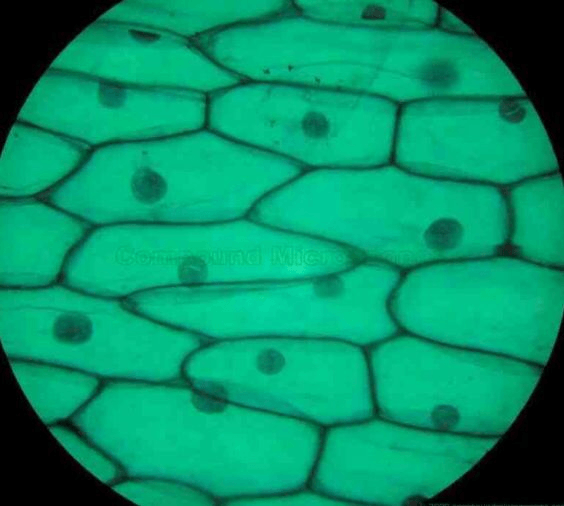
Plant cell
200
Homeostasis is one of the seven fundamental __________ of life because all living things seek it.
characteristics
200
Humans have __________ of cells that fall into about ________ different types of specialized cells.
trillions, 200
300
Identify the four biomolecules essential for life.
carbohydrates, lipids, proteins, nucleic acids
300
Double points
What is the name of the type of cell division that somatic/body cells, such as skin, pancreas and liver cells go through?
mitosis
300

Chloroplast
300
What type of cell is this?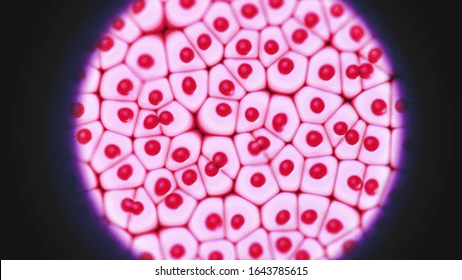
Animal Cell
300
When we exercise, our muscles produce CO2 as a waste product, causing our blood to become more acidic. Sensors detect this acidity and signal our lungs to breathe more. This helps to release more CO2 and make our blood less acidic.
What type of feedback is this and why?
It's negative feedback because it is returning our bodies to homeostasis in terms of our desired CO2 levels and blood acidity levels.
300
Double points
Name three characteristics of life that apply to cells.
*energy use
*reproduction
*heredity
*evolution
*responsive to the environment
*maintain homeostasis
400
For each food listed below, identify the main biomolecule that it's made of:
butter
pasta
lean meat
lipids, carbohydrates, proteins
400
Which type of cell evolved first on Earth, prokaryotic or eukaryotic?
prokaryotic cells
400
This organelle controls what enters and leaves the cell
cell membrane
400
Double points
Name the three main things that happen during interphase for most cells.
1. Cells grow
2. Cells replicate their DNA
3. Cells perform their specific functions
400
When a cell is severely damaged or infected, it needs to destroy itself to protect the rest of the body. To do this the cell releases destructive enzymes. Once a few enzymes are activated, they cause more and more enzymes to activate, eventually destroying the cell from the inside out.
What type of feedback is this and why?
It's positive feedback because the cell is going away from homeostasis in order to deal with the emergency of being infected.
400
Point donation
What is the name of the special type of unspecialized cell that can create specialized cells?
stem cells
500
Identify a food that you commonly eat that contains nucleic acids.
Any plant or animal that you eat contains nucleic acids because DNA is a nucleic acid and all living things contain DNA.
500
List three structures that are found in both prokaryotic and eukaryotic cells.
DNA, cell membrane, ribosomes, cytoplasm
500
This organelle breaks down cellular waste and recycles it
lysosome
500
Point donation
What are the two parts of cell division for body cells and what occurs in each?
Mitosis = when the nucleus and DNA divides in two
Cytokinesis = when the cytoplasm and organelles divides in two
500
Both types of feedback are important for living things, but negative feedback mechanisms are more common. Explain why this must be the case.
Negative feedback mechanisms are more common because they return an organism to homeostasis, which is its healthiest/normal state.
500
Put the following levels of biological organization in the correct order from smallest to largest: tissue, organelle, organ, cell, organ system, organism, molecule, atom
atom, molecule, organelle, cell, tissue, organ, organ system, organism