Cell Division
Embryonic Development
Chromosome Structure & Function
Gene Expression
The Cell Cycle
LER Labs
100
What is the correct order of phases in mitosis?
Prophase, metaphase, anaphase, telophase
100
What is the function of the placenta?
nutrition, respiration, excretion/waste removal
100
How many chromosomes will be in a haploid cell of an organism whose body cells contain 6 chromosomes?
3
100
Base your answer to this question on the diagram below, which represents some stages in the development of an embryo. The arrow labeled X represents the process of __________.

cell differentiation/specialization
100
___________ is composed of the G1, S, and G2 phases.
Mitotic phase
Anaphase
Prophase
Interphase
interphase
100
A student lifted weights after school and found that his muscles started to burn. He couldn’t continue to lift the weights after prolonged exercising. This muscle fatigue is most likely due to
1. the heart beating too fast and tiring out
2. the lungs accumulating oxygen
3. a lack of oxygen and build up of waste in the muscles
4. a lack of carbon dioxide in the muscles
3. a lack of oxygen and build up of waste in the muscles
200
Which processes lead to the greatest variety of genetic combinations?
Asexual reproduction and cloning
Meiosis and fertilization
Meiosis and mitosis
Cloning and mitosis
2. Meiosis and fertilization
200
The diagram below represents some stages that occur in the formation of an embryo. Which statement best describes stage X?
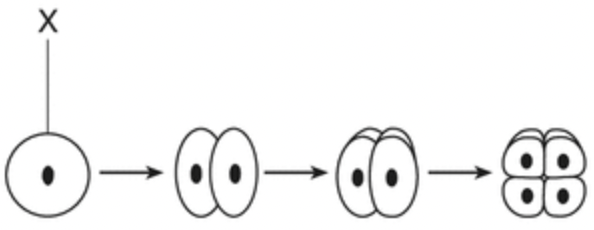
Stage X is a zygote and contains half the number of chromosomes as the body cells of the parents.
Stage X is formed by the process of meiosis and is known as a gamete.
Stage X is a zygote and is formed as a result of the process of fertilization.
Stage X is formed by mitosis and is known as an egg cell.
3. Stage X is a zygote and is formed as a result of the process of fertilization.
200
A frog sperm cell contains 12 chromosomes. How many chromosomes are in a normal frog gamete?
12
200
In an organism, a muscle cell has the same DNA as a nerve cell, yet the cells perform different functions. This is possible because
different mutations occur in each cell type, changing the genetic instructions.
temperature variations within the body alter DNA.
proteins in each cell type change the structure of DNA.
different parts of the genetic instructions are used in each type of cell.
4. different parts of the genetic instructions are used in each type of cell.
200
During which phase of the cell cycle is DNA replicated in preparation for cell division?
S phase
200
During periods of vigorous physical activity, a person’s breathing and heart rates increase. This enables the cells of the body to perform more efficiently because it helps the cells to
1. remove waste products faster
2. reduce the amount of ATP produced
3. store excess glucose in muscles
4. convert more oxygen to glucose
1. remove waste products faster
300
The process of mitotic cell division normally results in the production of
four cells with half the number of chromosomes as the parent .
two cells with the same number of chromosomes as the parent.
two cells with only one chromosome from each parent.
one cell with a replicated set of matched chromosomes.
2. two cells with the same number of chromosomes as the parent.
300
Which events must occur before the sequence of events in the diagram below can take place?
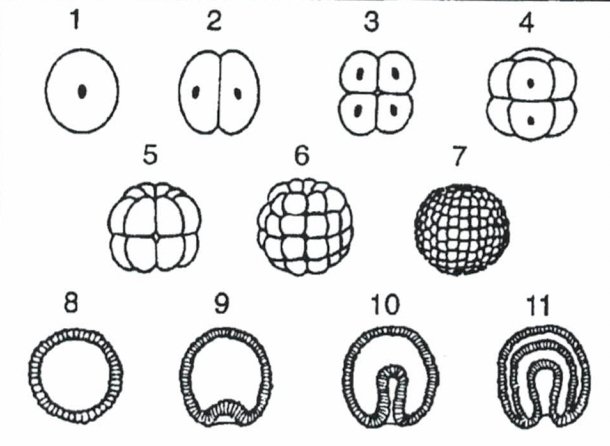
1. mitosis and fertilization
2. gamete formation and mitosis
3. gamete formation and fertilization
4. meiosis and mitosis
3. gamete formation and fertilization
300
During this fertilization, the egg cell normally contributes which of the following to the new organism?
A diploid set of chromosomes
A haploid set of chromosomes
Most of the cytoplasm of the zygote
- All of its genetic material
2. A haploid set of chromosomes
300
The diagram below represents a process that occurs during normal human development. Which statement is correct regarding the cells and DNA?
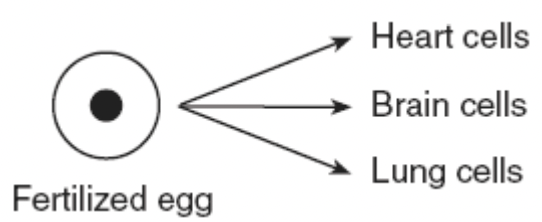
1. All the cells have identical DNA.
2. The DNA of the fertilized egg differs from the DNA of all the other cells.
3. The DNA of the fertilized egg differs from some, but not all, of the other cells.
4. Only the fertilized egg contains DNA.
1. All the cells have identical DNA.
300
Which of the following is NOT a correct statement about the events of the cell cycle?
1. Interphase is usually the longest phase.
2. DNA replicates during the S phase.
3. Cell division ends with cytokinesis.
4. The cell grows during the G2 phase.
4. The cell grows during the G2 phase.
300
The diagram below represents the distribution of some molecules inside and outside of an artificial cell over a period of time.
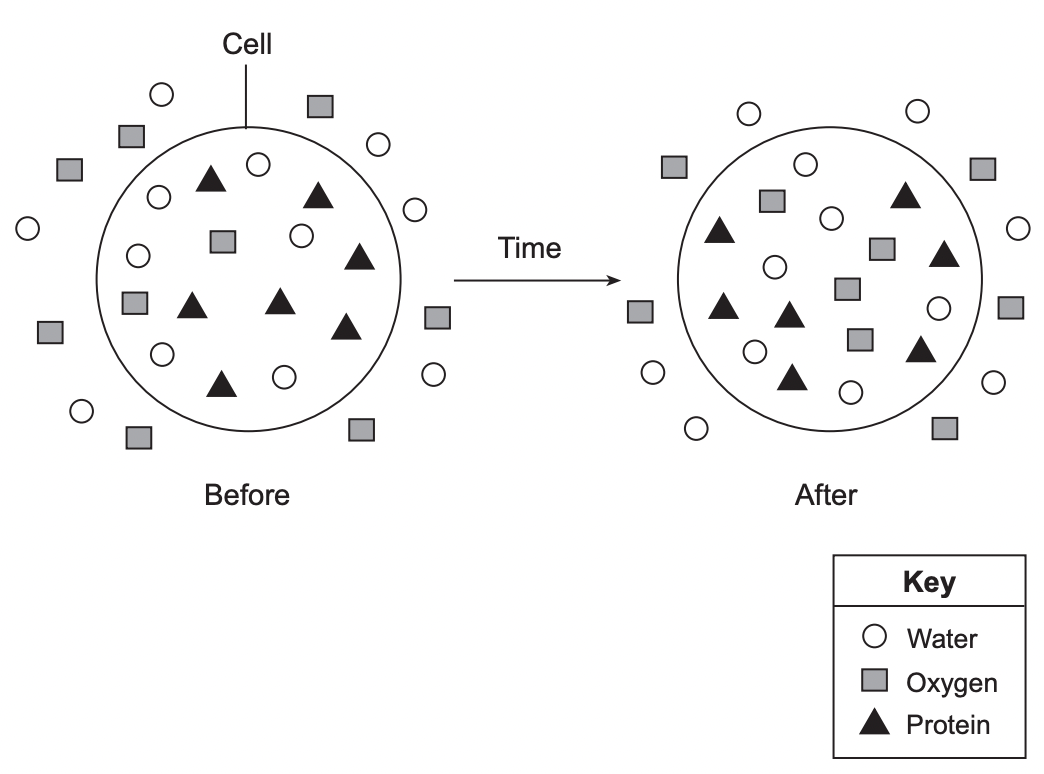
Which statement is best supported by the diagram?
1. Oxygen molecules entered the cell over time by active transport.
2. Water molecules are too large to enter or leave the cell, so they remained where they were at the start of the investigation.
3. Protein molecules are kept inside of the cell because the cell needs them.
4. The protein molecules are too large to diffuse out of the cell.
4. The protein molecules are too large to diffuse out of the cell.
400
Which phase of mitosis is represented by the diagram below?
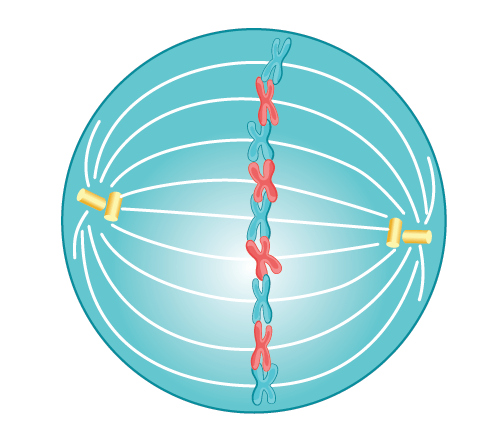
metaphase
400
After fertilization, the zygote divides via _______ and soon becomes a multicellular embryo.
mitosis
400
Each duplicated chromosome in a eukaryotic cell consists of identical halves called
sister chromatids
400
Base your answer to this question on the diagram below, which represents some stages in the development of an embryo. If cell A has 26 chromosomes, how many chromosomes will most likely be found in each cell of stage G?

26
400
A body cell of an organism has 16 unduplicated chromosomes just before the S phase. How many chromosomes will it have just before mitosis?
16 duplicated chromosomes
400
A student filled a dialysis tube with 97% water solution and sealed the ends. The tube and its contents had a mass of 55 grams. The student placed the tube in a solution, and the mass of the tube and its contents increased to 60 grams. Into which solution was the dialysis tube placed?
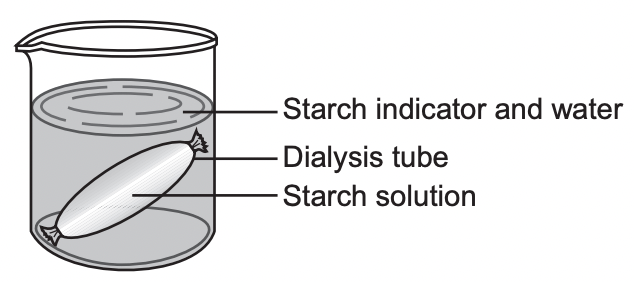
1. 0% water
2. 97% water
3. 95% water
4. 99% water
4. 99% water
500
During which phase of meiosis do pairs of homologous chromosomes align in the center of the cell?
Metaphase I
Metaphase II
Prophase I
Anaphase II
1. Metaphase I
500
The diagram below represents some processes in the early development of a multicellular organism.
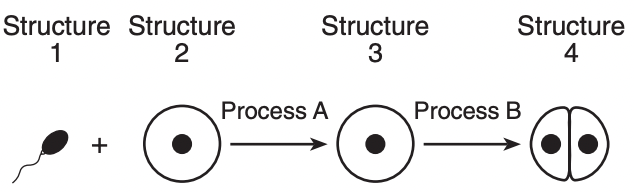
Which statement describing this diagram is correct?
1. The cell represented by structure 3 has the same genetic content as structure 2.
2. Process A represents the process of meiosis.
3. Each cell in structure 4 has the same genetic content as that in structure 3.
4. Processes A and B both occur in the placenta.
3. Each cell in structure 4 has the same genetic content as that in structure 3.
500
If a normal diploid cell has 8 chromosomes, then
1. there are 8 homologous pairs of chromosomes per diploid cell
2. there are 8 chromatids per diploid cell between the S phase and the first division of meiosis
3. there are 4 chromosomes per cell after meiosis I
4. sperm cells made from this diploid cell would have 8 chromosomes
3. there are 4 chromosomes per cell after meiosis I
500
Using the Universal Genetic Code Chart, complete the missing amino acid sequences for plant species A and the missing RNA base sequences for plant species B in the table below.
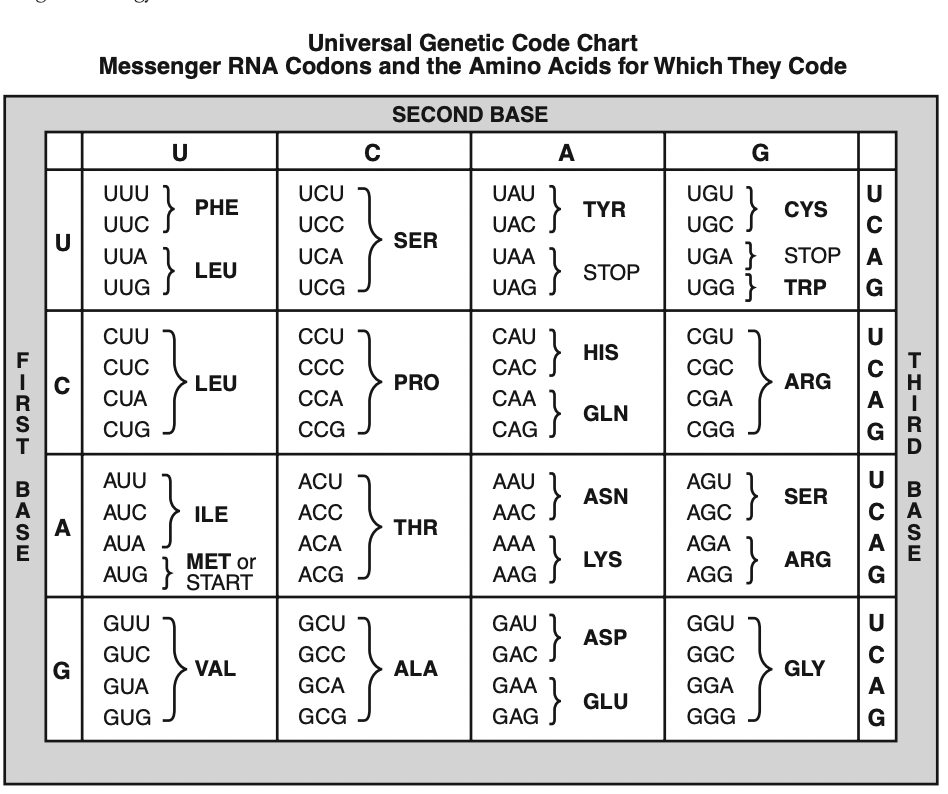
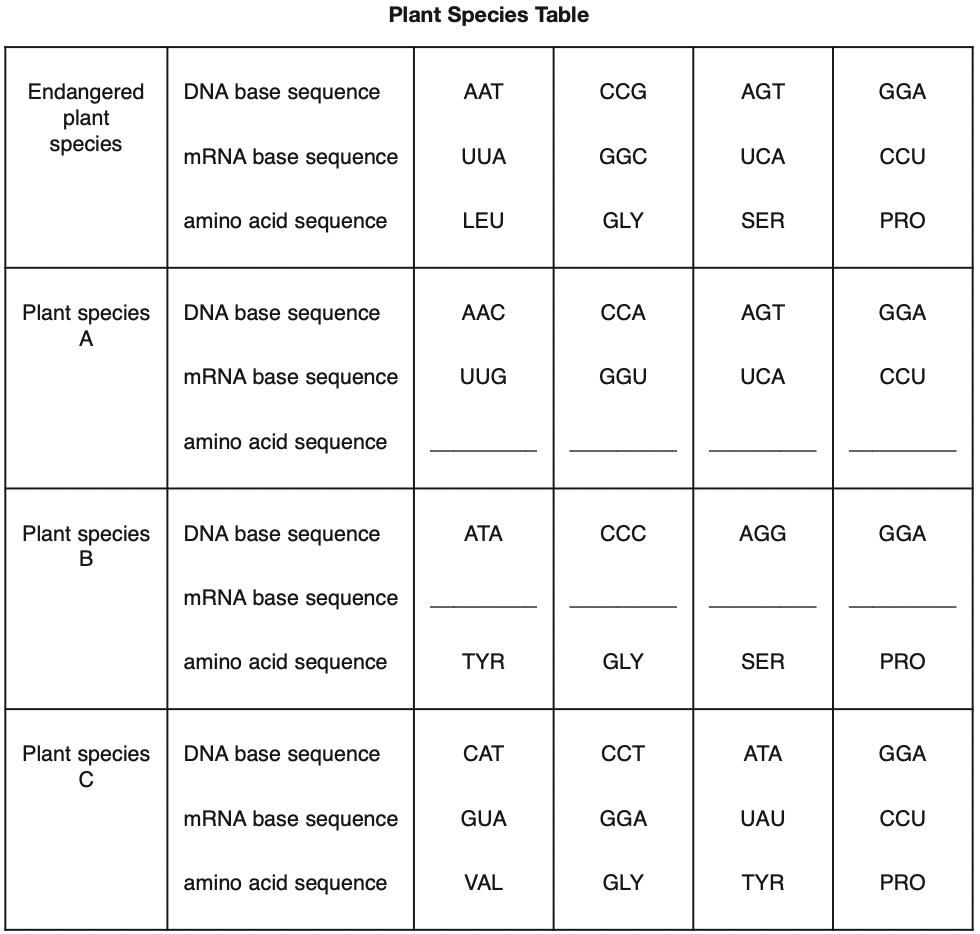
Species A: LEU GLY SER
Species B: UAU GGG UCC
500
If a sperm cell of an organism contains 5 chromosomes, which of the following is true?
1. The organism normally has 5 chromosomes in its body cells.
2. Each sperm cell contains 10 sister chromatids.
3. The organism's body cells normally contain 10 homologous pairs of chromosomes.
4. The organism has 5 homologous pairs of chromosomes in each diploid cell.
4. The organism has 5 homologous pairs of chromosomes in each diploid cell.
500
The diagram below represents a laboratory experiment involving sucrose and water molecules in a cellophane bag which functions in the same way as dialysis tubing.
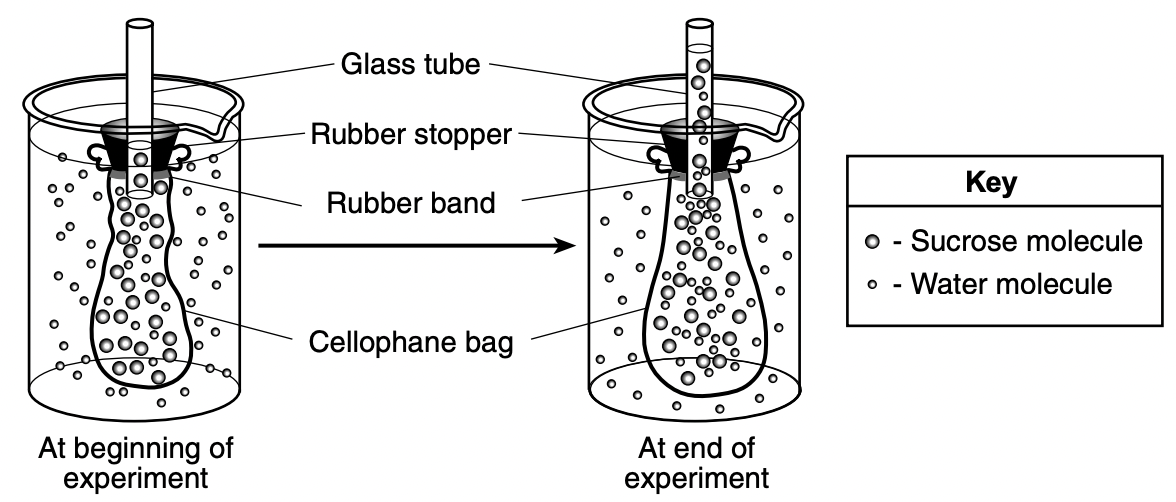
Which statement correctly explains the rise of liquid in the tube at the end of the experiment?
1. The concentration of sucrose molecules increased as water molecules entered the bag. This concentration increase pushed the liquid up the tube.
2. Water entered the bag due to the lower concentration of water inside. The extra water pushed the liquid up the tube as the bag filled.
3. Sucrose indicator entered the bag and reacted with the sucrose molecules. The reaction made the bag increase in size and pushed the liquid up the tube.
4. Sucrose molecules moved out of the bag and up the tube while water moved out, causing the rise of liquid in the tube.
2. Water entered the bag due to the lower concentration of water inside. The extra water pushed the liquid up the tube as the bag filled.