Factor Polynomials
Exponent Properties
Rational Expressions
Polynomials
Multiply/Divide Polynomials
Evaluate/Add/Subtract
Polynomials
Polynomials
100
What is the first step in our factoring flow chart?
Does it have a G.C.F (Greatest common factor)
100
10. Simplify
(4r^4s^5)/(24r^4s^-5)
s^10/6
100
Simplify.
(10x^2-40)/(5x-10)
2(x+2)
100
1. Determine if the following is a polynomial.
2x^5-x^4+5x^-3+1
No! All the exponents of "x" must be POSITIVE WHOLE numbers or ZERO.
100
13. Perform the indicated polynomial operation.
(3a^5 b+6)(3a^5 b-6)
9a^10b^2-36
100
5. Evaluate using Direct Substitution. When x= -3
x^2+2x-5
f(-3)= -2
(-3,-2)
200
16. Factor completely.
a^4+7a^2+6
(a^2+1)(a^2+6)
200
11. Simplify
x^-12*x^6
1/x^6
200
19. Multiply.
(x^2+3x-10)/(x^2+6x+9) ∙(5x^2+15x)/(x^2-6x+8)
(5x(x+5))/(x+3)
200
2. Give the degree.
h(x)=6x^2+pi-3x
Degree 2
200
What are the first 5 rows of pascals triangle?
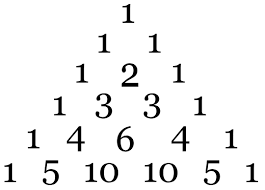
200
6. Evaluate using Synthetic Substitution. When x= -1
x^4+5x^2-2x+3
f(-1)= 11
(-1,11)
300
In Step 2 of factoring polynomials: If you know it has three terms what do you do to factor?
Double Bubble Divide
300
12. Simplify
x^6/(3y^3)
x^6/(3y^3)
300
20. Divide.
(2x^2+7x-15)/(x^2-49) ÷(3x+15)/(x-7)
(2x-3)/(3(x+7)
300
3. Give the type.
h(x)=6x^2+pi-3x
Quadratic Polynomial
300
14. Use the Binomial Expansion Theorem to perform the indicated operation.
(x+3)^4
x^4+12x^3+54x^2+108x+81
300
7. Perform the indicated polynomial operation.
g(t)= t+2
f(t)= t+1
Find g(t)+f(t)
2t+3
400
17. Factor Completely.
4c^3+8c^2-9c-18
(c+2)(2c+3)(2c-3)
400
9. Simplify.
4a^5*(2a^7)^3
32a^32
400
What should we do to divide rational expressions?
Multiply by the reciprocal.
400
4. Give the leading coefficient.
h(x)=6x^2+pi-3x
6
400
Use Synthetic division to perform the indicated operation.
(x^4=5x^3-8x^2+13x-12) div(x-6)
x^3+x^2-2x+1+(-6)/(x-6)
400
8. Perform the indicated polynomial operation.
(5b-6b^3+2b^4)-(9b^3+4b^4-7)
-2b^4-15b^3+5b+7