8A/B: Biodiversity & CHON Cycles
8C: Flow of Energy
8D: Group Behavior
8E: Graphing
8F: Succession
100
From where do plants get their carbon atoms?
A: Carbon from the Soil
B: CO2 from Atmosphere
C: Oxygen released during Cellular Respiration
D: From H2O in the Soil
B: CO2 from Atmosphere
100
Define the following terms:
1. Producer:
2. Secondary Consumer:
3. Omnivore:
1. Producer: Plants - make their own food
2. Secondary Consumer: Eat primary consumers
3. Omnivore: Eats plants and animals
100
Any relationship where two or more species live closely together.
Symbiosis
100
If the death rate exceeds the birth rate, what will happen to the population size?
The population will decrease
100
The first organisms to grow in an area. Ex: lichen
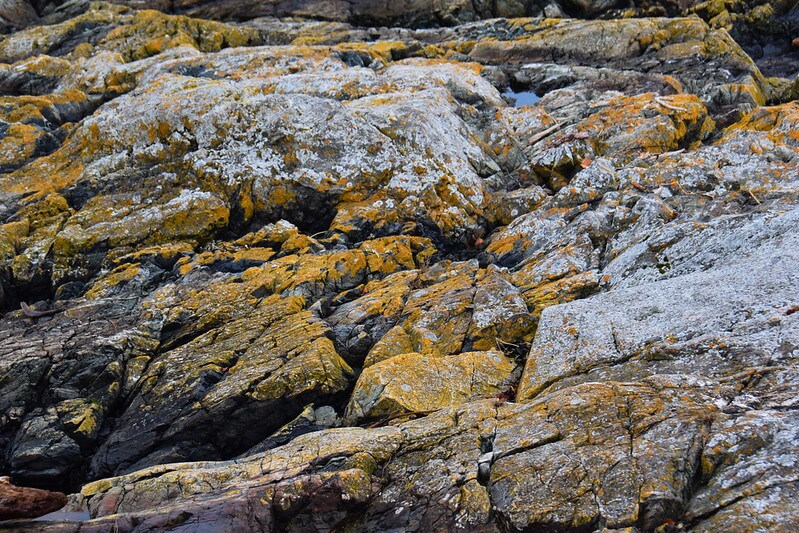
Pioneer Organisms/Species
200
Why is biodiversity important in an ecosystem?
Makes the ecosystem more stable.
or
Allows ecosystem to withstand changes.
200
If scientist wanted to study animal interactions would they use a food web or food chain and why?
Food web: Food webs show all the ways energy is transferred; Food chains only show a single way energy is transferred in an ecosystem.
200
In this relationship, one organism is harmed (but not killed) at the benefit of the other.
Parasitism
200
Which color on the graph below represents the predator?

Blue
200
This type of succession happens in areas of brand new land where nothing grew before
Primary Succession

300
List the levels of ecology in order from smallest to largest
Individual (smallest), Population, Community, Ecosystem, Biosphere (largest)
300
How many primary consumers are shown? Name them.

3 (grasshopper, mouse, rabbit)
300
Mycorrhizal Fungi grows in the soil around trees like the Ginkgo. The Fungi helps the Ginkgo take in more water and nutrients while the Ginkgo supplies sugar to the Fungi. What type of relationship is this?
Mutualism or Mutualistic
300
Which color on the graph below represents the prey?
Red
300
A stable ending state of succession. Ecosystems will remain at this state until a disturbance.
Climax Community
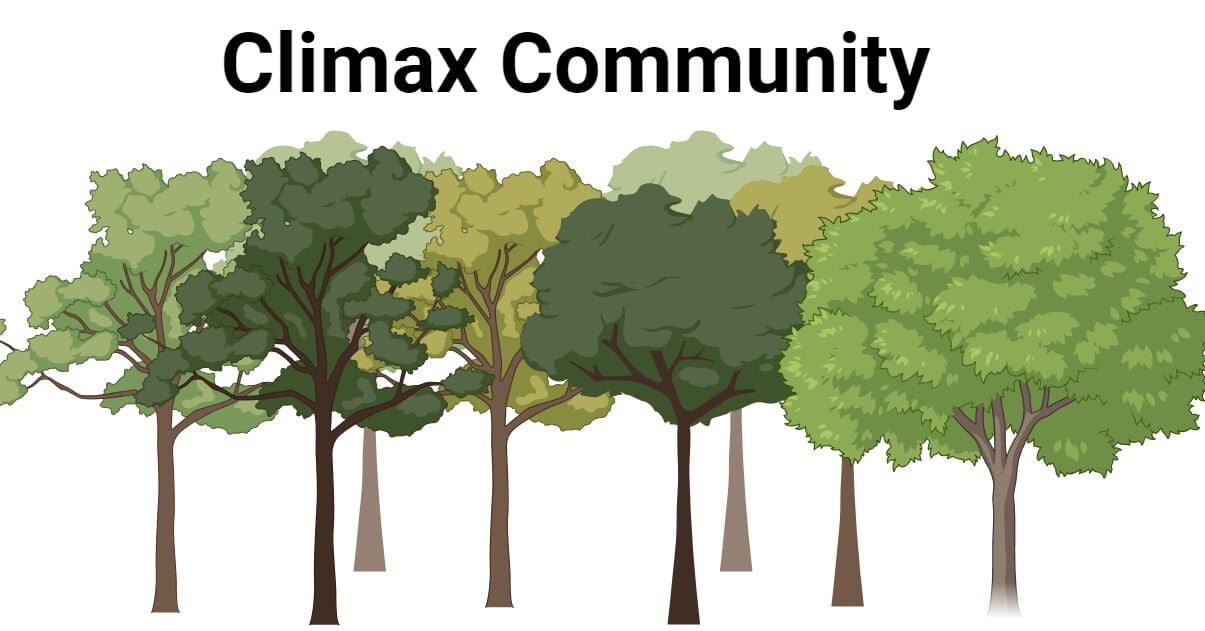
400
Which level of ecology does this picture show?

Ecosystem (living + nonliving things)
400
Assume the producers in a trophic pyramid have 7500 calories of energy. How much energy will be available to SECONDARY consumers?
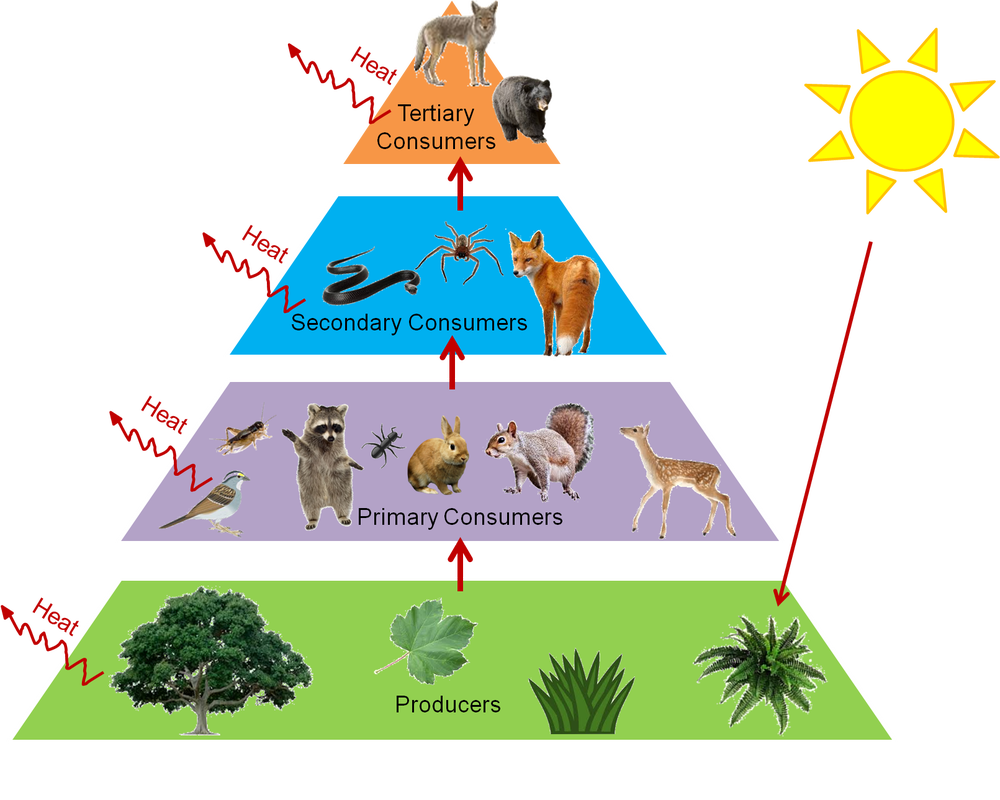
75 calories
400
In this relationship, one organism benefits while the other is unaffected. ( + | 0 )
Commensalism or Commensal
400
When did the birth rate exceed the death rate on the graph below?
A: Between years 13 and 14
B: Between years 8 and 9
C: Between years 6 and 8
C: Between years 6 and 8
400
Order these pictures of succession from first to last. (EX: A, B, C, D)

D, A, C, B
500
Carbon gets released into the air & absorbed out of the air in the carbon cycle.
List 2 ways carbon gets released into the air:
List 1 way carbon gets absorbed/taken out of the air:
Released:Cell respiration, burning fossil fuels, decomposition
Absorbed: Photosynthesis
500
What percent of energy is transferred to the next level on a trophic pyramid?
10%
(how much is lost as heat?)
500
What are two disadvantages of group behavior? Example: A pack of wolves
Increased spread of disease, competition for food, competition for mates, harder to hide from prey.
500
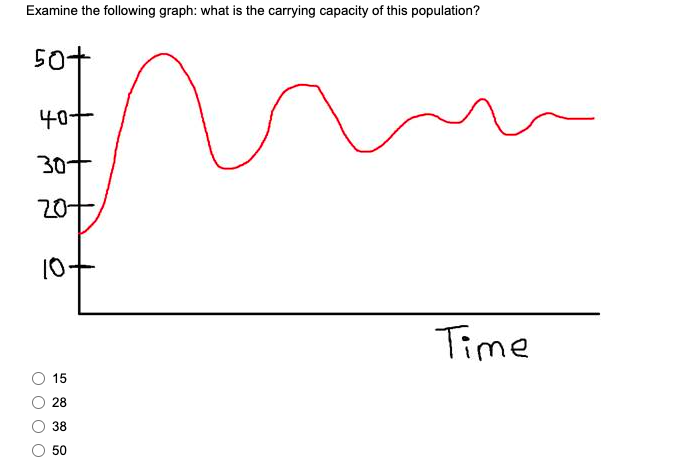
38
500
What makes ecological succession to more complex organisms possible?
Changes in abiotic factors like soil, nutrients, and water.