Vocal Mechanics/Misc.
Breath Functions
Throat Functions
Bone/Cartilage
Muscles/Ligaments
Oral Cavity
Tongue
Resonance and Speech
100
I couldn't think of a question that's appropriately easy so........what class are you in?
Intro to Voice (I assume)
100
This is when, in the breathing process, breath muscles are actively engaged rather than relaxed:
What is inhaling/inspirating?
100
This is the medical name for the "wind pipe," through which air travels to pass through our larynx and out of our mouths:
What is the trachea?
100
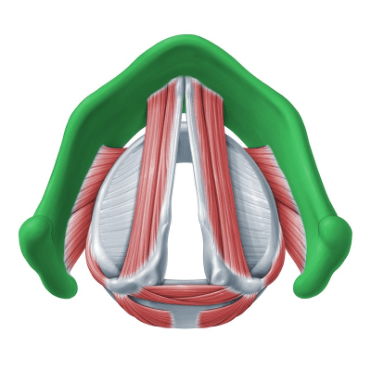 The largest "housing" of cartilage in the throat, which protects the larynx. Also creates the "Adam's Apple" in men.
What is the Thyroid Cartilage?
100
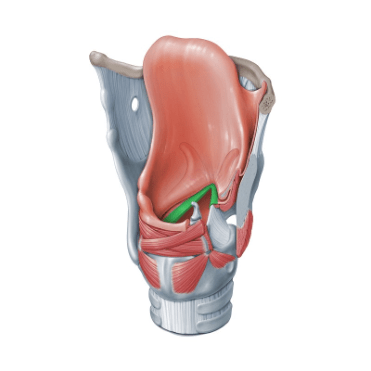 The ligaments in your larynx that vibrate to create sound that we know as speech.
What are the vocal folds?
100
These two parts of the oral cavity create what are called labial and dental sounds (yes, you need both!).
What are the lips and the teeth?
100
This part of the front of the tongue touches the lips, teeth, alveolar ridge, and palates to create different consonants.
What is the apex (tip)?
100
These are what we generally call speech sounds made by manipulating/filtering free flowing air.
What are vowels?
200
Muscles in the larynx can be divided into these two groups, one of which connects the larynx to its neighboring structures, and the other of which move the vocal cords in order to create speech sounds (remember that there are two - if you only get one, that's half points).
What are extrinsic and intrinsic muscles?
200
This is the primary function of the breath for humans:
What is intaking oxygen for the bloodstram and expelling unwanted gasses?
200
This is the homeostatic state of the larynx:
A relaxed position (like when one is breathing)
200
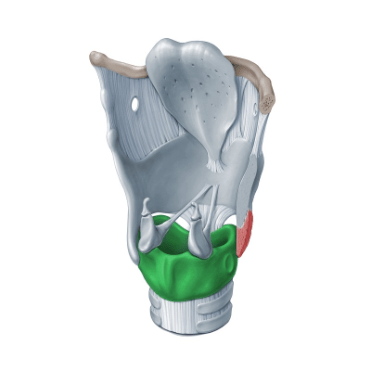 Directly connects the larynx to the wind pipe.
What is the Cricoid Cartilage?
200
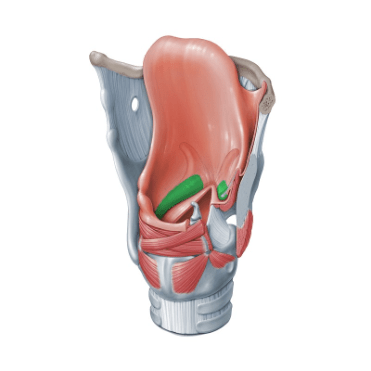 Sitting just adjacent to the vocal folds, these provide extra support structure, and can also be used to create unique vocal textures and effects.
What are the Vestibular Folds (False Vocal Folds)?
200
This is the hard “dome” at the top of your mouth. Sounds made with the hard palate are called “palatal” sounds (like “j”)
What is the hard palate?
200
This is the very back part of the tongue that connects to the pharynx, just above the epiglottis.
What is the root?
200
These are what we generally call speech sounds made by using different parts of the vocal mechanism to interrupt air flow in different ways.
What are consonants?
300
This is what we call the "impact" sound at the beginning of a vowel, created by the breaking of tension between the vocal folds:
What is a glottal sound?
300
These two main muscle groups are engaged when taking in air:
What are the diaphragm and the intercostals?
300
These need to be put under tension via the stretching of other muscles in the pharynx in order to create speech
What are the vocal folds?
300
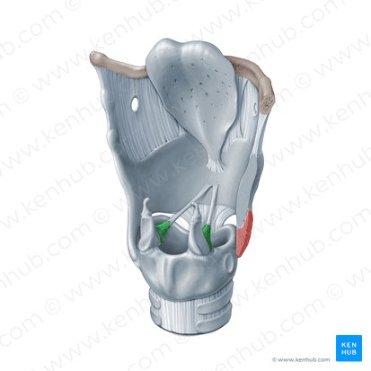 Connects directly to the vocal folds and moves them in and out to create certain amounts of openings and tensions.
What is the Arytenoid Cartilage?
300
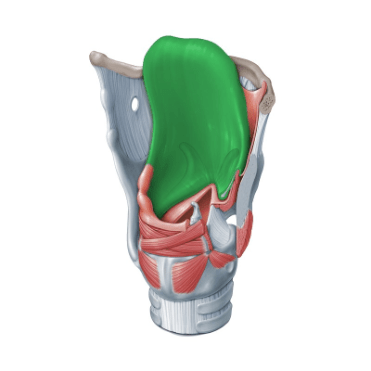 This large flap sits at the top of your larynx and prevents unwanted substances from entering the wind pipe.
What is the Epiglottis?
300
This is the soft portion at the back of the roof of the mouth. Sounds made with it are called velar sounds.
What is the soft palate/velum?
300
This is the middle part of the tongue that sits in your mouth. It touches the palates to create different consonants.
What is the blade?
300
This is what we call the resonance created by engaging the thyroarytenoid muscles to shorten and thicken the vocal folds, creating a deeper resonance.
What is chest voice?
400
The procedure of putting a camera into the throat either through the mouth or the nose in order to look at the vocal mechanism of the throat.
What is a laryngoscopy?
400
This generally drives the process of exhalation/expiration:
What is the relaxing of the primary breathing muscles (diaphragm and intercostals)?
400
This is the larger-than-expected flap at the top of the larynx, which helps to prevent unwanted substances from entering the wind pipe and the lungs:
What is the epiglottis?
400
The only bone we've talked about, which sits on top of the thyroid cartilage. Also the only "stand-alone" bone in the body.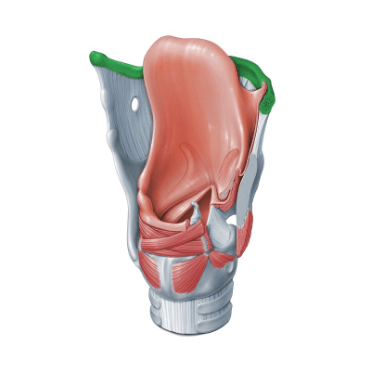
What is the Hyoid Bone?
400
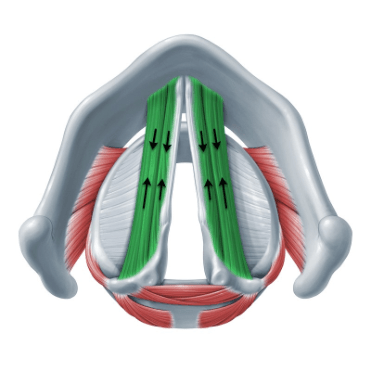 These muscles sit directly underneath the vocal folds and aid in stretching them, helping to create speech. There's two of them - if you only get one, you only get half points!
What are the thyroarytenoid and vocalis muscles?
400
This is a change in the angle of the roof of the mouth, just behind the top teeth. Sounds made with it are called alveolar sounds.
What is the alveolar ridge?
400
This is the back part of the tongue that sits underneath the soft palate, and it is used to create the "k" and "g" sounds.
What is the dorsum?
400
This is what we call the resonance created by engaging the cricothyroid muscles to lengthen and thin out the vocal folds, creating a higher resonance.
What is the head voice?