Experimental Design
Diversity and Classification
Evolution
Genetics
Latin/Greek Roots
100
1. Suzie Q wants to know how different colors of light effect the growth of plants. She believes that plants can survive the best in white light. She buys 5 ferns of the same species, which are all approximately the same age and height. She places one in white light, one in blue light, one in green light, one in red light and one in the closet. All of the ferns are planted in Miracle-Grow and given 20 mL of water once a day for 2 weeks. After the two weeks, Suzie observes the plants and measurements.
What measurements could Suzy make to determine how different colors of light affect the growth of plants?
Suzie should measure the heights of each plant in centimeters at the end of the two weeks.
100
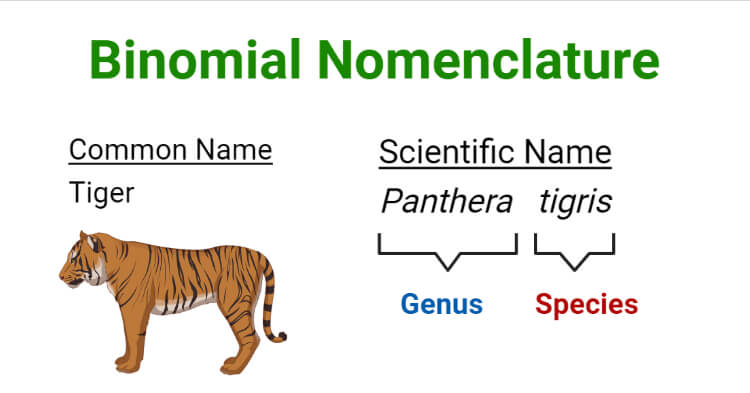
True or False?: when naming an organism is binomial nomenclature, the structure is "Species genus"

False.
100
what is darwinism? (hint: theory of evolution)
darwin’s theory, known as natural selection, believed that organisms possessed variation (each individual was slightly different from one another), and these variations led to some being more likely to survive and reproduce than others. Therefore, features that made an organism more likely to survive or reproduce are more likely to appear to each generation.
100
what is the difference between sexual and asexual reproduction?
In sexual reproduction, an organism combines the genetic information from each of its parents and is genetically unique. In asexual reproduction, one parent copies itself to form a genetically identical offspring.
100
what does the latin/greek root "macro-" mean?
big; ex. macrophage is a large phagocyte (type of cell within the body capable of engulfing and absorbing bacteria and other small cells and particles)
200
1. Suzie Q wants to know how different colors of light effect the growth of plants. She believes that plants can survive the best in white light. She buys 5 ferns of the same species, which are all approximately the same age and height. She places one in white light, one in blue light, one in green light, one in red light and one in the closet. All of the ferns are planted in Miracle-Grow and given 20 mL of water once a day for 2 weeks. After the two weeks, Suzie observes the plants and measurements.
What is the independent variable?
Color of light
200
which of the following is NOT one of the 6 kingdoms of life?: Plants, Animals, Protists, Fungi, Archaebacteria, Fish
Fish. The 6 kingdoms are Plants, Animals, Protists, Fungi, Archaebacteria, Eubacteria.
200
what is lamarckism? (hint: theory of evolution)
theory of evolution based on the principle that physical changes in organisms during their lifetime—such as greater development of an organ or a part through increased use—could be transmitted to their offspring
200
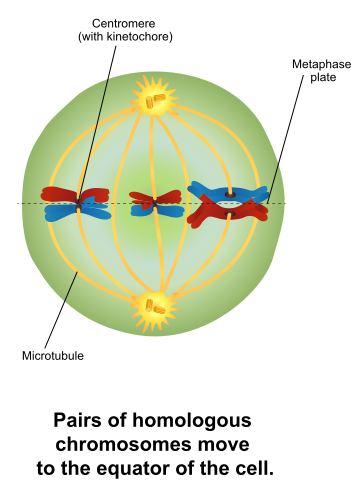
what stage of meiosis 1 is being described?: ____ is characterised by the alignment of the duplicated chromosomes at the equatorial plate known as the _____ plate. One of the sister chromatids is attached to one pole of the cell by microtubules attached to its kinetochore and the other sister chromatid gets attached to the opposite pole.
Metaphase 1.
200
what does the latin/greek root "inter-" mean?
between; ex. interphase the cellular phase between cell divisions
300
1. Suzie Q wants to know how different colors of light effect the growth of plants. She believes that plants can survive the best in white light. She buys 5 ferns of the same species, which are all approximately the same age and height. She places one in white light, one in blue light, one in green light, one in red light and one in the closet. All of the ferns are planted in Miracle-Grow and given 20 mL of water once a day for 2 weeks. After the two weeks, Suzie observes the plants and measurements.
What is the dependent variable?
Height/Growth of the plants
300
Why was Aristotle's classification system replaced?
Naturalists replaced Aristotle's classification system because it did not adequately cover all organisms and because his use of common names was problematic.
300
homologous or analogous?

analogous -- features of different species that are similar in function but not necessarily in structure and which do not derive from a common ancestral feature
300
Typically, a baby is born with 46 chromosomes. Babies with Down syndrome have an extra copy of which one of these chromosomes?
chromosome 21 -- a medical term for having an extra copy of a chromosome is 'trisomy' so down syndrome is also referred to as Trisomy 21
300
what does the latin/greek root "hetero-" mean?
unlike, mixed, different; ex. heterozygous is a cell that has two different versions of a gene
400
1. Suzie Q wants to know how different colors of light effect the growth of plants. She believes that plants can survive the best in white light. She buys 5 ferns of the same species, which are all approximately the same age and height. She places one in white light, one in blue light, one in green light, one in red light and one in the closet. All of the ferns are planted in Miracle-Grow and given 20 mL of water once a day for 2 weeks. After the two weeks, Suzie observes the plants and measurements.
What was the control group in this experiment?
The plant in the closet (didn’t receive any light)
400
What are the 7 levels of Linnaean classification?
Linnaeus' hierarchical categorization system has seven levels, known as taxa -- Kingdom, Phylum, Class, Order, Family, Genus, and Species are the largest to the smallest.
400
homologous or analogous?
homologous -- the structures which bear common basic structure but perform different functions.
400
Mendel proposed the law of inheritance of traits from the first generation to the next generation. What 3 laws are in this law of inheritance?
Law of inheritance is made up of three laws: Law of segregation (when two traits come together in one hybrid pair, the two characters do not mix with each other and are independent of each other), law of independent assortment (at the time of gamete formation, the two genes segregate independently of each other as well as of other traits), and law of dominance (states that in a heterozygous condition, the allele whose characters are expressed over the other allele is called the dominant allele)
400
what does the latin/greek root "hyper-" mean?
above, greater; ex. hypertonic has a greater concentration of solutes
500
Fill in the blank: What are the steps of the scientific method?
1. purpose -- state the problem
2. research -- find out about the problem
3. ??
4. experiment -- develop a procedure to test the hypothesis
5. ??
6. conclusion -- compare the hypothesis to the experiment
3 - hypothesis: predict the outcome to the problem
5 - analysis: record the results of the experiment
500
why are viruses considered nonliving? (name one reason)
viruses are not made out of cells, they can't keep themselves in a stable state, they don't grow, and they can't make their own energy. even though they definitely replicate and adapt to their environment, viruses are more like androids than real living organisms.
500
what is the difference between convergent and divergent evolution?
Convergent evolution is seen in how distinct species have evolved similar traits in response to a similar environment or pressure due to natural selection.
Divergent evolution shows how species can change slightly over time and separate (diverge) into new forms -- good example is how darwin's finches have diverged over time in response to natural selection pressures from the competition for food
500
describe the antigen/antibody interaction.
Antigen-antibody reaction or antigen-antibody interaction is a particular chemical interaction between antibodies generated by B cells of the white blood cells and antigens during the immune reaction. The process of agglutination combines antigens and antibodies.
500
what does the latin/greek root "endo-" mean?
inside; ex. endocytosis is a process that brings things into a cell