Wounds
Fluid Balance
Circulatory Compromise
Chest Tubes
Blood Administration
100
A ______ must be entered for each wound.
LDA
100
Your patient was admitted with nausea/vomiting secondary to chemotherapy. What would be an emerging problem you could anticipate along with nursing interventions?
Dehydration - anti-emetics, IV fluids, comfort measures/mouth care
100
One of the features of shock is...
Inadequate tissue perfusion
100
This denotes an air leak in the water seal drainage system.
Continuous bubbling or fluctuating water levels.
100
This must be received prior to instituting blood administration procedures.
Consent
Bonus! Who signs the consent??
200
Wounds must be documented within _____ hours.
24
200
Nursing interventions for your patient that is 2 hours post op without a foley catheter and has not voided include...
Palpate bladder
Bladder scan
Running water; repositioning
Obtain order for straight catheter
200
Name the 3 etiologies (causes) of shock
Hypovolemic
Cardiogenic
Distributive
200
The chest tube insertion site is assessed for these conditions.
Crepitus or air leaks
Stability of chest tube
Skin integrity
Drainage
200
Blood must be infused within this time limit after being removed from the blood bank.
4 hours
300
This wound has full-thickness skin loss where adipose is visible and epibole (rolled wound edges) are often present.
Stage 3 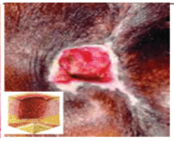
300
You can anticipate that a patient with a history of CHF will have what interventions?
O2 sat monitor
Respiratory assessment
Bed rest with HOB elevated
Daily weights
Peripheral edema assessment
I&O
Dietary and fluid restrictions
300
Assessing shock using objective date includes these assessments in the primary survey.
Airway
Breathing
Circulation
300
This is the procedure for removing clots from the drainage tubing.
Milking
300
The times when vital signs are taken when a patient is receiving a blood transufusion.
Pre-Transfusion
Start of transfusion
15 minutes after start
Every hour throughout transfusion
Post transfusion
400
If using a Rover phone to document a wound, this must be included in the picture.
A measuring tape for size reference
400
Patients should be assessed how often for foley catheter removal?
Daily
400
One of the features of shock is...
Inadequate tissue perfusion
400
Patients should be assessed every ___ hours for these types of changes.
4 hours (minimum)
Dyspnea, labored breathing, tachypnea
Rales, rhonchi, diminished or absent breath sounds
Increased drainage
400
These type of blood transfusion reactions can occur up to 6 hours after transfusion.
Transfusion Associated Circulatory Overload (TACO)
Transfusion-Related Acute Lung Injury (TRALI)
500
These are the times when the Braden Scale must be completed.
Admission
Every Shift
Changes in Patient Condition
500
This is the most common healthcare associated infection and represents what percentage of acute care facility infections?
Healthcare associated Urinary Tract Infection
40%
500
Signs of hypoperfusion of tissues include
Tachypnea
Dyspnea
Crackles
500
The procedure to follow if tube becomes dislodged.
Place sterile gauze dressing over site
Tape on 3 sides only
Monitor patient's VS, oxygenation, respiratory status
Contact physician
500
Supportive therapies for transfusion reactions include...
Antihistamine
Antipyretic
Epinephrine
Corticosteroids
Oxygen
Infusion Fluids