ELang Icons
Subsystems
Metalanguage
History
100
Name these two icons:
Kiki - Bouba

100
What is the difference between lexicology and semantics
Illustrate with an example
lexicology = The study of words (form, meaning, behaviour)
Semantics = the study of meaning (logical, lexical, and meaning-making as a whole)
E.g.: lexical analysis might lable the lexeme "snake" as a noun denoting a reptitle. Semantic analysis would consider the statement: "they're such a snake!" and consider the implications and connotations of "snake."
100
What's the difference between sentence types and sentence structure
Types: declarative, interrogative, imperative, exclamatory
Structure: simple, complex, compound, compound-complex, fragment
100
What's the difference between Norse and Norman?
Norse = Old Norse (from Scandinavia) arrived in Old English with the Vikings.
Norman = Norman-French (from Normandy, France) arrived 1066 with William the Conqueror
200
What is this called?
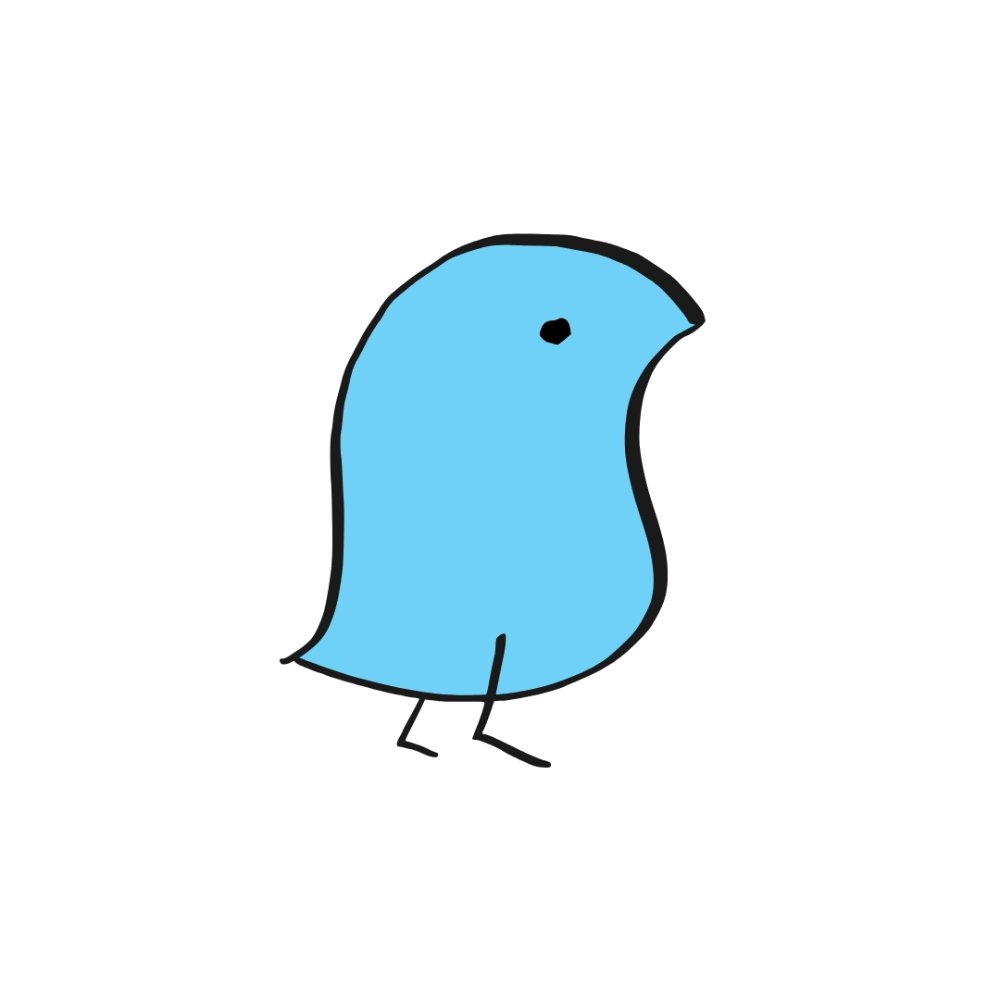
This is a wug
200
What are the 5 prosodic features you need to know?
pitch
intonation
stress
tempo
volume
200
List all first person pronouns
I - me - mine - myself
We - us - our - ourselves
200
What gave the 1631 version of the King James Bible the nickname "the Sinner's Bible" or "The Wicked Bible"
Two very unfortunate misprints
1. "not" was left out of "thou shall not commit adultery"
2. God's greatness was misspelled as "God's great asse"
300
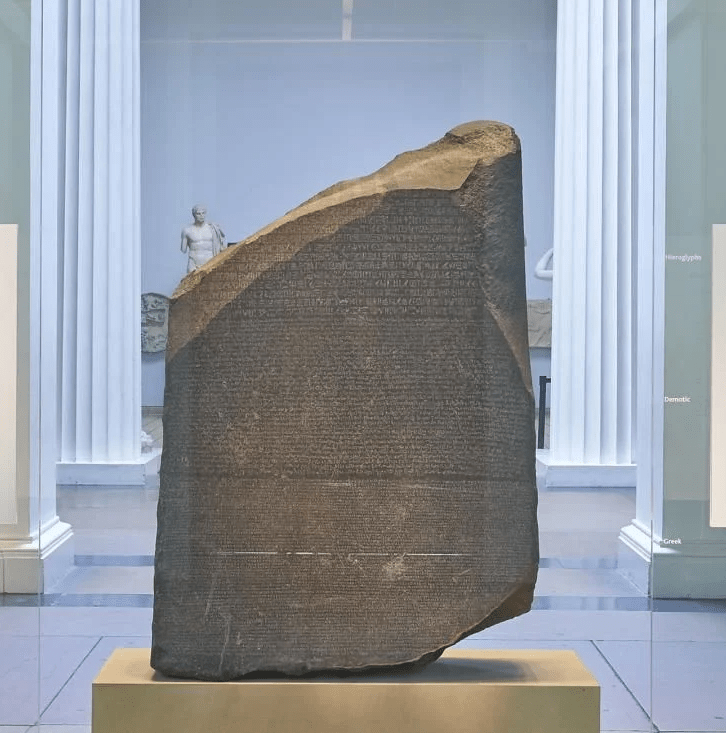
What's this called?
It is an ancient Egyptian stone bearing inscriptions in several languages and scripts; their decipherment led to the understanding of hieroglyphic writing.
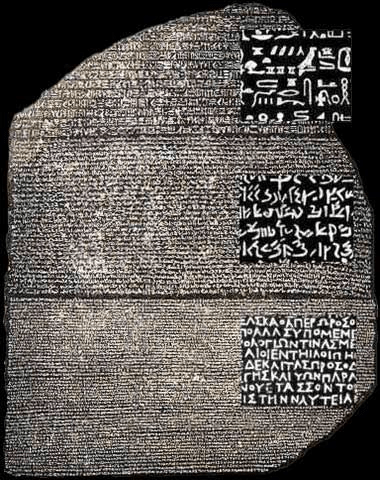
Rosetta Stone
300
List 3 types of semantic change with examples
1. Broadening: "holiday" - originally only for a "holy"+ "day" of celebration
2. Narrowing: "apple" - originally used for any fruit
3. Shift: when the term has moved completely away from the original meaning (often through another process first) "guys" now for a group of people from Guy Fawkes.
4. Elevation: "sick" - can be used as slang to mean "very good/cool"
5. Deterioration: "gossip" - originally meant a friend
300
What is the difference between an acronym and initialism?
acronyms can be said like words: QANTAS
initialisms are said letter-by-letter: MWSC
300
Approximately how old is the English language?
~1500 years old
Old English begins c.450CE
400
Who is this?
She is a prominent figure in Australian linguistics and regularly speaks on the ABC.
You are very likely to continue to see her quotes and research appear as essay stimuli.
If you study linguistics at Monash University, you may be lucky enough to have her as a lecturer.
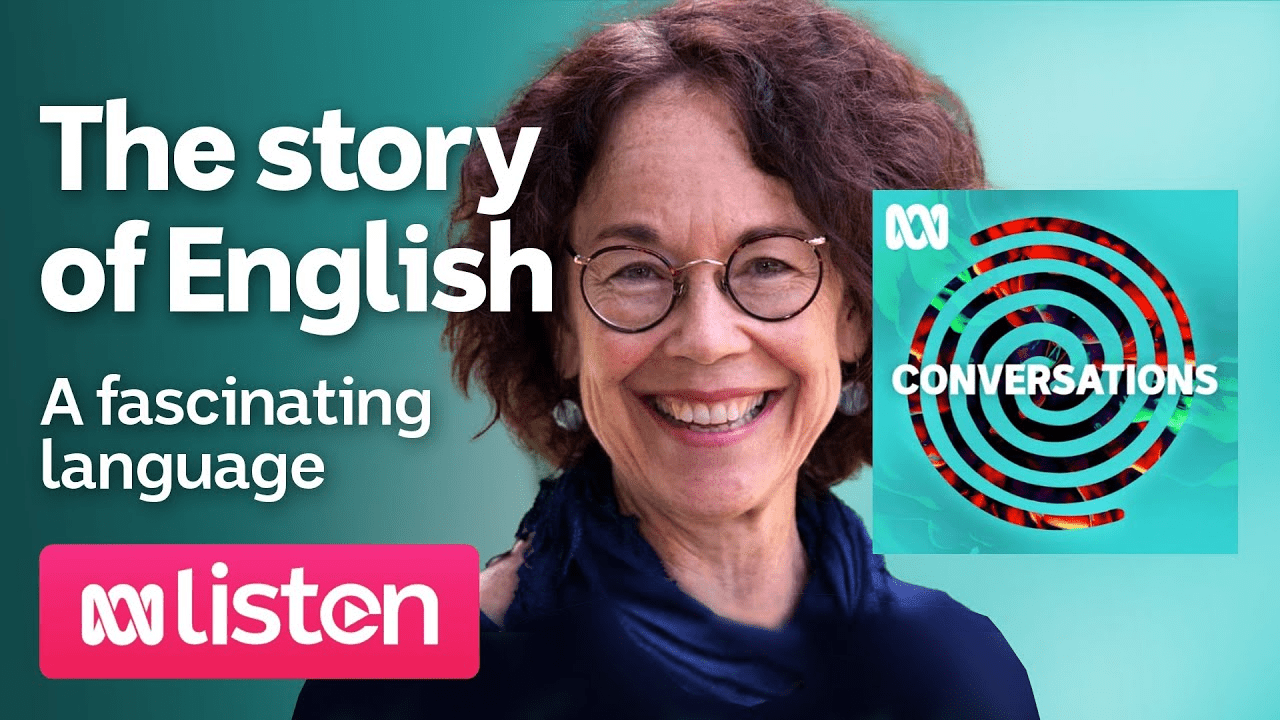
Kate Burridge
400
List 6 forms of morphemes with an example
Free: the "base" of a lexeme - it can stand alone (e.g.: happy in unhappy)
Bound: the prefixes or suffixes added that cannot stand alone (e.g.: unhappiness)
Prefix: Bound at the start of the lexeme
Suffix: Bound at the end of the lexeme
Inflectional: does not change the base other than in grammatical form (e.g.: run - runs)
Derivational: can change the word form, meaning (e.g.: unhappy)
400
Name 3 features of spoken discourse with examples to clarify their meaning
1. openings/ closings
2. adjacency pairs
3. back chanelling
4. overlapping speech
5. discourse markers
6. non-fluency features (pauses, filled pauses, false starts, repetition, repairs)
400
Provide an example of a lexeme that has become archaic and explain what made it archaic
corpse-house (lichhus) was replaced by the French "morgue" as the OE term was not considered technical, or academic enough when compared with the French counterpart.
This was common
e.g.: "dictionary" replaced "word+book" same as "survive" replaced "over+live"
500
Who is this?
He is sometimes referred to as "the father of modern linguistics"
(We have looked at one of his theories)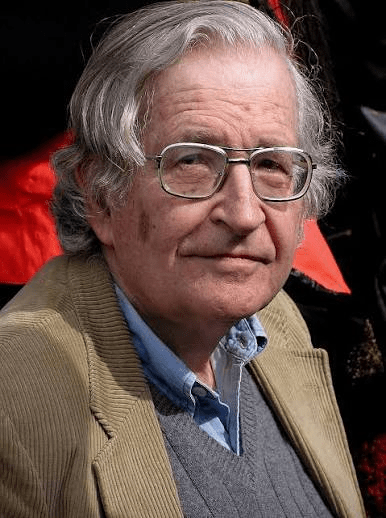
Noam Chomsky
(I am still devistated I did not win this Gnome Chomsky as part of a competition back in about 2011)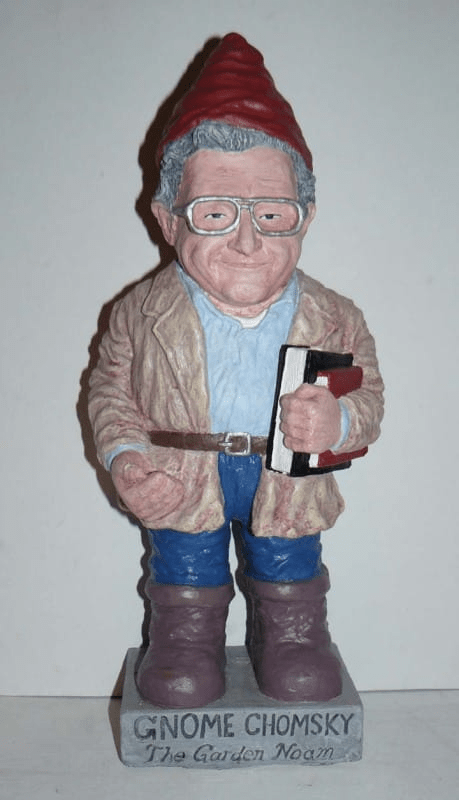
500
Explain the difference between adverbs and adverbials referring to both lexicology and syntax in your answer
An adverb can modify a verb, adjective, other adverbs, or whole sentences, phrases or clauses. They modify a lot.
They add information about
WHEN- after
WHERE- outside
HOW- viciously
HOW OFTEN- always
HOW LONG- slowly
HOW MUCH-slightly
Adverbials are specifically about adding to the verb.
This piece of information can be a word or phrase and to add information to the ver and can be removed without making the sentence harder to understand or ungrammatical.
E.g.: I opened the door just enough to let in a breeze without the bird flying inside.
500
What is the difference in tense between A, B and C?
A: I have seen that movie
B: I had seen that movie before
C: I saw that movie
All 3 are in past tense forms
A: present perfect
B: past perfect
C: simple past
500
Provide an example of a lexeme from a pidgin, creole or English variety.
You need to specify where it comes from and how it differs from Standard Australian English
pidgin = West African Pidgen uses "dey" and "dem" as opposed to ASE "they" and "them" - both instances replace the /th/ with a /d/
Creole = Kriol, AAE, uses "deadly" as a positive adjective as apposed to denoting something dangerous
Variety = Habirno English (Irish English) uses the imperative structure "come here to me now" to signify the speaker is about to say something. It's ASE comparative would be "listen up"