Basic Economics
Opportunity cost / Prices
Supply and demand
Circular flow diagram
Terminology
100
Which of the following best describes the basic economic problem?
a. Limited resources are available to fulfil unlimited wants
b. The government needs to fulfil individual needs and wants using limited
resources
c. Buyers and sellers interact to decide what price to sell goods at
d. All needs and wants can be satisfied if there are enough resources
A
100
What is opportunity cost?
Opportunity cost is the value of the next best alternative that you give up when making a choice.
100
What is supply and demand?
Demand = How much people want to buy a product.
Supply = How much businesses are willing to sell.
100
What are the two main sectors in the circular flow diagram?
Consumers (households) and producers (businesses)
100
A tangible product used to satisfy needs and wants e.g., books and paper.
Goods
200
Name two types of services the government provides?
public hospitals
public schools
parks
roads
police force
200
Which is the opportunity cost?
You spend $5 on chips instead of saving it.
The money saved
200
What is the term:
Supply quantity = demand quantity
e.g. Kmart supplies 50 units of one product and consumers are demanding 50 units of that particular product.
EQUALIBRIUM
200
What resource do consumers provide to producers?
Labour
200
Work that someone does to satisfy other people’s needs and wants e.g., mowing the lawn.
Services
300
Outline why the Government provides services (and not a company)?
The government provides these services so everyone can use them, even if they cannot afford to pay. Companies may not provide them because they want to make a profit.
300
Using the senario, explain the concept of opportunity cost:
Claire is an aspiring DJ. She has been touring the world however she had to look after her neighbour’s fish and had to end her tour.
In this scenario, Claire chose to look after her neighbour's fish instead of continuing her world tour as a DJ. Therefore, the opportunity cost was continuing her DJ tour and the experiences and income she could have gained from it.
300
What has happened to the supply and demand in this diagram?
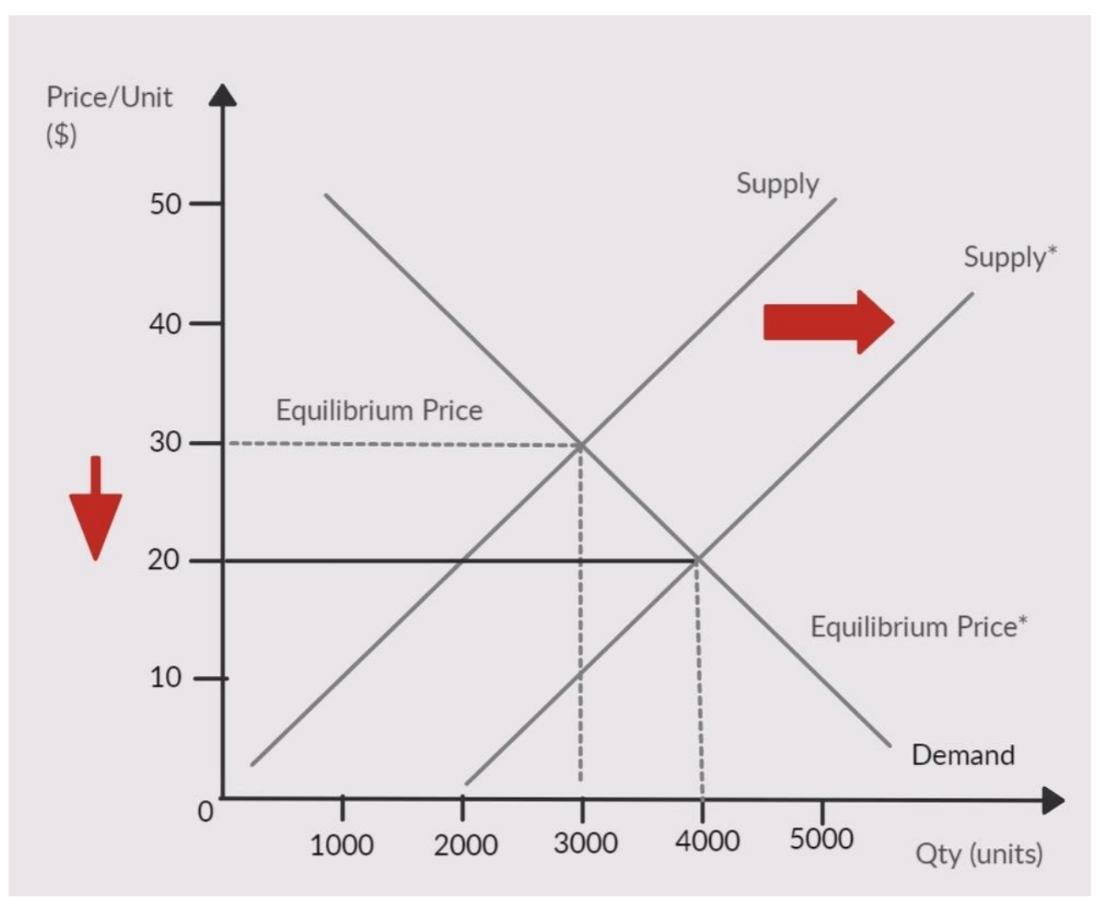
Supply has decreased and demand has increased
300
What resource do producers provide consumers?
Goods and services (output)
300
The things that are used to produce goods and services.
Resources
400
What are the four factors of production?
Land
Labour
Capital
Enterprise
400
Why might a company increase the price of a product?
A company may increase the price of a product when demand is high or when production costs increase. This helps the business cover its costs and earn a profit.
400
What has happened to the equilibrium in this diagram?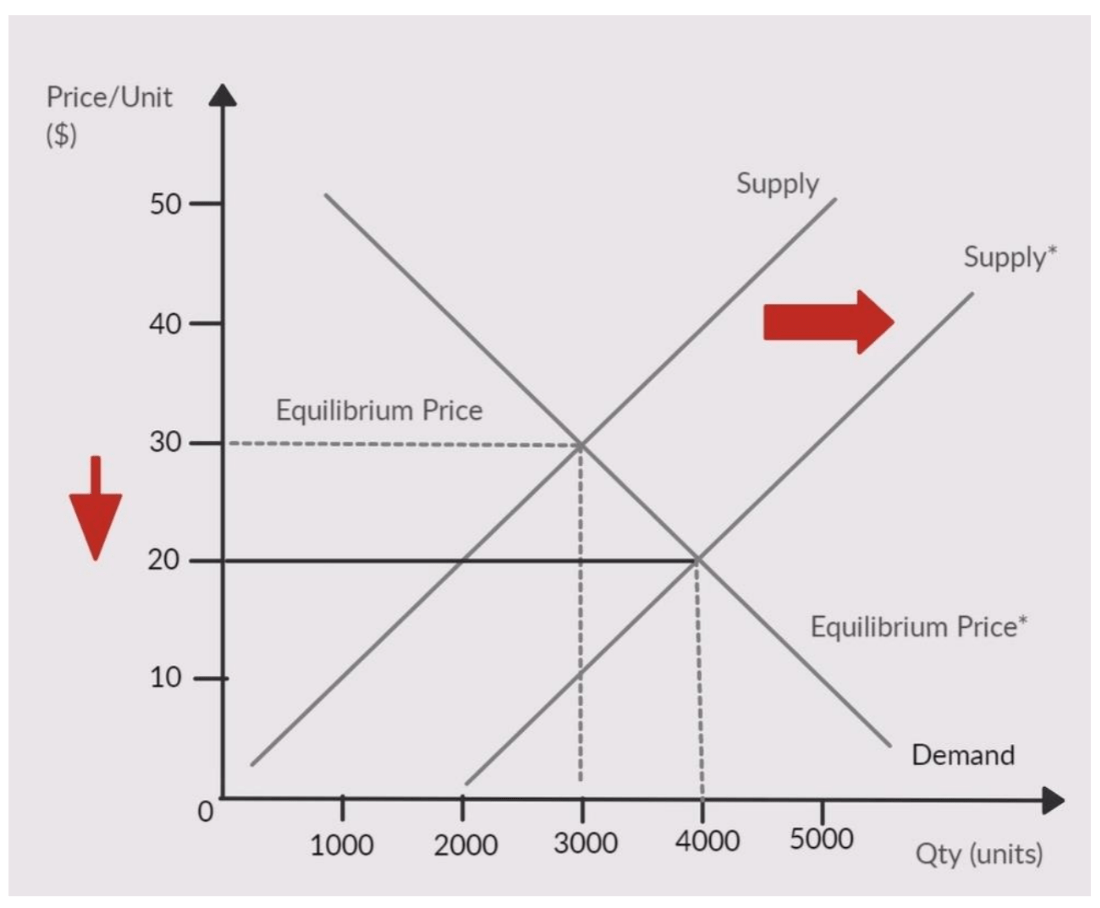
The equilibrium price falls from $30 to $20, while the equilibrium quantity rises from 3,000 units to 4,000 units.
400
Draw the circular flow diagram.
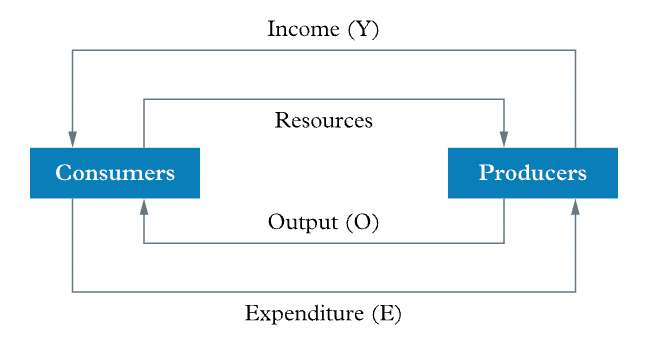
400
Any place or situation where consumers and producers interact with each other.
Market
500
Explain how the four factors of production can be used to make a good, with reference to a specific product of your choice.
A burger is made using the four factors of production. Land provides the ingredients such as beef, lettuce, and wheat for the bun. Labour is the work done by farmers and cooks. Capital includes equipment like grills, ovens, and refrigerators. Enterprise is the business owner who organises everything and takes the risk of selling the burgers. Together, these factors help produce and sell the burger.
500
Explain why a business wouldn’t want to supply more products than consumers have demanded.
If a business produces too much of one product, some may not be sold. This can cost the business money and reduce its profits.
500
What is the difference between a surplus and a shortage?
Surplus - supply is above the equilibrium
Shortage - supply is below the equilibrium
500
Describe the relationship between producers and consumers.
Households provide workers to businesses, and businesses pay them wages. Households then use their money to buy goods and services from businesses. This creates a continuous flow of money, goods, services, and resources in the economy.
500
A market structure where only one business is available to provide a particular good or service.
Monopoly