Ottoman Empire
Mughal Empire
Tokugawa Japan
Qing, Europe and Russia
Outsiders and Comparison
Vocab and Documents
Location, Location, Location
100
Founded in 1299, this empire conquered THIS CITY in 1453.
Constantinople
100
In the Mughal Empire THIS religious group only made up 15 percent of the population
Muslims
100
This military ruler held the real power in Japan while the dynasty passed from father to son.
shogun
100
A Manchu minority ruled China, whose majority population belonged to this ethnic group.
Han Chinese
100
Tokugawa Japan restricted most European trade to a single Dutch outpost at this port.
Nagasaki
100
Louis XIV claimed this idea, that a monarch’s authority comes directly from God.
Divine Right of Kings
100
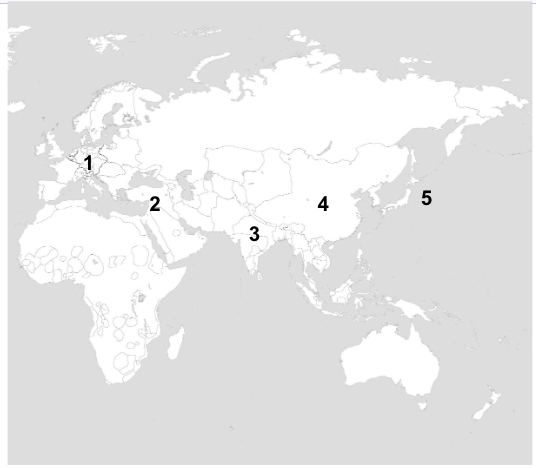 What location is #1?
Europe
200
Under the Devshirme system, these elite soldiers began as enslaved Christian boys, were raised as Muslims, and fought with early gunpowder weapons.
Janissaries
200
India was the hub of this ocean’s trade, sending out hand-loom textiles and trans-shipping spices.
Indian Ocean
200
These regional lords governed their own domains under the shogun.
Daimyo
200
Westerners could trade with Qing China only through this one harbor.
Canton
200
Mughal India’s openness to European traders was open to specifically what company?
British East India Company
200
A system of appointed officials who carry out the daily work of government is called this.
Bureaucracy
200
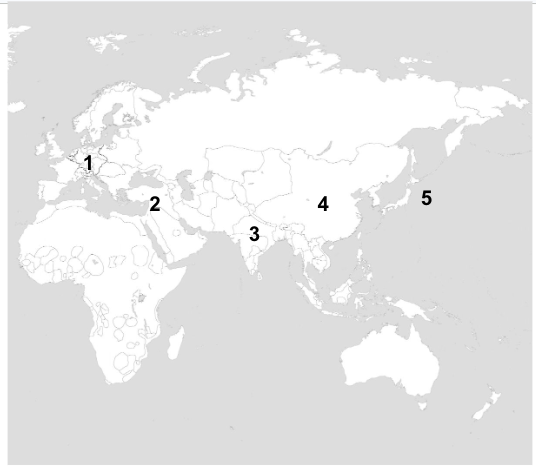 What location is #2
Ottoman Empire
300
This Ottoman system let non-Muslim communities govern themselves in exchange for special taxes and lower status.
Millet System
300
As Mughal power weakened, this British company expanded from Bengal and profited.
British East India Company
300
The shoguns moved the center of power from Kyoto to this city, now called Tokyo.
Edo
300
China exported more than it imported, so this precious metal flowed into its economy.
Silver
300
Unlike Tokugawa Japan, Mughal India took this approach toward European traders.
openness (welcoming them)
300
In his 1617 letter, Emperor Jahangir ordered his governors to welcome merchants from this country.
England
300
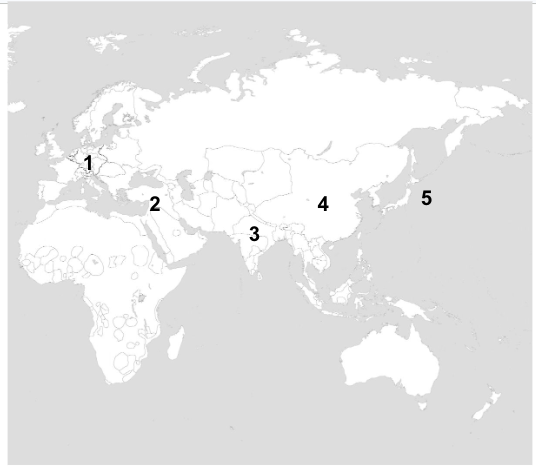 What location is #3
Mughal Empire
400
The sultan also claimed this title, meaning successor to the Prophet Muhammad, which rooted his authority in Islam.
caliph
400
This emperor’s long wars drained the treasury and fueled succession battles while also implementing religiously intolerant policies
Aurangzeb
400
This system required daimyo to live in the capital every other year, with their families kept there as leverage.
sankin kōtai (alternate attendance)
400
By 1750, economic power in Europe had shifted to England, France, and this republic.
Dutch Republic
400
Louis XIV drew France’s nobles to this palace outside Paris, much as Japan’s shoguns built up Edo.
Versailles
400
Historians call the Ottoman and Mughal empires by this name because gunpowder weapons helped them conquer and hold territory.
Gunpowder Empires
400
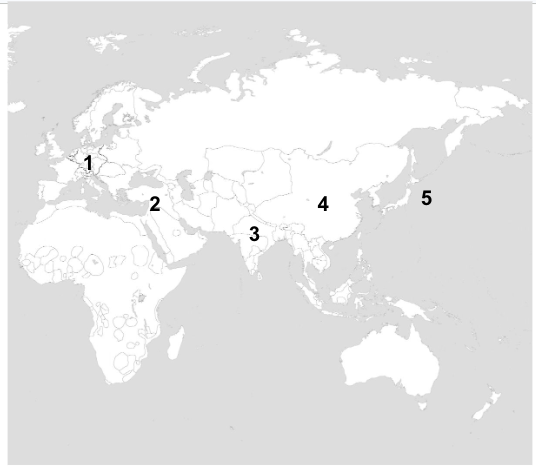 What is location #4
Qing Dynasty
500
By the 1700s, power in the empire shifted away from warrior-sultans toward this kind of government.
vizier-led (civilian) bureaucracy
500
Mughal officers allowed to collect taxes were called THIS.
Mansabdars
500
Name Japan’s four social classes in order, from the top class down to the merchants.
warrior, farmer, artisan, merchant? (Must be in this order.)
500
Ruling 22 million square kilometers, this Russian monarch embraced Enlightenment ideas while serfs stayed bound to the land.
Catherine the Great
500
Japan’s daimyo and France’s nobles were both targets of this goal shared by the shogun and Louis XIV.
controlling powerful elites (keeping them from challenging the ruler)
500
Tokugawa Japan is generally described as using this policy (Vocab Term) when it came to foreign trade.
Isolated (closed off)
500
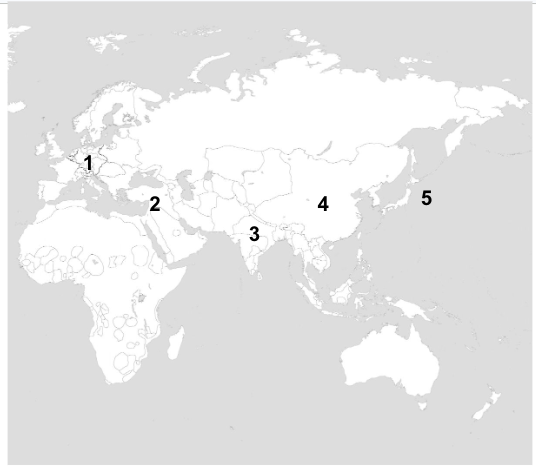 What location is #5
Tokugawa Japan