"B" Kind to Scientists
Early Earth
Buy and "Cell"
Novel Numbers
🌙🦉Eek! Owl-ogy 🦉
Name That Water Process
Name That Sense
100
The study of life
Biology
100
Early Earth was struck by many of these in the beginnings of the planet
Asteroids
100
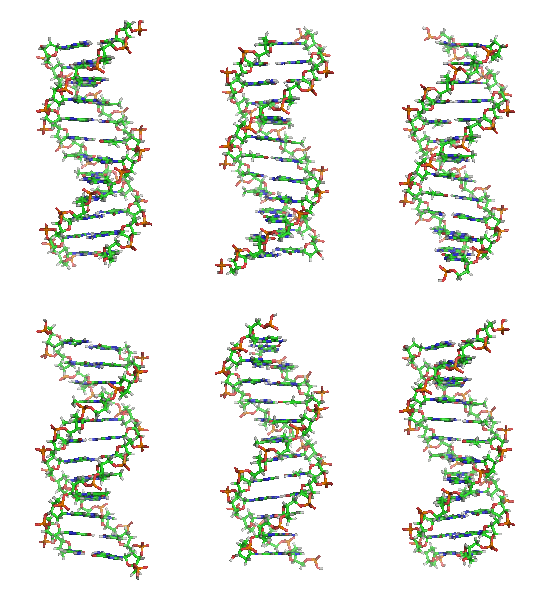
The "instruction manual" for cells
DNA
100
3.1415926...
pi (
pi )

100
This is simply an interconnection of multiple food chains all tied together in a single ecosystem - spiders, anyone?
Food web
100
Water going from the solid phase to the liquid phase
Melting
100
optical
Sight
200
The account of someone's life in writing
Biography
200
A study of these allowed scientists to find evidence of the earliest life
Fossils
200
The special feature of a eukaryotic cell that contains its DNA
Nucleus
200
299 792 458 m / s...
You can round this up to 300,000,000 meters per second, but this speed doesn't need any help to be the fastest that photons can travel in the Universe
The speed of light
200
If you don't make the energy and bio-components of life yourself, then you have to go out and get them: these organisms have to consume others to get what they need.
(+200 for another way to refer to these organisms)
(+200 for each specific type of organisms you can name of this type)
Autotrophs
(Primary producers)
(Herbivores ; Carnivores ; Omnivores ; Detritovores)
200
Water going from the liquid phase to the solid phase
Freezing
200
tactile
Touch
300
This is simply the total mass of all living organisms found in a given area or ecosystem
Biomass
300
Earth's earliest atmosphere wouldn't have been breathable to animals because it contained little of this
Oxygen
300
The "power plant" or energy producer of the cell
Mitochondrion
300
The number of words in a species name
2
300
Besides the Water Cycle, name another example of a Biogeochemical Cycle that takes place in the Earth system
(+300 for each additional cycle)
Carbon Cycle
Nitrogen Cycle
Phosphorus Cycle
300
Water falling to the ground
Precipitation
300
aural
Hearing
400
Ecosystems around the world that have similar climates and similar organisms
(+400: Name specific ones)
Biomes
(Desert, taiga, tundra, rainforest, savannah, grassland, forest, wetlands, etc)
400
This chemical element appears to have been (and continues to be) key to life's beginnings on the early Earth
Carbon
400
The boundary between the cell and everything that is not the cell - every cell of every living organism has one
Cell membrane
400
Even though most have not been discovered yet, there are estimated to be this many total species on Earth
10 million
400
The different layers of an ecological pyramid are each a different one of these levels that explain how organisms obtain chemical energy
Trophic levels
400
Water going from the liquid state to the gaseous state and going up into the atmosphere as water vapor
Evaporation
400
gustatory
Taste
500
An instrument used to measure changes in atmospheric pressure
Barometer
500
Earth formed around this long ago
4.5 billion years ago
500
Animal cells lack this, but all plants and some bacteria have them
Cell walls

500
Euler's number (e), which is 2.7182...
is a number which relates to compound interest and other things that grow in this way
Exponentially
(exponential function)
500
If there is something that is required for an organism's growth and health but it is found in very limited amounts, we can say that it is this (two word phrase)
(Double points: give a real life example)
Limiting factor
500
Water going from the gaseous state to the liquid phase (the opposite of evaporation)
Condensation
500
olfactory
Smell
600
This is a solution in chemistry that resists changes in pH - bicarbonate and carbonic acid are the ones found in our bodies
Buffer
600
This particular type of fossil found in Australia are important in the study of earliest life
Stromatolites
600
Prokaryotes like Bacteria, along with a few other types of organisms, sometimes have this "tail"
Flagellum (plural: Flagella)
600
6.0221515 x 10^23 - it's a huge number called Avogadro's Number and it's the number of these in a single "mole" of an element. Don't get excited though... you might not be able to see it (it's really small for us to see)
Atoms
600
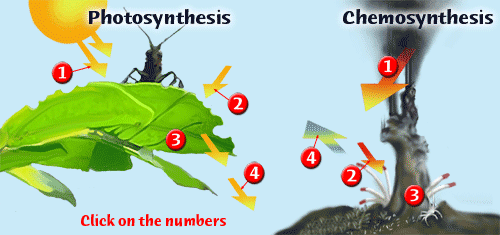
There are a very small number of organisms who are producers but don't get their energy from the Sun. They convert molecules such as CO2 or CH4 in places such as hydrothermal vents into nutrients and energy in this process
Chemosynthesis
600
Water going from the gaseous phase to the plasma state
Ionization
600
nociception
Sense of pain (pain receptors)
Did you know? These sensory nerves that register damage such as mechanical (cutting, crushing) or thermal (extreme heat or cold) can also be activated by things like cayenne powder, which our nerves perceive as a threat!