Name That Lung Problem!
Breathless Basics
X-ray Marks the Spot
Crash Course: Chest Trauma
ABG: Always Be Guessin
(but really, you should know these!)
(but really, you should know these!)
100
This chronic respiratory condition involves reversible bronchoconstriction triggered by inflammation and airway hyperresponsiveness.
What is asthma?
100
A patient is recovering from a mild case of pneumonia and needs low-flow supplemental oxygen to maintain SpO2 above 93%. The nurse chooses this device.
What is a nasal cannula?
100
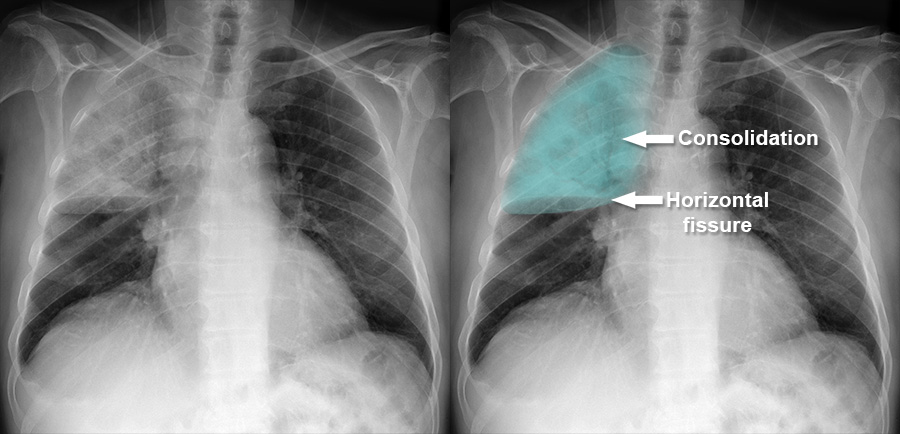
This condition shows lobar consolidation or patchy infiltrates on a chest x-ray.
What is pneumonia?
100
This condition is caused by bleeding into the pleural space following a trauma.
What is a hemothorax?
100
Identify the imbalance AND the degree of compensation.
pH 7.29
PaCO2 55
HCO3 24
What is uncompensated respiratory acidosis?
Rationale:
pH= acidic, PaCO2= acidic (matches pH), HCO3 still normal (hasn't started compensating yet)
200
This chronic, progressive disease leads to airflow obstruction, air trapping, and reduced elastic recoil.
What is COPD (Chronic Obstructive Pulmonary Disease)?
200
A patient with COPD has an SpO2 of 88%. The nurse knows this delivery device is ideal to deliver a precise, controlled FiO2 and avoid knocking out their hypoxic drive.
What is a venturi mask?
200

A ______ is caused when trapped air in the thoracic cavity pushes the heart, trachea, and mediastinum away from the affected side.
What is mediastinal shift?
200
This common chest injury causes point tenderness and ecchymosis and is usually treated conservatively with pain management and a chest binder for stabilization.
What is a rib fracture?
200
Identify the imbalance AND the degree of compensation.
pH: 7.32
PaCO2: 48
HCO3: 34
Partially compensated respiratory acidosis.
Rationale:
Ph= NORMAL (closer to acidic); PaCO2= acidic (started the problem); HCO3= alkaline (correcting the problem)
300
This disorder causes permanent dilation of the bronchi, leading to chronic cough, thick mucus production, and recurrent infections.
What is bronchiectasis?
300
A patient comes into the ED with severe dyspnea and an SpO2 of 80%. The nurse anticipates that the doctor will order this oxygen delivery device.
What is a non-rebreather mask?
300
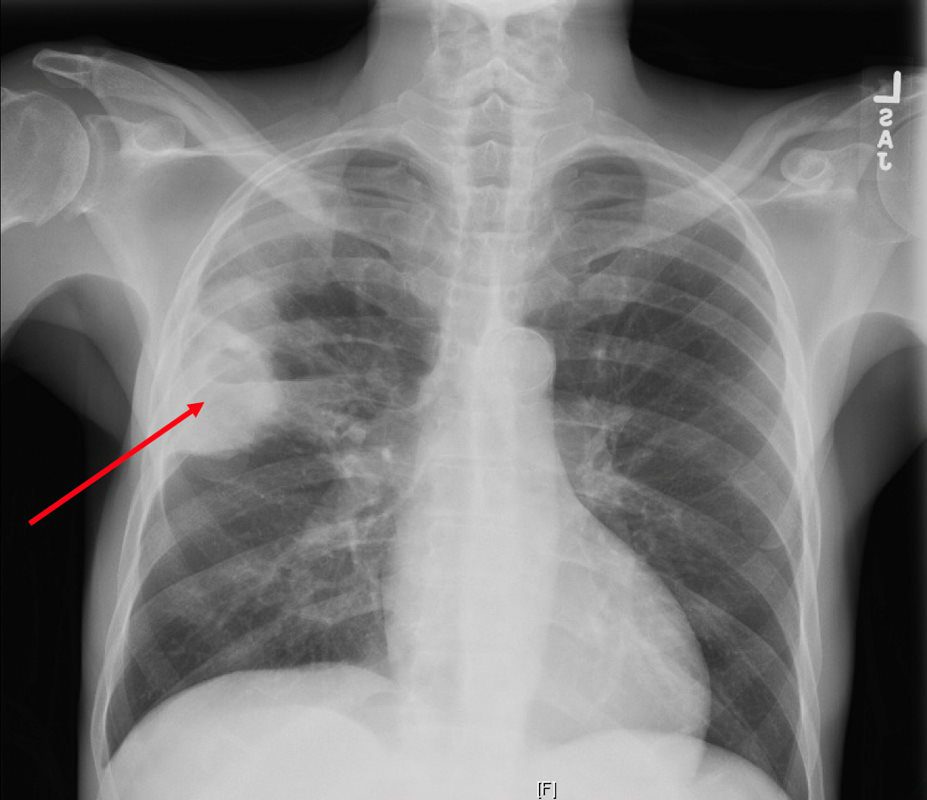
This slowly progressing respiratory disease may show upper-lobe cavitations or nodular infiltrates.
What is Tuberculosis (TB)?
300
This injury that occasionally requires chest wall stabilization (CWS) occurs when three or more consecutive ribs are fractured in two or more places.
What is flail chest?
300
Identify the imbalance AND the extent of compensation:
pH:7.45
PaCO2:48
HCO3:33
What is fully compensated metabolic alkalosis?
Rationale: pH=NORMAL (closer to alkaline)*, PaCO2=acidic (compensating), HCO3= alkaline (caused the problem)
400
This lung infection causes the alveoli to fill with fluid or pus, leading to fever, cough, and crackles on auscultation.
What is pneumonia?
400
A patient with sleep apnea is admitted after being found apneic at home. The nurse explains that this device delivers continuous pressure to keep their upper airway open.
What is a CPAP?
400
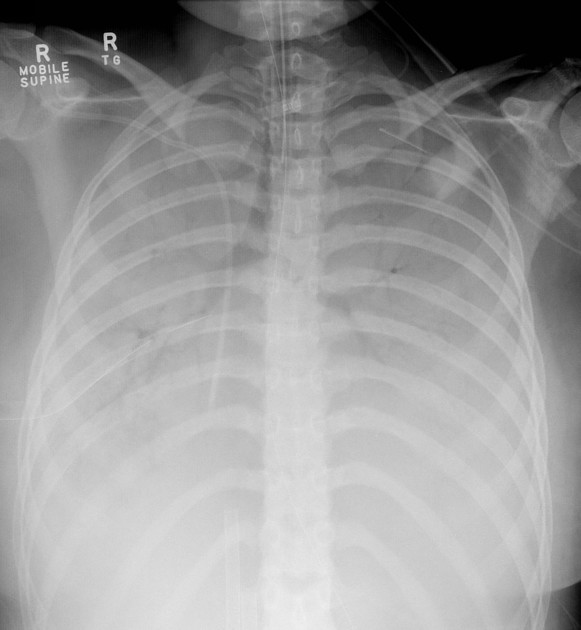
This condition presents with diffuse bilateral infiltrates often described as a "white-out" appearance on a chest X-ray.
What is acute respiratory distress syndrome (ARDS)?
400
This traumatic emergency occurs when an open chest wound allows air to enter the pleural space, causing a "sucking" sound and respiratory distress.
What is an open pneumothorax?
400
Identify the imbalance AND the extent of compensation:
pH: 7.50
PaCO2: 28
HCO3: 22
What is uncompensated respiratory alkalosis?
Rationale: pH= alkaline; PaCO2= alkaline (not enough acid); HCO3= normal (hasn't started to compensate yet)
500
This infectious disease is caused by Mycobacterium; presents with night sweats, weight loss, and a persistent cough; and requires airborne precautions.
What is Tuberculosis (TB)?
500
A patient in the ED has worsening respiratory distress with increased work of breathing. The nurse explains that this device provides two levels of pressure (one for inhalation and one for exhalation) to improve ventilation and reduce CO2 retention.
What is a BiPAP?
500
This complication that often follows aspiration pneumonia appears on a chest x-ray as a thick-walled cavity containing both air and fluid/pus.
What is a pulmonary abscess?
500
This life-threatening condition occurs from penetrating trauma when the opening in the chest acts as a one-way valve, allowing air into the chest cavity but not back out.
What is a tension pneumothorax?
500
Daily Double!
This would be the appropriate intervention for a patient with a PaO2 of 85.
A) Nasal Cannula
B) Simple facemask
C) Non-rebreather mask
D) Continue to monitor