DNA and Base Pairs
Central Dogma
Transcription
Translation & Proteins
PCR
PCR components
100
•Which base pairs with adenine in DNA?
•Thymine
100
•What is molecular biology central dogma?
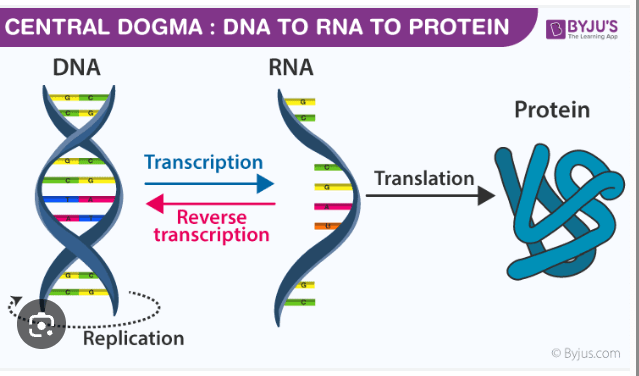 •DNA → RNA → Protein to a trait
(genetic information flows only in one direction)
100
•What is made during transcription?
•mRNA
100
•Where is mRNA read?
Ribosome
100
•What does PCR stand for?
•Polymerase Chain Reaction
100
•What do primers do?
•Start replication
200
•Which base pairs with cytosine?
•Guanine
200
•What does DNA code for ultimately?
• synthesis of Proteins
200
•What enzyme is responsible for transcription?
•RNA polymerase
200
•What are proteins made of?
•Amino acids
200
•What is PCR used for?
•Amplify DNA
200
•What are dNTPs?
•Free nucleotides
300
•What type of bond holds base pairs together?
•Hydrogen bonds
300
•Where does transcription occur?
•Nucleus
300
•What is one difference between DNA and RNA?
•RNA uses uracil instead of thymine
300
•What is a codon?
•3-base sequence
300
•Name a PCR step.
•Denaturation/Annealing/Extension
300
•Why are primers needed?
•Starting point
400
•Why is complementary base pairing important?
•Ensures accurate DNA replication
400
•Where does translation occur?
•Ribosome
400
•RNA uses uracil instead of what?
• thymine
400
•What determines protein function?
•Shape
400
•Why repeat cycles?
•To amplify the DNA Exponentially
400
•If no primers?
•No amplification
500
•If a DNA strand is ATCG, what is the complementary strand?
•TAGC
500
•Why is the central dogma important?
•Explains how genetic info becomes traits
500
•If DNA is TAC, what is mRNA?
AUG
500
•What happens if a codon changes?
•Protein may change
500
•What happens in denaturation?
•DNA separates
500
•Role of dNTPs?
•Build DNA