Eye Can't Even
ENT-ertain Me
Brainrot
Different Strokes
Nerves Gone Wild
100
A 62-year-old with high myopia notices new flashes, a shower of floaters, and a painless dark curtain moving across one eye. Name the diagnosis AND describe in detail the US findings.
What is retinal detachment?
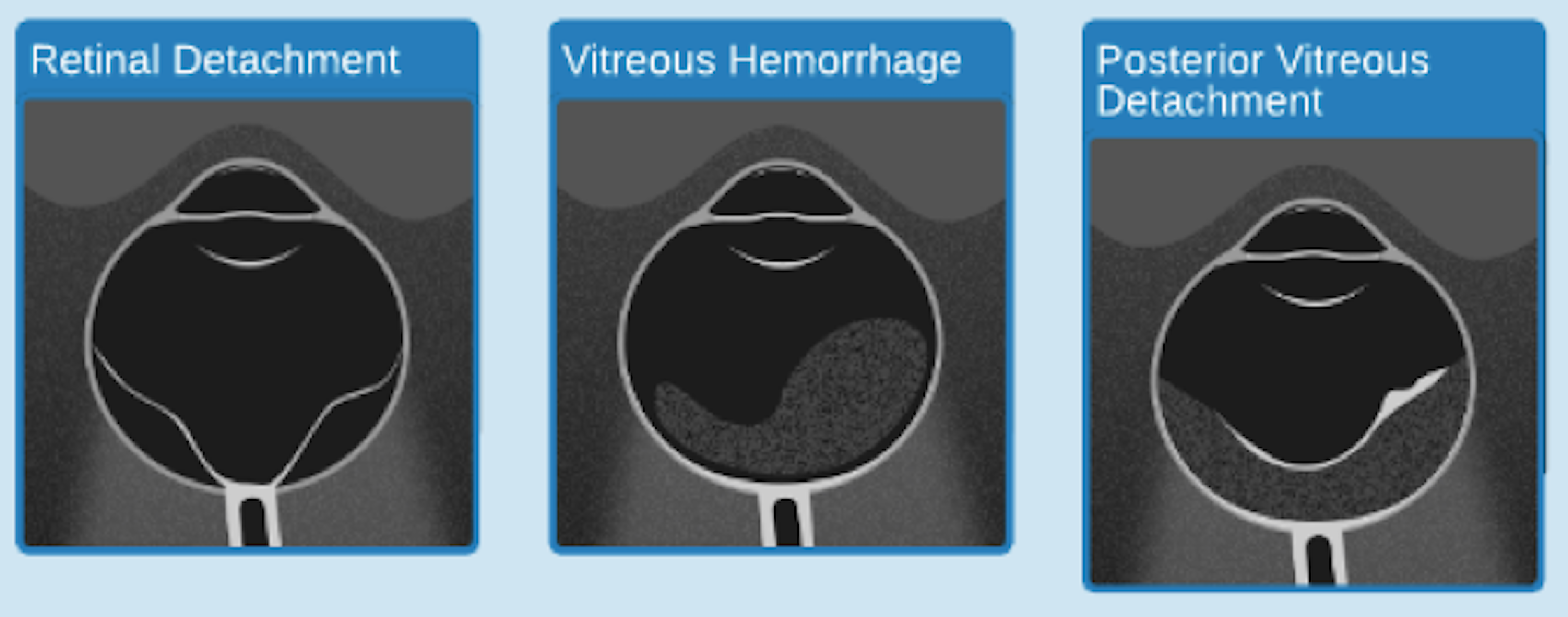
Learning points:
• Flashes + floaters + a curtain-like field defect are classic.
• Preserved central acuity does not exclude a peripheral detachment.
• Arrange urgent ophthalmologic evaluation.
100
In a patient with a peritonsilar (PTA) abscess (as pictured above), where is the appropriate initial site of aspiration?
A - The initial site of aspiration for a PTA is in the superior pole (A) of the peritonsilar tissues. If unsuccessful > middle > inferior
Recurrence rates after initial successful drainage with needle aspiration are approximately 10% with around 4-10% of patients requiring repeat aspiration. There is also the possibility of missing an abscess if you only perform needle aspiration of the superior pole (up to 30% miss rate).
100
A 30-year-old has a typical, debilitating migraine lasting 4 days. Evaluation reveals no secondary headache red flags, and IV medication has provided incomplete relief. Name this ED physician intervention (not medication) supported by the American Academy of Neurology (AAN).
What is a greater occipital nerve block (GONB)?
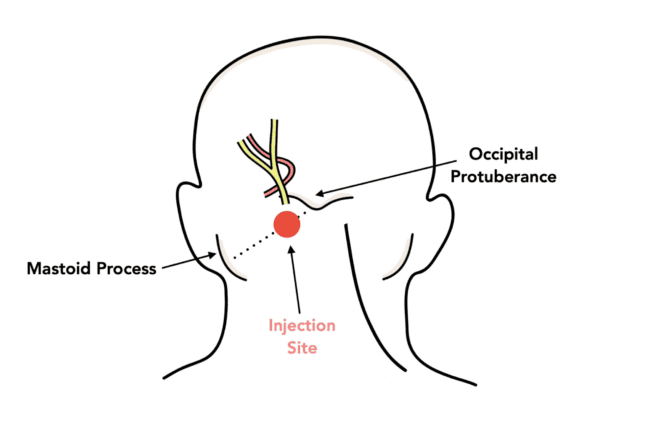
Learning points:
• GONB is an evidence-supported ED migraine treatment, not just an occipital neuralgia treatment.
• EMOttawa summarizes a Level A recommendation for eligible ED migraine patients.
100
Brief spinning spells occur only when a patient rolls over in bed. She is normal between attacks. Dix-Hallpike produces transient torsional upbeating nystagmus. Use this maneuver to treat posterior-canal BPPV.
MUST BE ABLE TO DEMONSTRATE ON A CO-RESIDENT
What is the Epley maneuver?
Learning points:
• Brief position-triggered attacks suggest BPPV.
• Dix-Hallpike identifies posterior-canal BPPV; Epley treats it.
• HINTS is not intended for brief positional attacks.
100
An adult has been continuously convulsing for 6 minutes. Glucose is normal and IV access is available. You choose to give Ativan. Your nurse wants to know what dose you'd like to give.
Ativan 4mg IV or 0.1mg/kg
Learning points:
• Treat ongoing convulsive status at 5 minutes.
• Benzodiazepines are first-line; IV lorazepam is one option. Diazepam or Midazolam are also options.
• Routes include IM, buccal, intranasal.
200
A 68-year-old has severe unilateral eye pain, vomiting, halos around lights, a hazy cornea, and a fixed mid-dilated pupil. Intraocular pressure is 54 mm Hg. Name 3 medications to initiate in the ED.
What are topical beta-blockers (timolol), alpha-2 adrenergic agonist (alphagan = brimonidine), a miotic (pilocarpine), carbonic anhydrase inhibitor (acetazolamide = diamox 500 mg PO/IV,)
Pilocarpine is often intentionally held until systemic medications bring the intraocular pressure down. At extreme pressures, the iris sphincter muscle may be ischemic and unresponsive, meaning pilocarpine is delayed until the pressure drops enough for the muscle to respond and constrict the pupil.
Learning points:
• Painful red eye + halos + mid-dilated pupil suggest angle closure.
• Rapidly lower intraocular pressure and consult ophthalmology.
• Pupillary-block disease usually needs definitive laser iridotomy.
200
A patient has persistent anterior epistaxis without instability. Before packing, apply a topical vasoconstrictor and hold uninterrupted pressure over this part of the nose. MUST BE ANATOMICALLY SPECIFIC (ACTIVATE MED STUDENT)
What is the soft lower nose (the nasal alae), pinched against the septum?
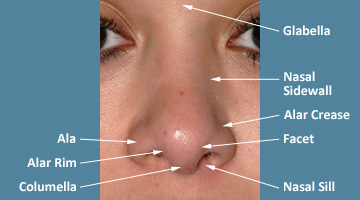
What are the remaining steps if not improved?
200
A 76-year-old with a new temporal headache, scalp tenderness, and jaw claudication now reports transient monocular vision loss. What lab is considered abnormal? What drug/dose should be started before biopsy?
What is ESR > 50 (20% will ESR < 50 !!!)
What are high-dose systemic glucocorticoids?
Learning points:
• New headache + jaw claudication + visual symptoms suggest giant cell arteritis.
• Start glucocorticoids immediately; do not await diagnostic confirmation. 40-60mg/day of prednisone PO daily x 1 mo then taper per specialist
• Threatened vision warrants urgent specialist care and consideration of IV pulse therapy.
200
A patient suddenly develops aphasia and right face-and-arm weakness greater than right leg weakness. Utlize the CT image below to identify the affected arterial territory and side.
What is the left middle cerebral artery territory?
Learning points:
• Dominant MCA ischemia can cause aphasia.
• Face/arm weakness greater than leg weakness helps localize the territory.
• Acute focal deficits require immediate stroke-pathway activation.
200
Generalized convulsive status continues despite adequately dosed benzodiazepines. You choose Levetiracetam as a second line agent. What is the dose mg/kg IV (up to what max?)?
60 mg/kg (4500mg)
Learning points:
• Levetiracetam, fosphenytoin, and valproate have similar second-line efficacy.
• Select according to contraindications and clinical context.
• Persistent seizures require refractory-status escalation and EEG monitoring.
300
A child with recent sinusitis develops fever, eyelid swelling, proptosis, and pain with restricted extraocular movement. What is the diagnosis?
What is orbital cellulitis?

Learning points:
• Proptosis, painful eye movements, and restricted motility are orbital signs.
• Obtain urgent orbital imaging, usually CT with IV contrast.
• Start IV antibiotics; involve ophthalmology/ENT and evaluate for abscess.
300
An older patient with diabetes has severe nocturnal otalgia, persistent otorrhea, and granulation tissue in the external auditory canal despite topical therapy. Name the invasive infection AND name the most common organism.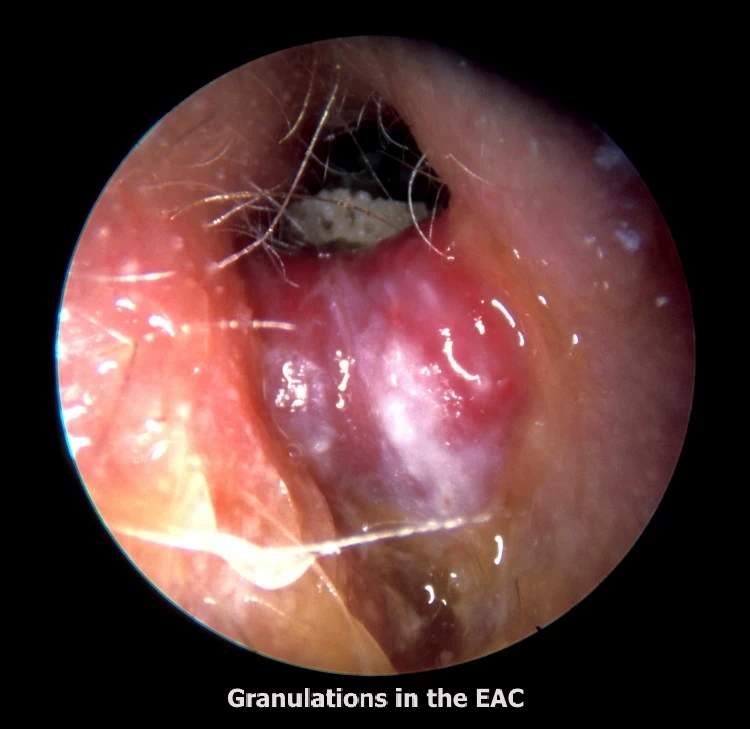
What is necrotizing otitis externa (malignant otitis externa)?
Learning points:
• Diabetes + severe otalgia + canal granulation tissue are red flags.
• Often involves Pseudomonas and may extend to the skull base.
• Urgent ENT evaluation and systemic antibiotics are needed; drops alone are inadequate.
300
A 72-year-old with suspected community-acquired bacterial meningitis is receiving vancomycin and ceftriaxone. What additional antibiotic should be added and why?
What is ampicillin for Listeria coverage?
Learning points:
• Ampicillin adds Listeria coverage to ceftriaxone plus vancomycin.
• Older age is an important Listeria risk factor.
• Do not delay antibiotics for CT/LP; give dexamethasone before/with antibiotics when indicated.
300
DAILY DOUBLE
Acute vertigo and ataxia accompany hoarseness, dysphagia, left facial pain-temperature loss, and right body pain-temperature loss. Name the classic brainstem syndrome.
What is left lateral medullary syndrome (Wallenberg syndrome)?
Learning points:
• Crossed face/body pain-temperature loss localizes to the brainstem.
• Dysphagia and hoarseness support a lateral medullary lesion.
• Vertebral artery or PICA disease can produce Wallenberg syndrome.
300
Two weeks after diarrheal illness, a patient develops symmetric ascending weakness. CSF has elevated protein with very few leukocytes.
Will this patient typically present with UMN or LMN signs?
LMN signs predominantly.
This is Guillain-Barre syndrome
Learning points:
• Ascending weakness and areflexia are classic for Guillain-Barre syndrome.
• CSF protein may remain normal early despite the diagnosis.
• Monitor respiration/autonomic function; use IVIG or plasma exchange, not steroids.
400
A patient with a painful red eye has a branching fluorescein-staining corneal ulcer with terminal bulbs.
What is the diagnosis?
What is HSV epithelial keratitis.
• Both topical trifluridine solution and ganciclovir gel are safe and effective and have been FDA approved for the treatment of HSV epithelial keratitis.
• Empiric topical steroids can worsen active epithelial infection.
• Arrange antiviral treatment and urgent ophthalmology review.
400
A 24-year-old with C1 esterase inhibitor deficiency presents with severe unilateral lip and tongue swelling and crampy abdominal pain without urticaria or pruritus. She also feels tightness in her throat. Name the subcutaneous bradykinin B2-receptor antagonist used to treat this acute hereditary angioedema attack.
Answer:
What is icatibant?
Learning points:
- Icatibant blocks bradykinin B2 receptors to treat acute hereditary angioedema attacks.
- Bradykinin-mediated swelling typically lacks hives or itching and responds poorly to epinephrine, antihistamines, and steroids.
- Airway assessment comes first; medication must not delay securing a threatened airway.
400
Ten days postpartum, a patient has progressive headache, papilledema, and a focal seizure. Blood pressure is normal and noncontrast head CT is unrevealing. This image, however is not. What is the diagnosis AND radiological finding?
What is cerebral venous sinus thrombosis (CVST)?
Learning points:
• Postpartum headache with seizure or papilledema raises concern for CVST.
• A normal noncontrast CT does not exclude venous thrombosis.
• Use CT venography or MR venography to evaluate the cerebral veins/sinuses.
400
During continuous acute vertigo with spontaneous nystagmus, a clinician trained in HINTS finds a normal head impulse, direction-changing gaze-evoked nystagmus, and skew deviation. Classify this result as central or peripheral.
What is central (concerning for posterior circulation stroke)?
Learning points:
• Normal head impulse, direction-changing nystagmus, or skew can signal central disease.
• Use HINTS only in appropriate continuous acute vestibular syndrome with nystagmus and training.
• Central/equivocal findings require stroke evaluation and MRI/MRA.
400
A patient with myasthenia gravis develops dysphagia, a weak cough during pneumonia. Oxygen saturation remains 98%. Next best bedside tests to consider to evaluate respiratory function?
myasthenic crisis (impending neuromuscular respiratory failure)
- FVC: < 20 mL/kg
- NIF: < -30 cm H₂O
- Maximal Expiratory Pressure (MEP): < 40 cm H₂O
Learning points:
• Normal oxygen saturation does not exclude neuromuscular ventilatory failure.
• Bulbar weakness, weak cough, and worsening respiratory mechanics are concerning.
• Anticipate airway support; involve ICU/neurology for IVIG or plasma exchange.
500
A 70-year-old develops sudden, painless, profound monocular vision loss 45 minutes ago. Fundoscopy shows retinal whitening with a cherry-red spot. In addition to urgent ophthalmology consultation, activate this emergency pathway now.
What is the acute stroke pathway (emergency stroke-center evaluation)?
Learning points:
• CRAO is retinal ischemic stroke.
• Record last-known-well and activate urgent stroke-center evaluation.
• Ocular massage or outpatient follow-up must not delay definitive evaluation.
Ocular Massage: Place a finger over the closed, affected eyelid and apply firm, direct pressure for 5 to 15 seconds, then release suddenly.
- The THEIA trial found no significant difference in visual acuity improvement between intravenous alteplase and oral aspirin when administered within 4.5 hours of symptom onset.
- The TenCRAOS trial (Jan 2026, 81 patients, NEJM) and other studies showed that intravenous tenecteplase did not outperform aspirin and carried increased safety risks, including a case of fatal intracranial hemorrhage
500
A previously healthy 20-year-old worsens after pharyngitis, with fever, unilateral neck tenderness, pleuritic chest pain, internal jugular vein thrombosis, and multiple peripheral cavitary lung lesions. Name the syndrome AND the offending microbial agent.
What is Lemierre syndrome?
Fusobacterium Necrophorum
Learning points:
• Think septic internal jugular thrombophlebitis after pharyngitis.
• Fusobacterium necrophorum is classic; lung lesions represent septic emboli.
• Treat sepsis with IV antibiotics covering anaerobes; assess for source drainage.
500
A neurologically intact patient presents 14 hours after a headache that reached maximal intensity within seconds. Noncontrast head CT is negative, but concern for subarachnoid hemorrhage remains. Name TWO acceptable next tests under the ACEP headache policy.
What is lumbar puncture OR CT angiography of the head?
Learning points:
• At 14 hours, the early-CT exclusion rule does not apply (< 6 hours)
• ACEP supports LP or CTA when SAH risk persists after negative CT.
• Use shared decision-making: LP evaluates CSF; CTA can reveal incidental aneurysms.
500
A previously independent 65-year-old has a CTA-confirmed basilar artery occlusion, NIHSS 22, and limited established infarction (pc-ASPECTS 9). Last-known-well was 8 hours ago. What is the next management step?
What is persue urgent evaluation for endovascular mechanical thrombectomy?
Learning points:
• Eight hours is not automatically too late for basilar thrombectomy.
• Selected patients may benefit within 24 hours under the 2026 AHA/ASA guideline.
• Severity, baseline function, and established infarct burden guide eligibility.
500
A patient with injection drug use develops an abscess at the volar aspect of the elbow and over the next eight days develops severe atraumatic back pain, fever, urinary retention, and new leg weakness. You obtain this preferred urgent study... be VERY SPECIFIC.
What is MRI of the WHOLE spine with and without IV contrast?
Learning points:
• Back pain + infection risk + neurologic deficits demand urgent MRI.
• Consult spine/neurosurgery and start IV antibiotics urgently.
• Consider noncontiguous disease in the Emergency Dept, especially with:
- Symptoms for ≥7 days
- Another infection outside the spine/paraspinal region (disseminated infection)
- ESR >95 mm/h
- Poorly localized symptoms
- Neuro symptoms not matching suspected level