US Presidential Election
Presidential System (Executive Branch)
Parliamentary System (Overview)
Parliamentary System (Executive Branch)
Random
100
What is the name of the institution through which the United States president is elected?
The Electoral College
100
Who is the Head of State in the United States? Who is the Head of Government?
Donald Trump. In the US, the President is both Head of Government and Head of State.
100
What is the name of the legislature (legislative body) in the Parliamentary system?
Parliament
100
What position is the Head of State in the UK? What position is Head of Government?
Head of State = Monarch (Queen)
Head of Government = Prime Minister
100
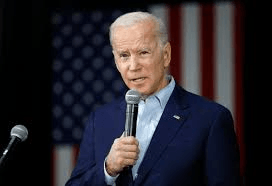
What is the name of the presidential candidate for the Democratic Party who is running against Donald Trump?
Joe Biden
200
California gets 55 electoral college votes in total. Imagine that in the next election 55% of Californians vote for Biden, and 45% of Californians vote for Trump. How many of California's electoral college votes would Biden get? How many would Trump get?
Biden would get all 55 of California's electoral college votes, and Trump would get 0. This is because all states except for Nebraska and Maine use a "first past the post" winner-takes-all system for allotting its electoral college votes.
200
How long is one presidential term in office? How many terms can the US president serve total?
One term is 4 years. A president can serve only 2 terms, for a total of 8 years.
200
What does the abbreviation MP stand for?
Member of Parliament
200
How is the Head of State in the UK selected?
Since the Head of State in the UK is the monarch (King or Queen), they come into power hereditarily. This mean the role is passed down to them in their family.
200
What is the name of the UK's current Prime Minister?
Boris Johnson
300
What are states that are very competitive and do not always tend to vote for only one party's candidate (either Democrat or Republican) in the general presidential elections are called often referred to?
Swing states
300
How does a US president select his/her Cabinet? What criteria should they meet?
The President can choose anyone to serve on their Cabinet. Cabinet members do not have to come from Congress. They should have expertise in the area of the department which they lead (for example, the Secretary of Health and Human Services should have a medical or social work background).
300
What is it called when no single party wins a majority of PMs in a general election and multiple parties form an alliance in order to reach a majority in Parliament and form a government?
Coalition government
300
How is the Head of Government in the UK selected?
The citizens in the United Kingdom vote for an MP (member of Parliament) to represent them in the House of Commons (the UK's lower house in the legislature). Whichever party wins the most MPs sends chooses their leader to serve as Prime Minister.
300
Name 4 countries (not including the UK) that use the Parliamentary System.
Canada, India, Australia, Japan, Spain, Denmark, Sweden, Ireland, Germany, Singapore...
400
What is one argument in favor of the electoral college? What is one argument against it?
In Favor: The Electoral College system ensures that candidates do not skip over states with smaller populations and only campaign in the most populace states.
Against: The Electoral College system sometimes results in the candidate with fewer votes actually winning the presidency.
400
Name 5 of the president's major powers/responsibilities.
Commander-in-Chief of the military
- Responsible for executing and enforcing laws created by Congress (through the different departments that are run by his/her Cabinet members)
- Appoints cabinet members to lead 15 executive departments
Has power to either sign legislation into law or to veto bills enacted by Congress (though vetoes can be overturned by two-thirds vote of Congress in both houses)
Conducts diplomacy with other nations
- Can negotiate and sign treaties (though they must also be ratified by two-thirds of Senate)
Can issue executive orders, which direct executive officers or clarify and further existing laws.
Has unlimited power to extend pardons and clemencies for federal crimes, except in cases of impeachment.
400
What is a "snap election" and when might a prime minister call for one?
A snap election is an election that is called earlier than expected - or when not required.
The "snap" element is often used as a tactic to exploit the opposition's weakness, or for a party to boost their majority in parliament.
400
How, other than through their party losing a majority of MPs in a general election, can a Prime Minister be removed from office? What percentage of MPs must support removing the Prime Minister for it to be successful?
MPs can call for a "vote of confidence" to assess if the current government, led by the current Prime Minister, has the "confidence" (support) of the Parliament. If a simple majority (50% + 1) of MPs vote that they have "no confidence" in the government, the Prime Minister must resign (unless he/she manages to win back the confidence of a majority of MPs within 14 days. We will learn more about this in our next unit on the Legislative Branch!)
400
What are key features of the semi-presidential system?
In semi-presidential systems, there is always both a president and a prime minister. In such systems, the president has genuine executive authority (power), unlike in the parliamentary system, but the role of a head of government may be exercised by the prime minister. In semi-presidential systems the president appoints the prime minister, but the prime minister and the rest of the cabinet is responsible to the legislature.
500
How is it determined how many electoral college votes a state gets?
It is based on their population, though not directly so. Each state gets one electoral college vote for each representative in the House of Representatives (this number of electoral college votes reflects the state's population) and an additional two electoral college votes for Senator from that state.
500
There are 3 ways a president might leave office other than through losing a general election or finishing two 4-year terms in office.
1.) He/she resigns
2.) He/she is found "unfit" to serve as president by the vice president and a majority of his/her Cabinet.
3.) ??? What is the process called? What percentage of Congress must support it in order to remove a sitting president?
Impeachment and removal. Impeachment happens when a simple majority of representatives in the House of Representatives votes to impeach the president. However, a President is not removed unless 2/3 of Senators vote to remove him from office.
500
When we refer to "the government" in the Parliamentary system, who exactly are we talking about?
The Prime Minister and his/her Cabinet
500
Why is it generally considered easier for a Prime Minister in the UK to get his/her policies through the Parliament than it is for the President in the United States?
What is one situation when this may not be the case?
The Prime Minister is chosen from the largest party in the legislature and there is no real separation of powers between the executive and legislative branches in the UK. This means that, most of the time, the Prime Minister is working with members of his/her own party to get legislation passed. In the US, however, it is common for the president to come from one party and at least one of the two bodies of the Congress have a majority from the opposing party. This often results in "gridlock" -- meaning that very little gets done.
One situation where the Prime Minister may have difficulty getting his/her policies passed through Parliament is when no party wins a majority of MPs and so a coalition government is formed. Coalition governments require more compromise may make it difficult for a Prime Minister to pass his/her agenda successfully.
500
How many electoral college votes does a presidential candidate need to win the presidency in the US?
270