Images in ID
RA
Geriatrics
Commonly Missed ITE Topics
Grab Bag
Final Jeopardy
100
the most likely diagnosis for this acute, warm, and tender skin condition? 
Cellulitis
100
These are the two lab studies that aid in the diagnosis of RA
Rheumatoid Factor and anti cyclic citrullinated peptide antibodies
100
The leading cause of injury in adults >65
Falls (30-40% fall every year)
100
a patient on atorvastatin and colchicine is at risk for this condition
rhabdomyolysis
100
most likely diagnosis for this skin condition

allergic contact dermatitis
100
this syndrome, characterized by fever and diffuse capillary leak, occurs in up to 25% of patients receiving ATRA as part of induction therapy for APML
differentiation syndrome
200
Most likely diagnosis in a 25 year old woman with a two day history of dysphasia which has preogressed to AMS? 
Herpes Simplex Encephalitis
200
RA pleural effusions are characterized by: (name 3/7)
Low glucose
low ph
low complement
elevated total protein
elevated RF
elevated LDH
Mononuclear inflammatory cells
200
These criteria provide a list of medications that could be problematic in elderly patients
Beers
200
the length of time from IBD diagnosis to start screening for colon cancer
8 years
200
Which of the following diagnoses is most compatible with the urinalysis findings shown under polarized light? 
Nephrotic syndrome
300
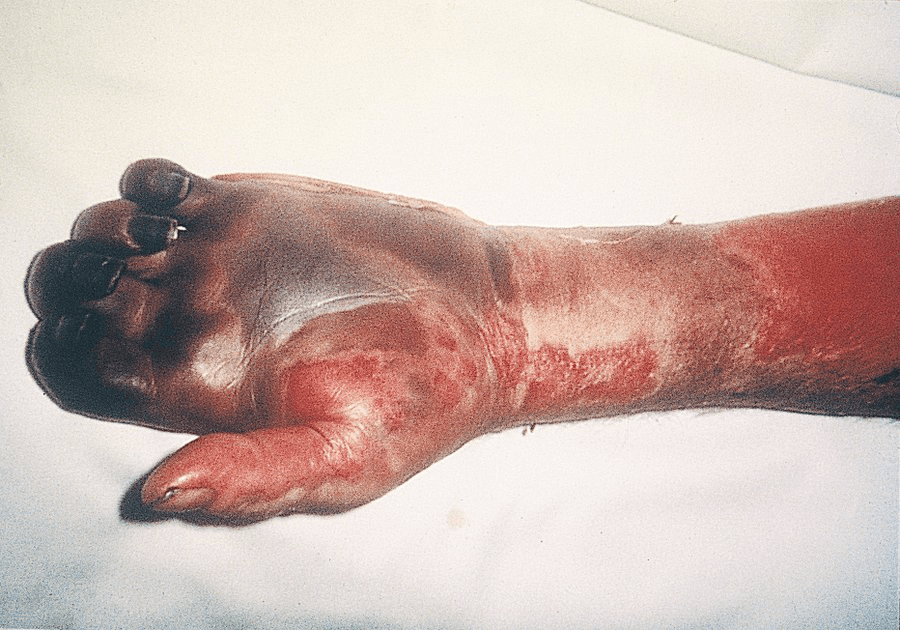
The most likely infectious agent responsible for this skin condition in a patient with cirrhosis and sea water exposure?
Vibrio Vulnificus
300
This syndrome consists of neutropenia, splenomegaly, and RA and occurs in patients with long standing, severe, seropositive RA
Felty Syndrome
300
this drug is approved for moderate to severe dementia in patients with Alzheimer disease associated with significant functional impairment.
memantine
300
This is the less severe form of cutaneous t cell lymphoma (and the most common type)
mycosis fungoides
300
A patient with long-standing osteoarthritis of the knee with a large effusion develops acute calf pain. Three days later, this skin finding is noted. What is the most likely cause of the leg pain and new finding?

Baker cyst with rupture
ecchymosis below the medial malleolus, a finding known as the “crescent sign
400
The most likely diagnosis in a patient with fever, hemolytic anemia, and this peripheral blood smear following a tick bite? 
Babesiosis
400
These two RA specific conditions significantly increase the risks associated with intubation
Cervical subluxation
cricoarytenoid arthritis
400
pseudobulbar affect and gait impairment are two early signs of this etiology of cognitive impairment
vascular
400
a patient with claudication symptoms and normal vasculature should be evaluated for this disease
lumbar spinal stenosis
400
this type of fracture can occur with minimal trauma in patients with severe ankylosing spondylitis

Chalkstick fracture
500
Most likely explanation for abnormality with this CXR + fever + cough?
Miliary TB

500
This bacterium, which is associated with periodontitis, is a risk factor for development of RA.
Porphyromonas gingivalis
500
this disease occurs in as many as 20% to 30% of patients with behavior-variant fronto-temporal dementia
ALS
500
these drugs should be discontinued in patients undergoing cataract surgery because of the risk of floppy iris syndrome
alpha blockers
500
A 28-year-old woman is evaluated for hypokalemia found during evaluation of dry eyes and mouth of several months' duration. In addition to hypokalemia, she has a low serum bicarbonate level and a normal anion gap of 8 mEq/L. A spot urine potassium ratio is 20. What is the most likely origin of her hypokalemia.
Renal
Type I RTA (associated with Sjogrens syndrome)
Key here:
spot urine K:Cr ratio distinguishes between renal and non renal losses. <13 = non renal