Carbohydrates
Lipids
Proteins
Nucleic Acids
Biomolecules
100
What are the three elements found in carbohydrates?
carbon, hydrogen, oxygen
100
What are the three elements found in lipids?
carbon, hydrogen, oxygen
100
What are the four elements found in proteins?
carbon, hydrogen, oxygen, nitrogen
100
What are the five elements found in nucleic acids?
carbon, hydrogen, oxygen, nitrogen, phosphorous
100
What are the names of the four main biomolecule groups?
carbohydrates, lipids, proteins, and nucleic acids
200
What do carbohydrates provide for the body?
They provide the body's primary source of energy
200
What food group is made up of lipids?
fats and oils
200
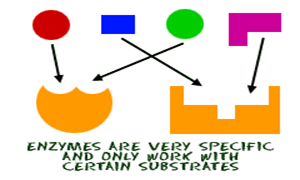
Enzymes are proteins. Where can enzymes be found?
in ALL living things (people, plants, animals)
200
Nucleic acids carry genetic coding information. What are the names of the two groups of genetic code?
DNA and RNA
200
What is a monomer?
a single molecule that can be bonded to other identical molecules to form a polymer (many molecules)
300
Describe how simple carbohydrates work.
They break down quickly into glucose to be used as energy.
300
How do lipids support the cells?
They give the cells structure.
300
What are proteins made of? And how many are there?
amino acids
there are 20
300
A monomer (or molecule) of nucleic acid is a nucleotide. What is the purpose of a nucleotide?
the basic building block of nucleic acids (DNA and RNA).
300
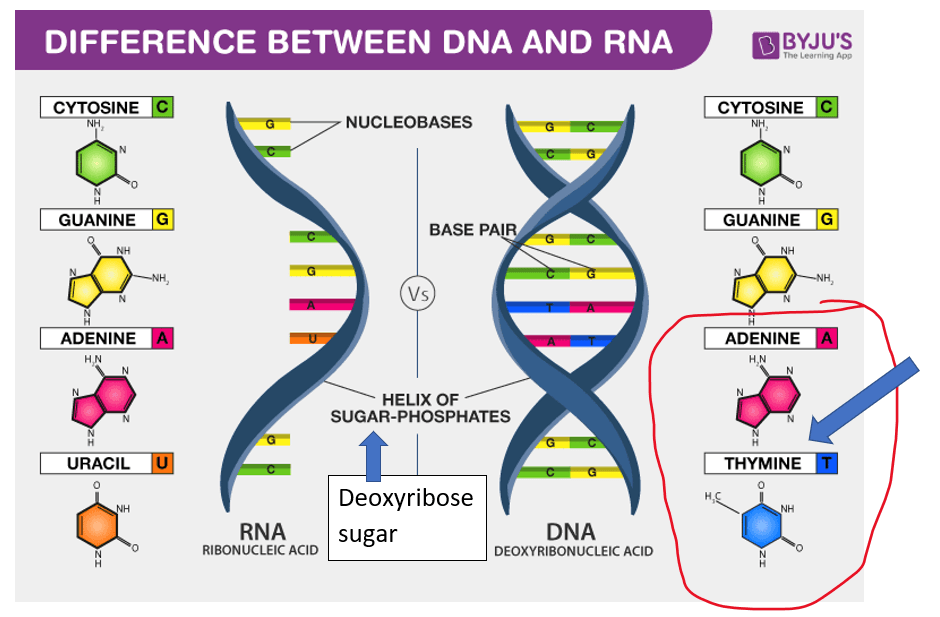
What components bond with adenine?
400
Saccharides are sugar.
What is the difference between monosaccharides and disaccharides?
Monosaccharides have only one sugar (simplest form of carbohydrates).
Disaccharides have two sugars.
400
Name TWO of the four key functions of lipids.
* control what goes in and out of your cells
* store energy
* absorb vitamins
* make hormones
400
Enzymes are a type of protein. What do enzymes do?
speed up metabolism
400
What is the purpose of a DNA double helix?
to allow genetic information to be copied and passed on to the next generation
400
What happens during a catalyzed chemical reaction?
a substrate attaches to an enzyme and produces products such as glucose and fructose (sugars) 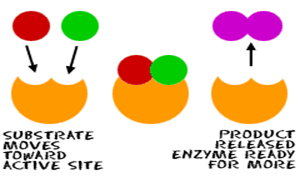
500
Name four types of carbohydrates by scientific name and function.
* cellulose- structure of plant cell walls
* chitin- structure of fungal cell walls
* glycogen- energy in the form of glucose
* starch- energy stored in plant roots and seeds
500
What is a shared function of carbohydrates and lipids?
store energy
500
What happens in a condensation reaction?
2 or more molecules combine to make a larger molecule AND a small molecule of water is lost.
500
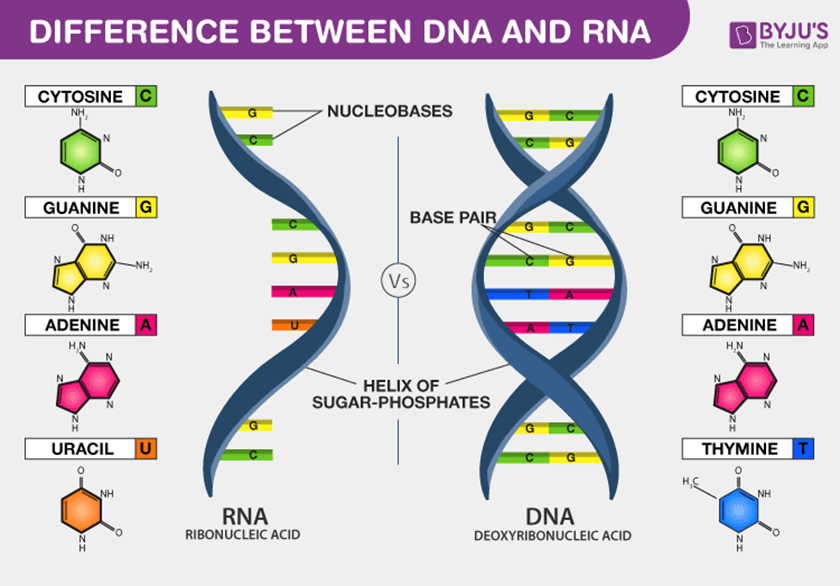
What is the difference between DNA and RNA?
RNA is a single strand of code; DNA is a double strand of code.
500
For an enzyme to be able to catalyze (accelerate) a reaction, the active site must have what?
a complementary shape to the substrate (or base on which an organism lives)