Epidemiology/Etiology
Clinical
Clinical
Evaluation
Bonus
100
Age of onset for Retinoblastoma
<1 year
<2 years
<4 years
<4 years
100
If the eye is not salvageable (either anatomically or functionally), what is the treatment of choice for retinoblastoma?
Enucleation
100
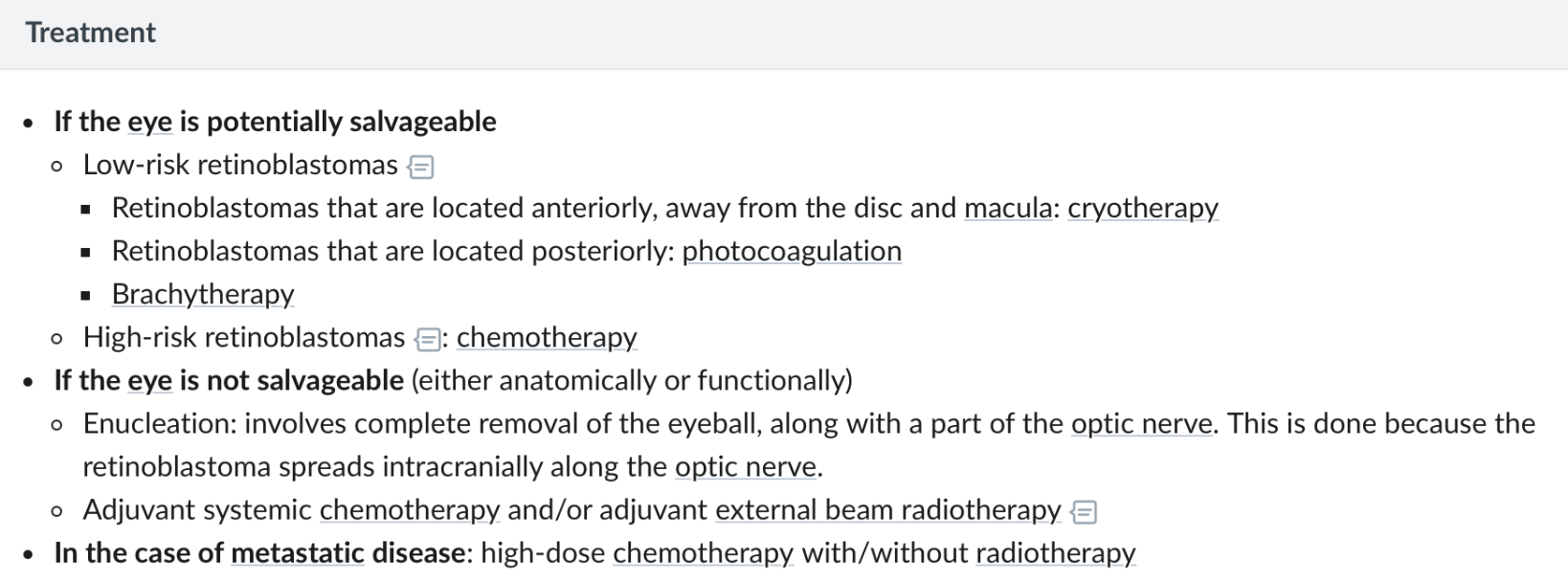
Name the clinical feature associated with this MRI and possible diagnosis?

The mass displaces the orbit anteriorly, resulting in proptosis
Dx. Rhabdomyosarcoma
Most common soft tissue sarcoma and malignant orbital tumor in children. Malignant mesenchymal tumor of primitive skeletal muscle cells (rhabdomyoblasts) that have failed to fully differentiate.
100
Initial evaluation for retinoblastoma
Fundoscopic Examination> Ocular ultrasound> Contrast-enhanced MRI of the cranium
100
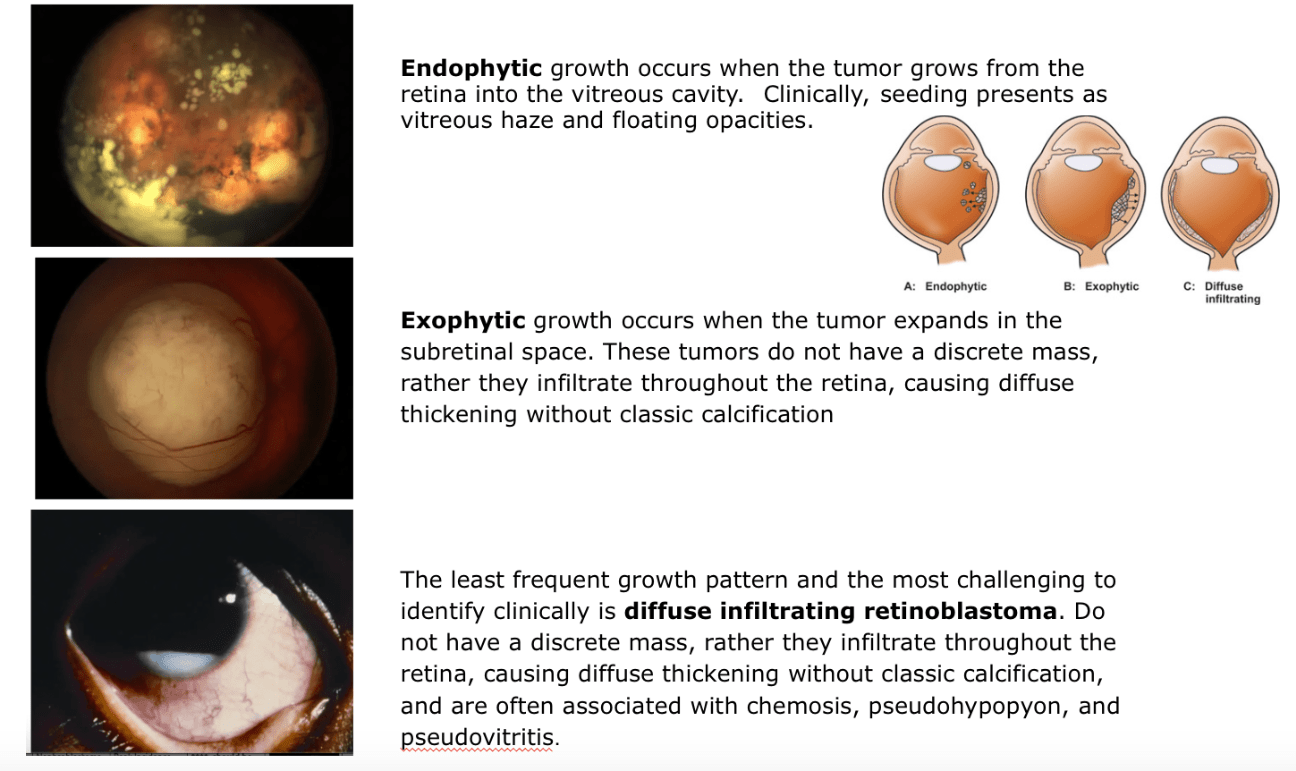
Name Sculpture and location

Plaza La Rogativa
The sculpture commemorates a women-led religious procession that took place in 1797. The legend goes that the British Armada was planning to invade San Juan, but were spooked away by hundreds of torches that they saw on land and believing that they were reinforcements they halted their invasion.
200
Associated with amplification and over-expression of oncogene MYCN (N-myc)
Neuroblastomas
Presence/Absence of MYCN is used for stratification of treatment

200
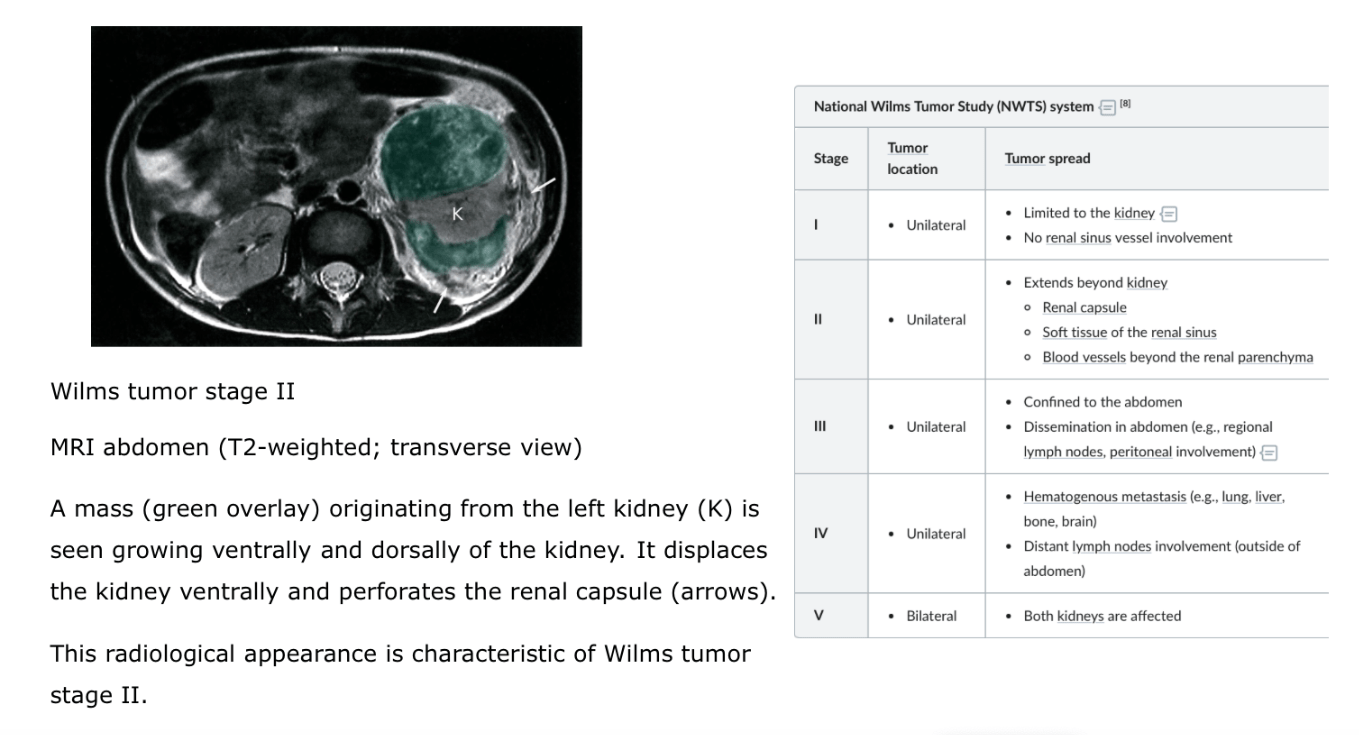
A 4-year-old girl is brought to the physician by her mother for a follow-up examination. She has a history of recurrent asthma attacks. The mother reports that her daughter has also had mild abdominal pain for the past 2 weeks. The patient's current medications include daily inhaled fluticasone and inhaled albuterol as needed. She appears well. Her temperature is 37°C (98.6°F), pulse is 100/min, and blood pressure is 130/85 mm Hg. The lungs are clear to auscultation. Cardiac examination shows no murmurs, rubs, or gallops. Abdominal examination shows a left-sided, nontender, smooth abdominal mass that does not cross the midline. The remainder of the examination shows no abnormalities. A complete blood count and serum concentrations of electrolytes, urea nitrogen, and creatinine are within the reference range. Which of the following is the most likely diagnosis?
Nephroblastoma

200
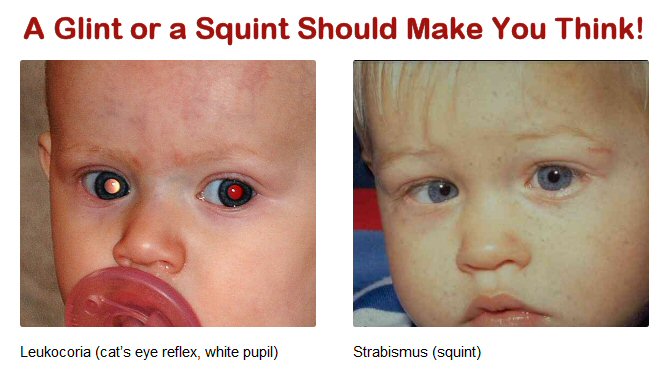
Name this clinical feature

Leukocoria
Children with retinoblastoma could also present with strabismus
200
The classification of a tumor as rhabdomyosarcoma requires the identification of which type of cells?
Rhabdomyoblasts
Rhabdomyosarcomas (RMS) are thought to originate from immature cells that are destined to form striated skeletal muscle; however, these tumors can arise in locations where skeletal muscle is not typically found (eg, the urinary bladder).
Undifferentiated sarcomas derive from mesenchyme that cannot be ascribed to a specific tissue lineage. As such, they are grouped with non-rhabdomyosarcomatous soft tissue sarcomas

200
Name the plant

Culantro/Recao
Eryngium foetidum, is native to Mexico, the Caribbean, and Central and South America

300
Type of cancer associated with two hit hypothesis?
The RB1 gene is located on human chromosome 13. In hereditary retinoblastoma, the fertilized egg carries 1 defective copy of the RB1gene and all retinal cells in this offspring carry only a single functional RB1 gene copy. If this surviving copy is eliminated in a retinal cell by a nonheritable mutation (the second hit of the Knudson 2-hit hypothesis), the cell will lack RB1 gene function and will proliferate into a tumor. In nonheritable retinoblastoma, the fertilized egg is genetically wild type at the RB1 locus. In the retina of this offspring, retinoblastoma development requires 2 successive nonheritable mutations striking both copies of the RB1 gene in the retinal precursor cells. Because only a single nonheritable mutation is needed to eliminate RB1 function in familial cases, multiple cells in both eyes are affected. In contrast, the 2 nonheritable mutations required in nonheritable disease are unlikely to affect a single cell lineage, yielding at most 1 tumor.

300
A 1-year-old boy is brought to the physician for a well-child examination. He has no history of serious illness. His older sister had an eye disease that required removal of one eye at the age of 3 years. Examination shows inward deviation of the right eye. Penlight examination shows a white reflex in the right eye and a red reflex in the left eye. The patient is at increased risk for which of the following conditions?
Patients with inherited Rb gene mutations also have a significantly higher risk of developing osteosarcomas and pinealomas.
300
Type of cancer associated with this clinical feature?
Opsoclonus-myoclonus syndrome (OMS), also known as opsoclonus-myoclonus-ataxia (OMA), is a paraneoplastic syndrome that occurs in 1 to 3 percent of children with neuroblastoma. Almost 50 percent of children with OMA have an underlying neuroblastoma.
300
In which type of tumor should CT scan be avoided?
CT scan should be avoided because of the risk of radiation-induced tumors in patients with retinoblastomas with Rb1 mutation!
300
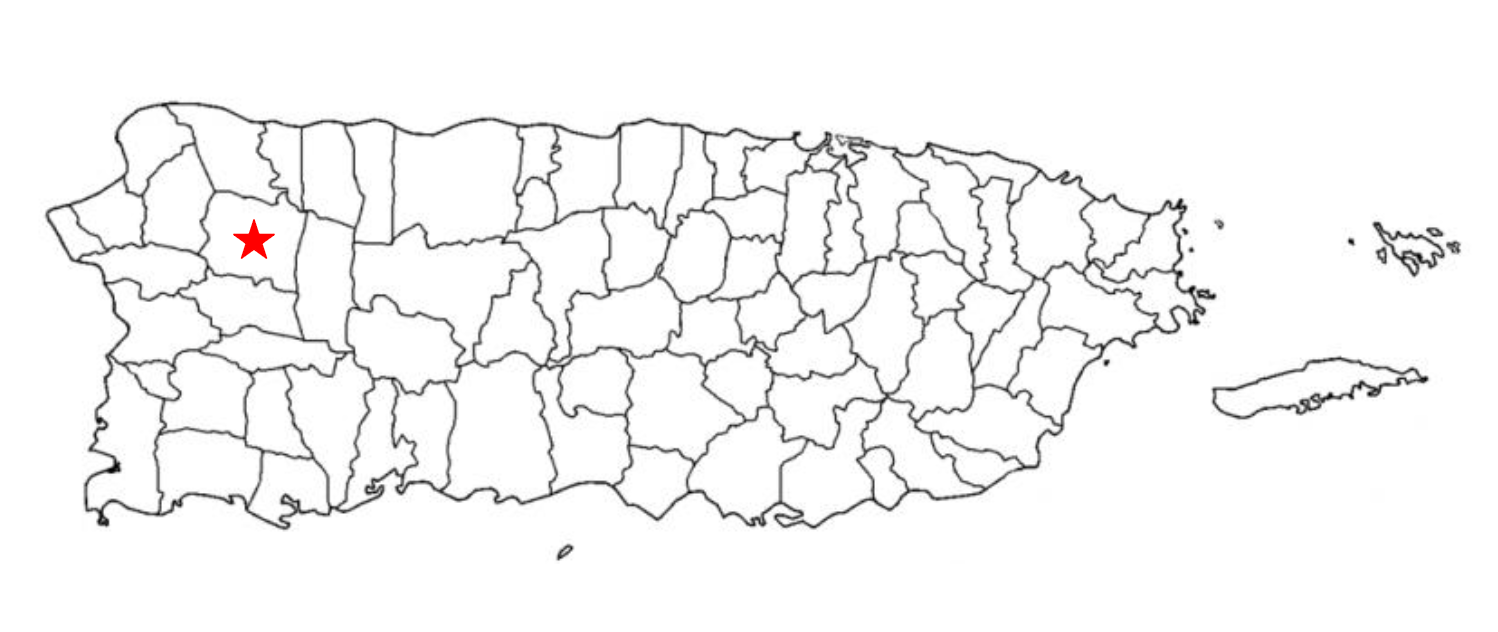
San Sebastian, Puerto Rico
Festival de La Novilla every January

400
The majority of children with this cancer have progressed to advanced-stage disease by the time of diagnosis
Nonspecific clinical features associated with neuroblastoma
●Abdominal mass (retroperitoneal or hepatic)
●Abdominal pain or constipation
●Proptosis
●Periorbital ecchymoses ("raccoon eyes," from periorbital ecchymosis caused by orbital metastases)
●Horner syndrome (miosis, ptosis, anhidrosis)
●Cord compression (lower extremity weakness, changes in reflexes, ascending paralysis)
●Unexplained back pain, dysuria, constipation
●Palpable nontender subcutaneous nodules
●Opsoclonus myoclonus syndrome
●Otherwise unexplained secretory diarrhea (from paraneoplastic production of vasoactive intestinal polypeptide [VIP])
●Systemic symptoms (fever, weight loss)
●Bone pain
●Anemia
●Heterochromia iridis (different colors of the iris or portions of the iris)
●Hypertension
400
Most common primary site for neuroblastomas?
Neuroblastomas can arise anywhere throughout the sympathetic nervous system. The adrenal gland is the most common primary site (40 %), followed by abdominal (25 %), thoracic (15 %), cervical (5 %), and pelvic sympathetic ganglia (5 %). Less commonly, tumors arise within the central or autonomic nervous systems.
400
For this type of cancer in some cases patients can be managed with observation alone

400
In which types of tumors are biopsies not recommended and why? (At least 1)
Biopsies of retinoblastomas are contraindicated because of the risk of tumor seeding
In nephroblastomas biopsy is usually reserved for assessing nodules that are suspected metastases, as tumor capsule rupture and spillage results in more advanced staging and intensive treatment.
400
Name the town

Maricao
500
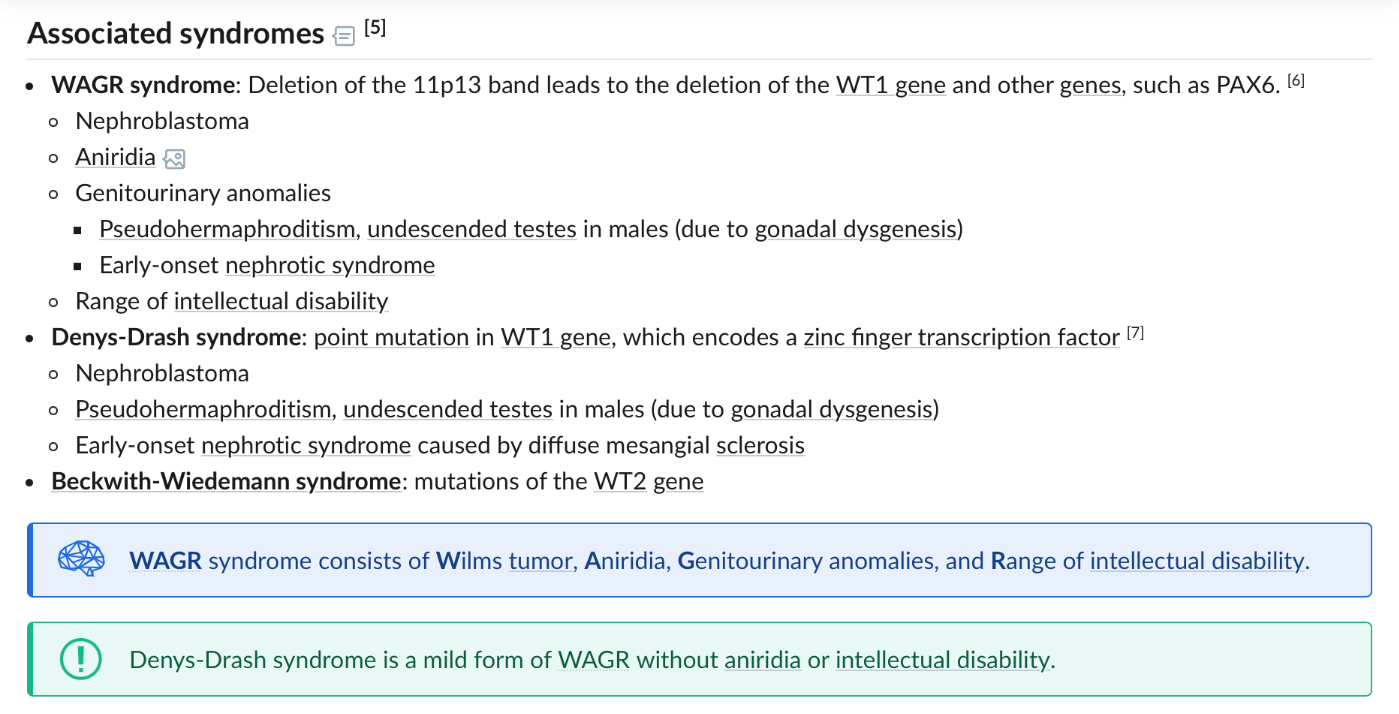
Syndromes associated with nephroblastoma (at least 1)

500
Most common body region/site affected by rhabdomyosarcomas?
Any body part can be affected by rhabdomyosarcomas. However, the most common primary sites are the head and neck region (35 to 40 %), the genitourinary tract (25 percent), and the extremities (20 percent). The impact of the primary site location on prognosis; more favorable for localized tumors of the orbit, and less favorable for metastatic disease
500
A 2-year-old boy is brought to the emergency department by his parents after they discovered an abdominal mass while giving him a bath this evening. The mass does not appear to be causing the patient pain. He has had constipation for the last 2 weeks, which the parents have treated with stool softeners. His parents are also concerned that his face and neck become red and that his palms perspire several times a day even when he is cold. The patient has also had decreased energy and a 1.5 kg (3.3 lb) weight loss in the last month despite a normal appetite. He has no chronic medical conditions, has had no surgeries, takes no medications, and has no known allergies. Temperature is 37.2 C (99 F), blood pressure is 140/90 mm Hg, and pulse is 120/min. Physical examination reveals a toddler who appears in no distress. The lungs are clear to auscultation. Heart rate and rhythm are normal; there are no murmurs. The abdomen is soft and nontender; a baseball-sized, nontender, fixed mass is palpable in the right mid-abdomen. What is the most likely diagnosis for this patient?
Neuroblastoma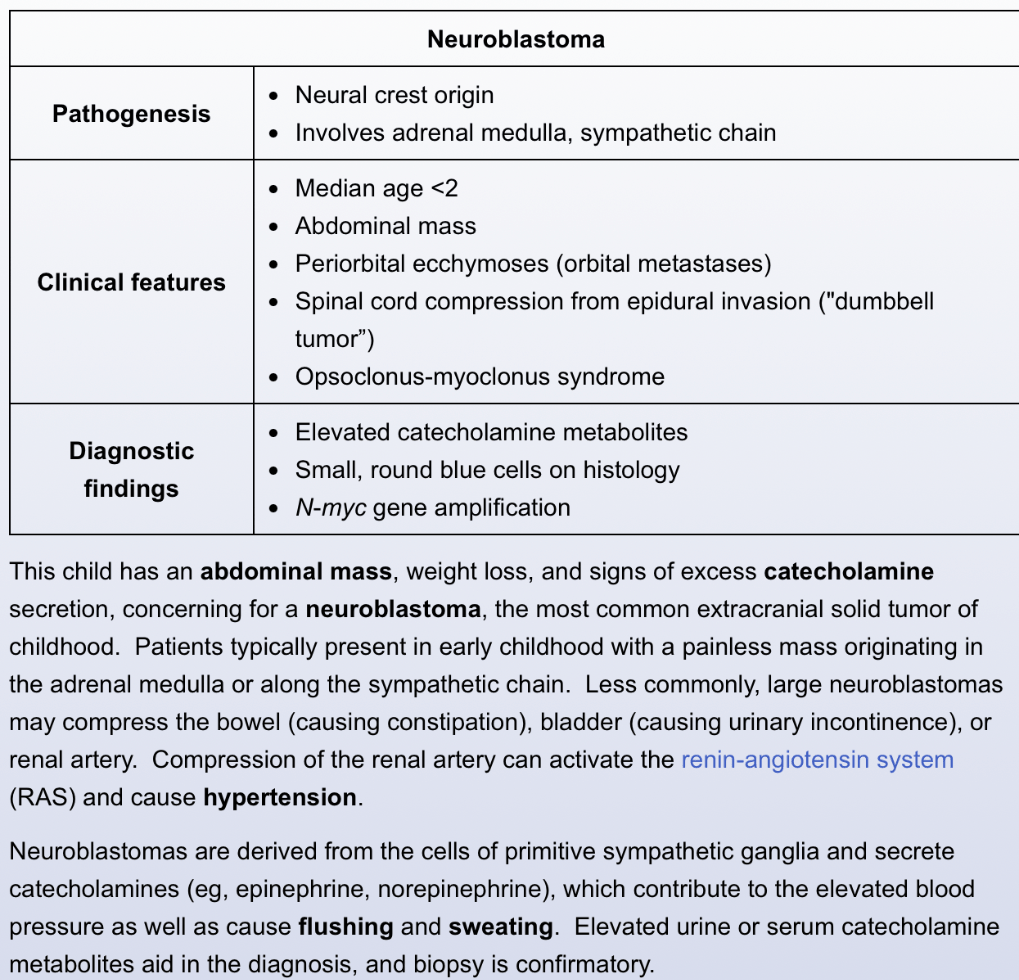
500
Name the catecholamine metabolites associated with neuroblastoma
Catecholamine metabolites homovanillic acid (HVA) and vanillylmandelic acid (VMA)
Increase in these metabolites in urine or blood
500
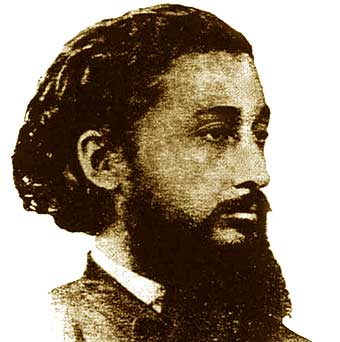
Lugar de nacimiento del desterrado de Paris
Ramón Emeterio Betances
April 8, 1827, Cabo Rojo, Cabo Rojo
Betances was a medical doctor and surgeon in Puerto Rico, and one of its first social hygienists. He had established a successful surgery and ophthalmology practice. His doctoral thesis, "Des Causes de l'ávortement" (The Causes for Miscarriage) examines various possible causes for the spontaneous death of a fetus and/or pregnant women.