Gram Positives
Gram Negatives
Viruses
Fungi
Drugs
100
A 63-year-old man with aortic valve disease is admitted to the hospital for a 3-week history of progressively worsening fatigue, fever, and night sweats. Temperature is 38.2°C (100.8°F). Physical examination shows a systolic murmur and tender, erythematous nodules on the finger pads. Blood cultures show alpha-hemolytic, gram-positive cocci that are catalase-negative and optochin-resistant. Which of the following is the most likely causal organism?
A. Staphylococcus aureus
B. Streptococcus pyogenes
C. Streptococcus pneumoniae
D. Staphylococcus epidermidis
E. Streptococcus viridans
E. Streptococcus viridans
100
A 26-year-old man comes to the emergency department for evaluation of burning with urination and purulent urethral discharge for the past 3 days. He is sexually active with multiple female partners. Several months ago he was diagnosed with urethritis caused by gram-negative diplococci and received antibiotic treatment with complete resolution of his symptoms. A Gram stain of the patient's urethral discharge shows gram-negative intracellular diplococci. Which of the following properties of the infecting organism most contributed to the pathogenesis of this patient's recurrent infection?
A. Invasion of neutrophilic granulocytes
B. Synthesis of capsular polysaccharides
C. Absence of immunogenic proteins
D. Variation of expressed pilus proteins
E. Expression of beta-lactamase genes
D. Variation of expressed pilus proteins
100
During the course of a week at an overnight summer camp, 4 children age 7-9 are sent to the camp health center. They each have fever, cough, congestion, sore throat, and red eyes. Physical examination of the children shows bilateral conjunctival injection and an erythematous oropharynx. All the children's symptoms improve over 7 days with supportive care. Which of the following is the most likely cause of the outbreak?
A. Adenovirus
B. Coxsackievirus
C. Influenza virus
D. Norovirus
E. Parvovirus
A. Adenovirus
100
A 47-year-old man comes to the office due to persistent fever, night sweats, and fatigue. Thorough evaluation yields a diagnosis of chronic myeloid leukemia. While undergoing treatment for his malignancy, the patient experiences headaches, scant nasal discharge, and left eye symptoms. Physical examination reveals tenderness over the paranasal sinuses and left-sided orbital swelling and cellulitis. Mild proptosis and ptosis of the left eye are also present. Biopsy of the sinus mucosa is shown in the image below: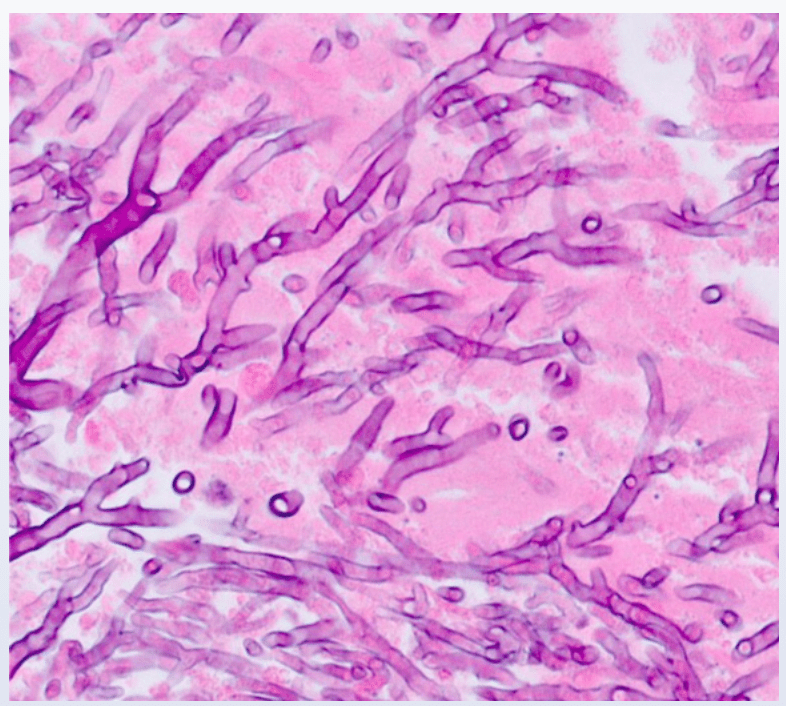
A. Aspergillus fumigatus
B. Blastomyces dermatitidis
C. Candida albicans
D. Cocciodiodes immitis
E. Cryptococcus neoformans
A. Aspergillus fumigatus
*Fungal hyphae with acute angles and septations 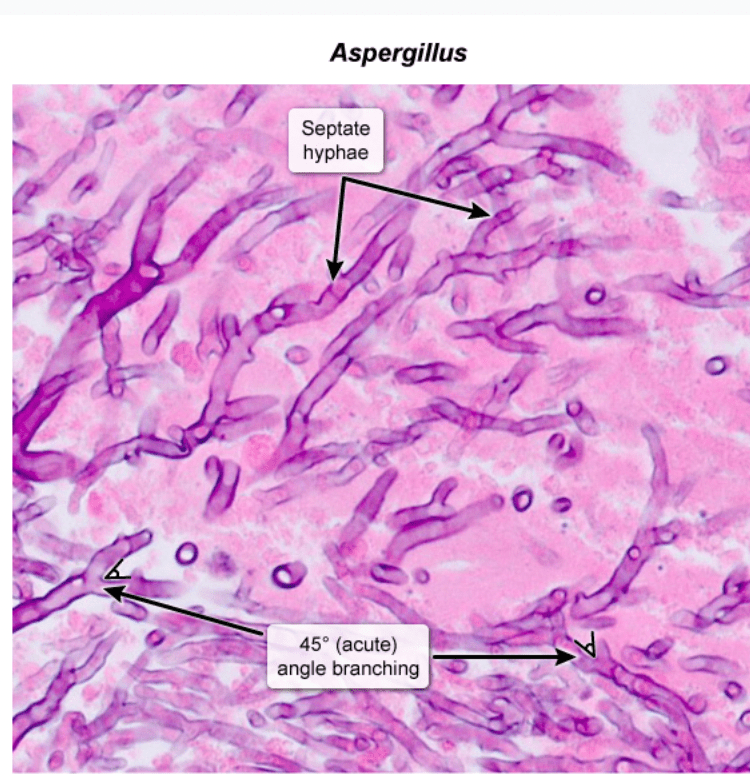
100
Three days after admission to the hospital following a motor vehicle accident, a 45-year-old woman develops a fever. A central venous catheter was placed on the day of admission for the treatment of severe hypotension. Her temperature is 39.2°C (102.5°F). Examination shows erythema surrounding the catheter insertion site at the right internal jugular vein. Blood cultures show gram-positive, catalase-positive cocci and there is a low minimum inhibitory concentration of novobiocin. Which of the following is the most appropriate pharmacotherapy?
A. Metronidazole
B. Minocycline
C. Vancomycin
D. Clarithromycin
E. Penicillin G
C. Vancomycin
200
A 2980-g (6.6-lb) female newborn is brought to the emergency department by her mother because of worsening lethargy. The newborn was delivered at home 10 hours ago. The mother has had no prenatal care. The newborn's temperature is 39.7°C (103.5°F). Physical examination shows scleral icterus. She has elevated leukocyte count. An organism is isolated from the blood. When grown together on sheep agar, the isolated organism enlarges the area of clear hemolysis formed by Staphylococcus aureus. Which of the following is the most likely causal organism?
A. Clostridium botulinum
B. Listeria monocytogenes
C. Streptococcus pyogenes
D. Streptococcus pneumonia
E. Streptococcus agalactiae
E. Streptococcus agalactiae
200
A 3-day-old boy is brought to the physician by his mother because of irritability and feeding intolerance for 1 day. His temperature is 39.2°C (102.6°F). Physical examination shows a bulging anterior fontanelle. Gram stain of the cerebrospinal fluid shows gram-negative rods. Further evaluation shows that the organism expresses the K1 capsular polysaccharide. Which of the following is the most likely causal pathogen?
A. Neisseria meningitidis
B. Escheria coli
C. Listeria monocytogenes
D. Pseudomonas aeruginosa
E. Haemophilus influenzae
B. Escheria coli
200
A previously healthy 2-year-old boy is brought to the clinic with fever and mouth pain that began yesterday. He has consumed an adequate amount of fluids but refuses to eat due to the pain. Physical examination reveals vesicular, inflamed lesions on the gums and lips. There are no lesions in the posterior oropharynx.
He has enlarged and tender cervical lymph nodes. The rest of the examination is unremarkable.
Which of the following is most likely responsible for this patient's condition?
A. DNA virus, double-stranded, enveloped
B. DNA virus, double-stranded, non-enveloped
C. DNA virus, single-stranded, non-enveloped
D. RNA virus, double-stranded, non-enveloped
E. RNA virus, single-stranded, negative-sense
A. DNA virus, double-stranded, enveloped
200
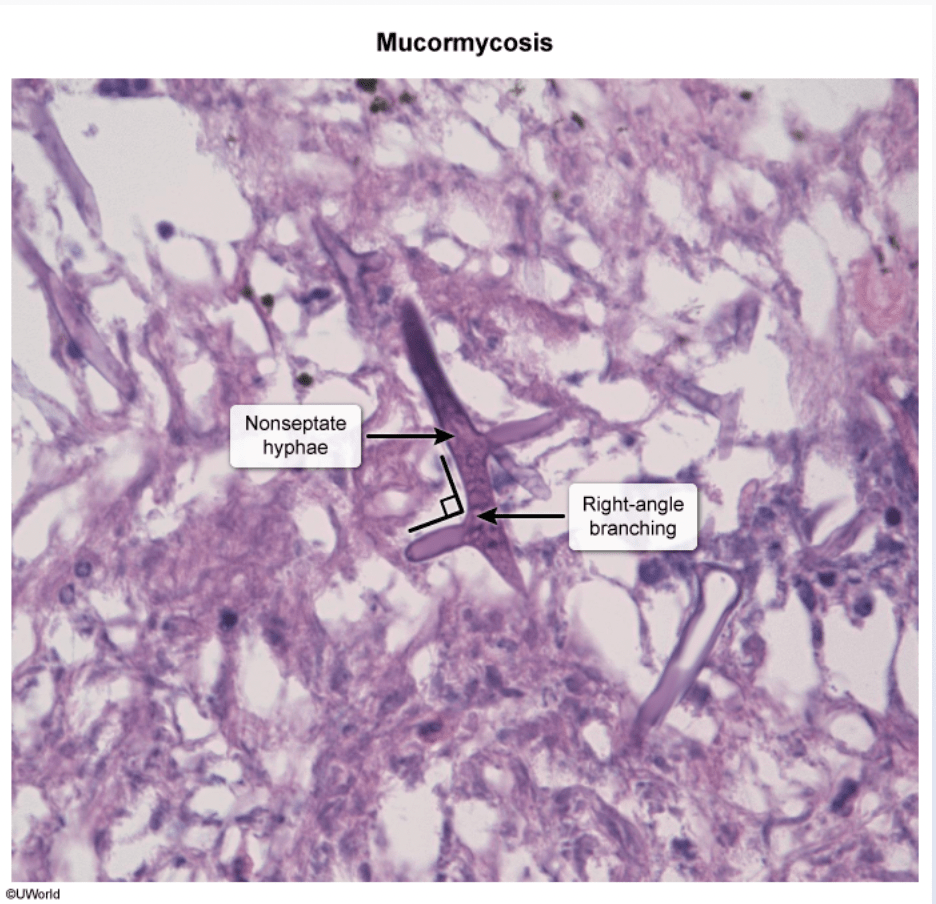
A 38-year-old man is undergoing treatment for acute myeloid leukemia. He has noted increasingly severe right-sided headaches. He describes the pain to be throbbing in nature and located behind his right eye. He also has associated nasal stuffiness. The patient has no prior history of allergies. Physical examination reveals right-sided proptosis and periorbital tenderness. Biopsy of the right maxillary sinus mucosa reveals the following: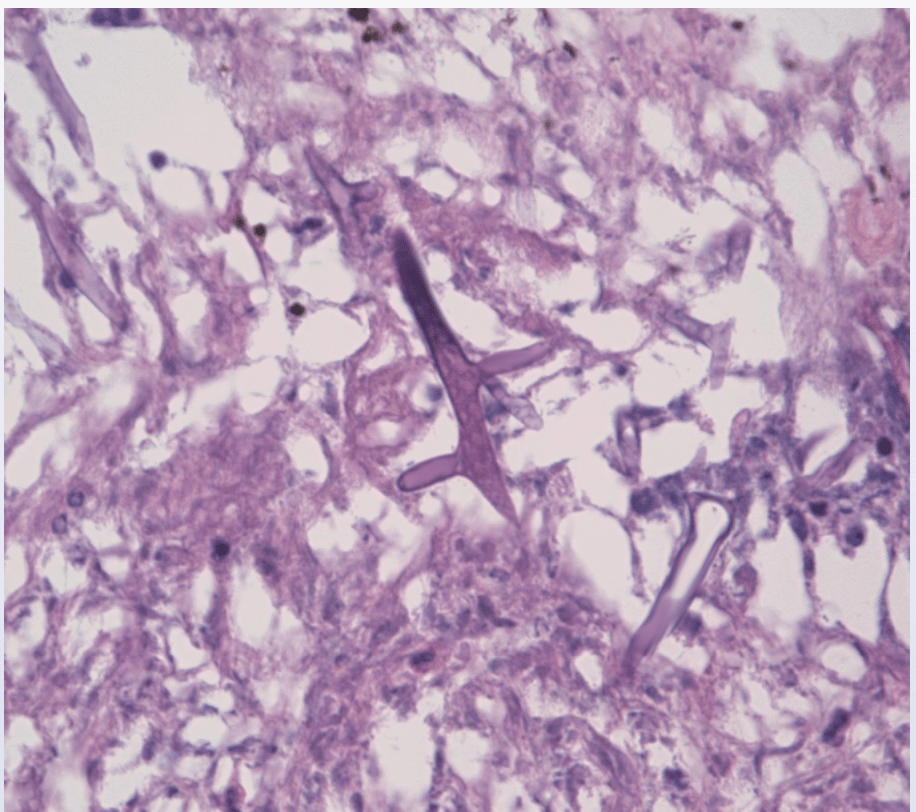
Which of the following is the most likely cause of this patient's condition?
A. Malassezia furfur
B. Microsporum canis
C. Rhizopus species
D. Aspergillus fumigatus
E. Candida albicans
C. Rhizopus species
200
A 64-year-old woman with type 2 diabetes mellitus comes to the physician because of a 1-week history of painful red swelling on her left thigh. Examination shows a 3- x 4-cm, tender, fluctuant mass. Incision and drainage of the abscess are performed. Culture of the abscess fluid grows gram-positive, coagulase-positive cocci that are resistant to oxacillin. Which of the following best describes the mechanism of resistance of the causal organism to oxacillin?
A. Degradation of the antibiotic
B. Decreased uptake of the antibiotic
C. Acetylation of the antibiotic
D. Altered target of the antibiotic
E. Active efflux of the antibiotic
D. Altered target of the antibiotic
300
A 61-year-old woman comes to the physician because of a 5-day history of fever, headache, coughing, and thick nasal discharge. She had a sore throat and nasal congestion the week before that had initially improved. Her temperature is 38.1°C (100.6°F). Physical exam shows purulent nasal drainage and tenderness to percussion over the frontal sinuses. The nasal turbinates are erythematous and mildly swollen. Which of the following describes the microbiological properties of the most likely causal organism?
A. Gram-negative, oxidase-positive, maltose-nonfermenting diplococci
B. Gram-positive, optochin-sensitive, lancet-shaped diplococci
C. Gram-negative, lactose-nonfermenting, blue-green pigment-producing bacilli
D. Gram-negative, encapsulated, lactose-fermenting bacilli
E. Gram-positive, coagulase-positive, clustered cocci
B. Gram-positive, optochin-sensitive, lancet-shaped diplococci
300
A 4-year-old boy is brought to the physician because of a 3-day history of fever and left ear pain. Examination of the left ear shows a bulging tympanic membrane with green discharge. Gram stain of the discharge shows a gram-negative coccobacillus. The isolated organism grows on chocolate agar. The causal pathogen most likely produces which virulence factor?
A. Protein A
B. Shiga toxin
C. Heat labile toxin
D. IgA protease
E. Exotoxin A
D. IgA protease
300
A 30-year-old man is brought to the emergency department due to erratic behavior, progressive right-sided weakness, and difficulty walking for the last month. The patient was diagnosed with HIV several years ago and is not compliant with antiretroviral treatment. Physical examination shows a cachectic and disheveled man.
Motor strength in the right upper and lower extremities is decreased, and his gait is ataxic. Brain MRI reveals several discrete areas of demyelination in the subcortical and periventricular white matter with no surrounding edema or mass effect. CD4 cell count is 30/mm%. Reactivation of which of the following pathogens is most likely responsible for this patient's current symptoms?
A. Cytomegalovirus
B. Epstein-Barr virus
C. Herpes simplex virus
D. JC virus
E. Measles virus
D. JC virus
300
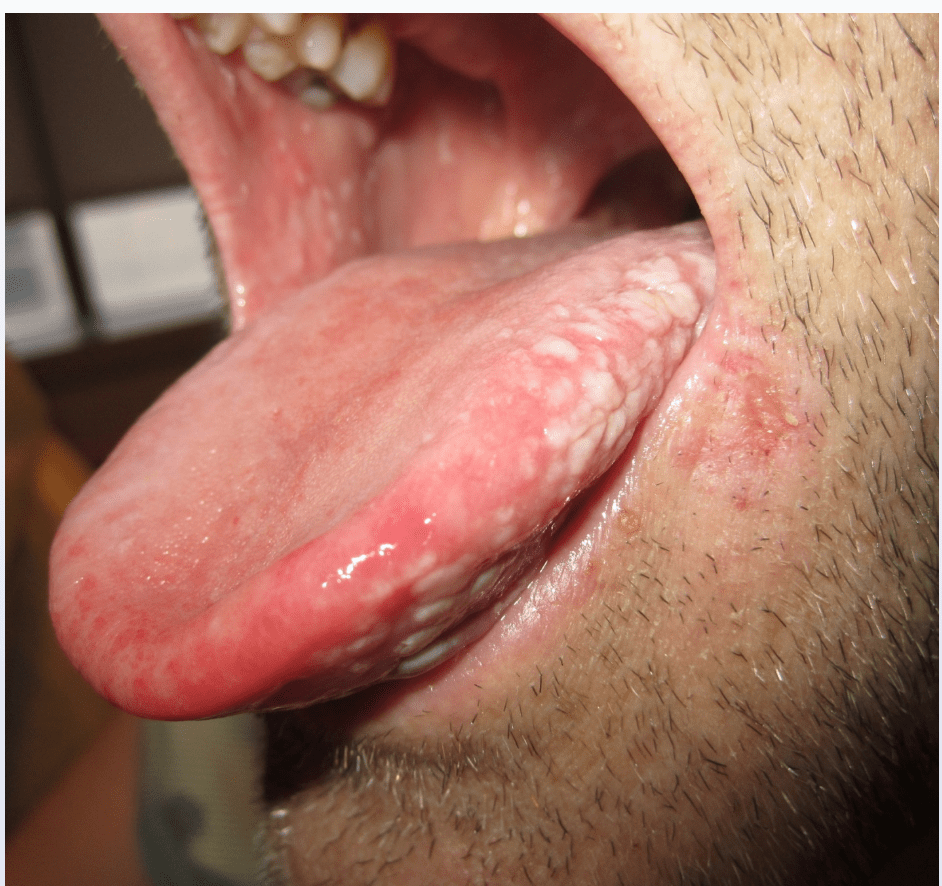
A 31-year-old man comes to the office due to oral lesions that cause occasional discomfort during eating. He also reports fatigue and unintentional weight loss. The patient has no prior medical problems and takes no medications. Oral examination findings are shown below:
The lesions can be easily scraped off, revealing erythematous mucosa underneath. There are several enlarged cervical and axillary lymph nodes. Which of the following diagnostic tests is most appropriate during further workup of this patient?
A. HIV antigen and antibody testing
B. Oral lesion biopsy to rule out malignancy
C. PCR for coxsackievirus
D. Scraping microscopy for multinucleated giant cells
E. Serum vitamin B12 and folate levels
A. HIV antigen and antibody testing
300
A 68-year-old man comes to the physician because of headache, fatigue, and nonproductive cough for 1 week. He appears pale. Pulmonary examination shows no abnormalities. Laboratory studies show a hemoglobin concentration of 9.5 g/dL and an elevated serum lactate dehydrogenase concentration. A peripheral blood smear shows normal red blood cells that are clumped together. Results of cold agglutinin titer testing show a 4-fold elevation above normal. An x-ray of the chest shows diffuse, patchy infiltrates bilaterally. Treatment is begun with an antibiotic that is also used to promote gut motility. Which of the following is the primary mechanism of action of this drug?
A. Inhibition of transpeptidase cross-linking at the cell wall
B. Free radical creation within bacterial cells
C. Inhibition of peptide translocation at the 50S ribosomal subunit
D. Inhibition of folic acid synthesis
E. Inhibition of bacterial RNA polymerase
C. Inhibition of peptide translocation at the 50S ribosomal subunit
400
A previously healthy 13-year-old girl is brought to the physician by her parents because of a 2-day history of low-grade fever, headache, nausea, and a sore throat. Examination of the oral cavity shows enlarged, erythematous tonsils with exudates and palatal petechiae. There is cervical lymphadenopathy. The physician finds that the isolated organism is able to withstand phagocytosis when placed in fresh blood. The most likely explanation for this finding is the expression of which of the following?
A. IgA protease
B. Protein A
C. Streptolysin O
D. Hyaluronidase
E. M Protein
E. M Protein
400
A 7-year-old boy is brought to the physician by his mother because of low-grade fevers and a cough lasting for 2 weeks. He has vomited several times after fits of coughing. He has no history of serious illness and has not received any routine childhood vaccinations. While in the exam room, he has a long series of consecutive coughs, during which he appears diaphoretic. The coughing is followed by a loud inspiratory gasp. The pathogen most likely responsible for this patient's presentation contains a toxin that acts by which of the following mechanisms?
A. Increases intracellular cAMP
B. Increases intracellular cGMP
C. Inactivates host elongation factor
D. Inactivates host 60S ribosome
E. Activates Gi-coupled protein receptors
A. Increases intracellular cAMP
400
A 3-year-old girl is brought to the emergency department with abrupt-onset vomiting followed by frequent, large-volume, watery diarrhea for the last day. Temperature is 37.8 C (100 F). Physical examination shows mild dehydration. The abdomen is soft and mildly tender to palpation throughout. Bowel sounds are increased. Polymerase chain reaction testing of the stool sample yields a virus with a segmented, double-stranded RNA genome. Which of the following pathologic findings is most likely to be present in this patient?
A. Blunting of the villi in the duodenum and proximal jejunum
B. Extensive colonic mucosal injury with yellow-white adherent layer
C. Flask-shaped ulcerations in the cecum and ascending colon
D. Foamy macrophages in the small intestinal lamina propria
E. Inflammatory infiltration and necrosis of the Peyer patches
A. Blunting of the villi in the duodenum and proximal jejunum
400
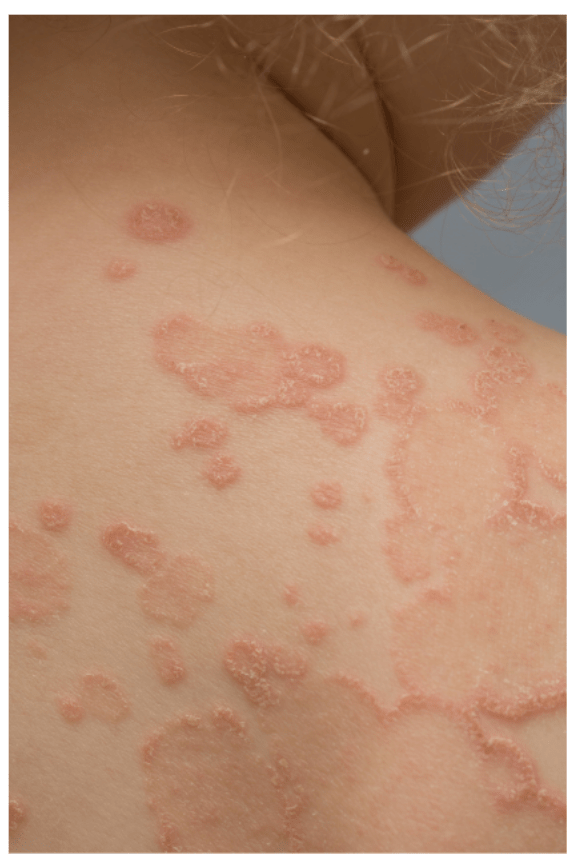
An 8-year-old girl is brought to the office for evaluation of a skin rash on her upper back. The rash is not painful but is mildly pruritic. She has no prior medical conditions, takes no medications, and is up to date with vaccinations. Vital signs are within normal limits. Right scapular area skin examination is shown in o exhibit. The remainder of the examination is normal. Which of the following is the most likely cause of this patient's current condition?
A. Deep tissue invasion by normal skin flora
B. Epidermal damage from excessive sun exposure
C. Immunologic response to bacterial pharyngitis
D. Infection limited to keratinized structures
E. Proliferation of a pathogen transmitted by tick bite
D. Infection limited to keratinized structures
400
A 71-year-old man is brought to the emergency department because of fever (103.2°F), chills, dyspnea, and generalized body aches. Social history is significant for a flu outbreak in his assisted living facility. A clinical diagnosis of influenza is made and treatment with a neuraminidase inhibitor is started. Which of the following actions most likely mediated the therapeutic effect of this drug?
A. Blockade of fusion of the virus with the host cell
B. Prevention of virus release from infected cells
C. Inhibition of viral transcription
D. Inhibition of viral proteolytic cleavage
E. Inhibition of viral protein synthesis
B. Prevention of virus release from infected cells
500
A 6-month-old infant is brought to the emergency department with a diffuse erythematous rash and generalized skin peeling. The rash initially began as red, tender areas around the mouth and nose, which then spread to involve the entire body. The mother reports that the infant has been irritable and has had a fever for the past two days. On examination, there is diffuse erythema with superficial epidermal peeling. Nikolsky sign is positive. Laboratory studies show leukocytosis with a left shift. A skin biopsy reveals detachment of the stratum granulosum. Which of the following mechanisms best explains the pathogenesis of the toxin responsible for this finding?
A. Superantigen stimulation
B. Inhibition of protein synthesis
C. Disruption of cell-cell adhesion
D. Activation of intracellular signaling cascades
E. Inhibition of peptidoglycan synthesis
C. Disruption of cell-cell adhesion
500
An 81-year-old man comes to the emergency department with severe left ear pain and drainage for 3 days. He has a history of poorly-controlled type 2 diabetes mellitus. Physical examination of the ear shows marked periauricular erythema, exquisite tenderness on palpation, and granulation tissue in the external auditory canal. The most likely causal pathogen produces an exotoxin that acts by a mechanism most similar to a toxin produced by which of the following organisms?
A. Corynebacterium diphtheriae
B. Bordetella pertussis
C. Shigella dysenteriae
D. Staphylococcus aureus
E. Bacillus anthracis
A. Corynebacterium diphtheriae
500
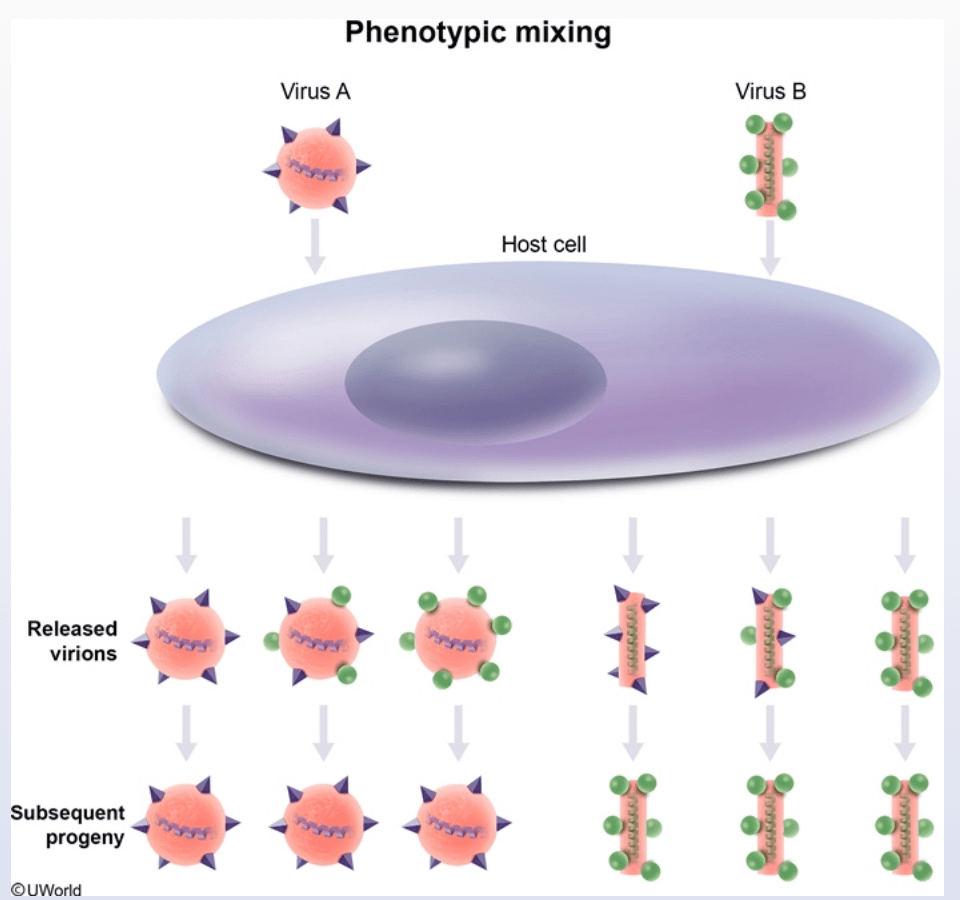
The influenza A virus uses a sialic acid as a receptor for cellular entry. The avian influenza virus attaches to a specific sialic acid that is present in fowl epithelial cells but absent in human cells, whereas the human influenza virus can only attach to the type of sialic acid present in human respiratory epithelium. When pig epithelial cells, which contain both types of sialic acid, are infected with the combination of avian and human influenza A viruses, some of the new avian influenza viral particles become capable of attaching to human cells. However, the progeny of this new strain of avian influenza virus is still unable to attach to human epithelial cells. Which of the following phenomena best describes the change in the avian influenza virus in this experiment?
A. Interference
B. Phenotypic mixing
C. Reassortment
D. Recombination
E. Transformation
B. Phenotypic mixing
500
A 52-year-old woman comes to the office due to worsening skin lesions on her right hand. The patient injured her hand while cleaning decaying vegetation from her rose garden 3 weeks ago. She washed the wound with soap and water and noticed a mildly itchy papule several days later.
The lesion progressively enlarged, and 2 other similar papules appeared proximal to the original lesion. The patient has had no fever, chills, or severe pain. She has no previous medical conditions and takes no medications. Physical examination shows a 1-cm, nontender, red nodule on the dorsum of the right hand with 2 smaller papules in linear distribution proximal to it. Which of the following histopathologic findings is most likely present in this patient's skin lesions?
A. Dense inflammatory infiltrate surrounding sulfur granules
B. Granulomas with amastigote parasites inside dermal macrophages
C. Mixed granulomatous and neutrophilic inflammatory reaction
D. Perivascular lymphocytic inflammation and epidermal spongiosis
E. Prominent plasma cell infiltrates and obliterative endarteritis
C. Mixed granulomatous and neutrophilic inflammatory reaction
500
A 38-year-old woman with AIDS was found to have a CD4+ lymphocyte count of 45 cells/mm3 (normal >500 cells/mm3) at her last clinic visit. The patient had an extensive history of treatment with a variety of antiretroviral drugs and had been taking zidovudine, lamivudine, and ritonavir. A tropism test showed that her HIV used the CCR5 receptors to enter host cells. Therapy was started with a drug that prevents entry. Which of the following drugs was most likely prescribed?
A. Enfuvirtide
B. Didanosine
C. Maraviroc
D. Indinavir
E. Atazanavir
C. Maraviroc